
Morocco Camel Riding Tours: Your Desert Adventure Guide
- Morocco camel riding tours offer guided desert experiences that combine cultural immersion, Berber hospitality, and access to remote landscapes.
- The tours vary from quick one-hour rides near Marrakech to extended multi-day treks across Sahara dunes, with the pace allowing travelers to truly see and experience the desert.
- Selecting the right tour depends on time, terrain preferences, inclusions, seasonal safety, and budget, ensuring an authentic and memorable adventure.
Morocco camel riding tours are guided desert excursions that combine camelback travel with cultural immersion, Berber hospitality, and access to landscapes most travelers never reach on foot or by vehicle. The experience spans everything from a one-hour sunset ride in the Agafay Desert, just 30 minutes outside Marrakech, to an 11-day trek crossing multiple erg dune systems deep in the Sahara. What separates a camel tour from a standard Morocco desert tour is the pace. You move at roughly 4 kilometers per hour, which forces you to actually see the desert rather than pass through it. Moroccotours has guided travelers through both ends of this spectrum, and the difference in what you take home is significant.
The industry term for longer camel-based travel is camel trekking, while shorter rides are typically marketed as camel excursions or camel rides. Both fall under the broader umbrella of Morocco adventure tours, but they deliver very different experiences. Knowing which format fits your schedule, budget, and physical comfort level before you book is the single most important decision you will make.
What types of Morocco camel riding tours are available?
Three distinct formats define the camel riding market in Morocco, and each targets a different type of traveler.
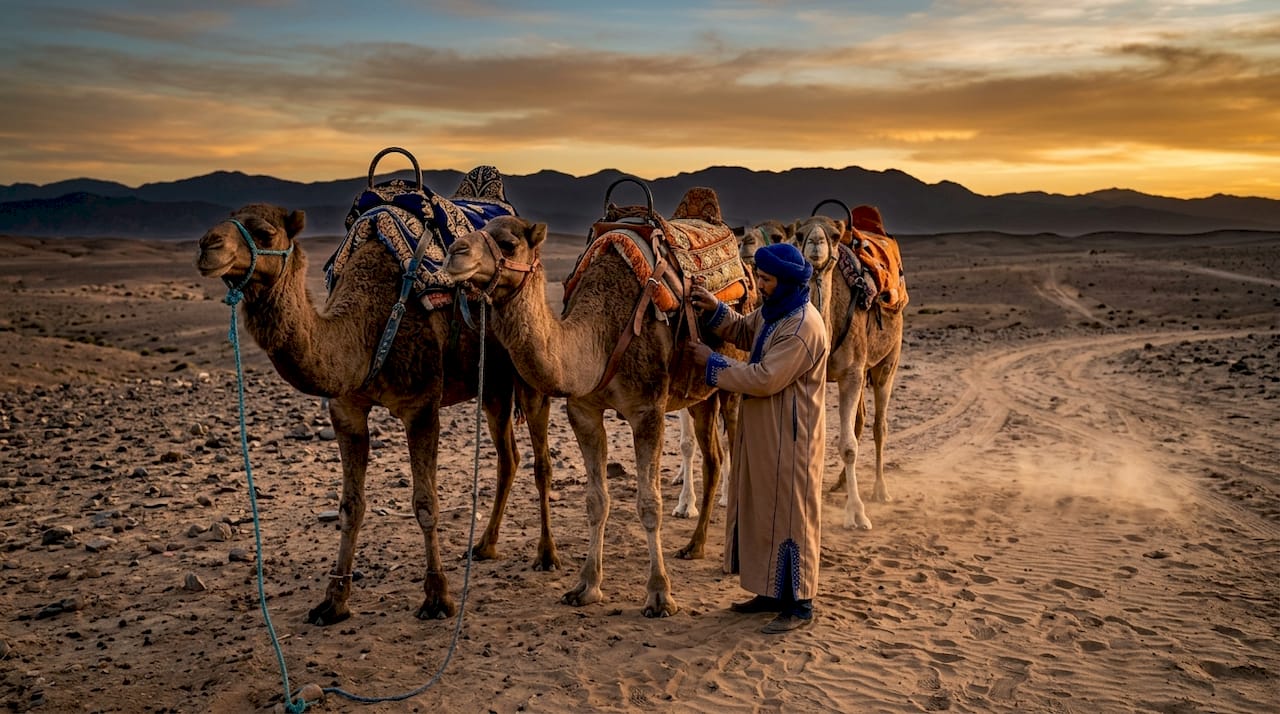
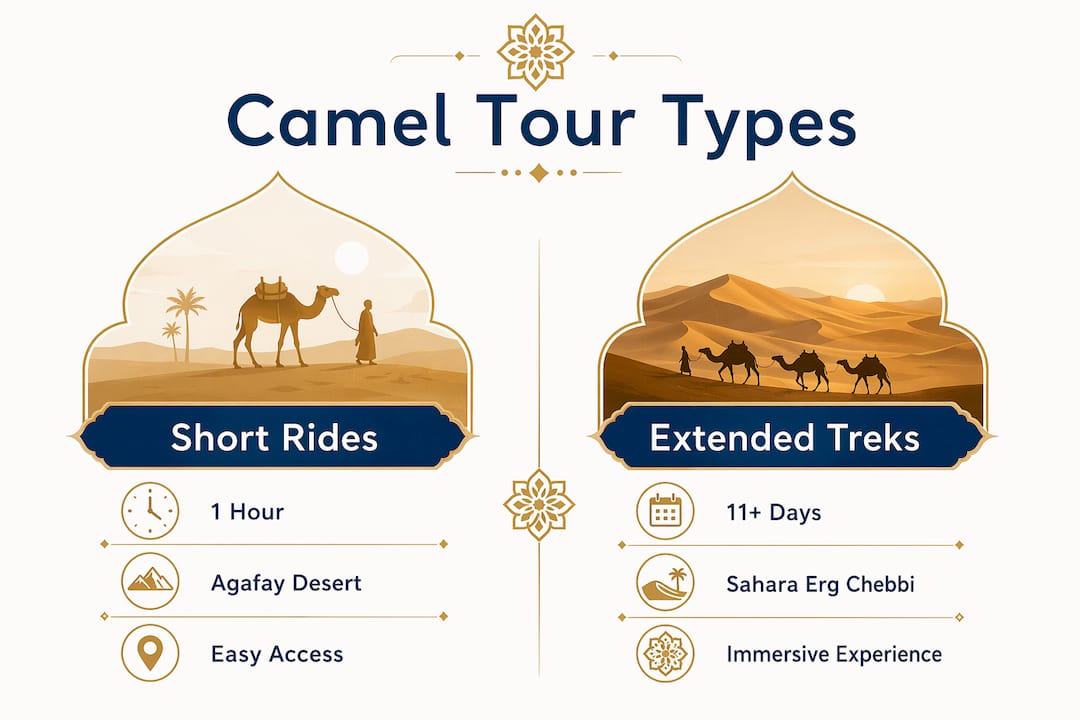
Short camel rides near Marrakech center on the Agafay Desert, a rocky plateau about 30 to 45 minutes from the city. These Agafay desert rides are ideal for travelers with limited time who still want an authentic desert encounter. A typical Agafay ride lasts about one hour, includes a traditional cheich scarf and a safety briefing, and fits within a 4 to 6-hour half-day trip, including hotel transfers. The terrain is stony rather than sandy, which makes it visually distinct from the classic Sahara image, but the light at sunset is extraordinary.
Overnight Sahara excursions are the most popular format for international visitors. These tours focus on Erg Chebbi near Merzouga and Erg Chegaga in the south. A standard Merzouga package runs 2 to 3 days and costs approximately €250 to €300 per person. That price typically covers air-conditioned transport, an English-speaking guide, sunset and sunrise camel treks of about 1.5 hours each, a desert camp stay with bedding, dinner, and breakfast. The sunrise ride back from camp is consistently rated by travelers as the most memorable part of the entire Morocco trip.
Extended camel trekking is a niche but growing format. Operators like Desert Sahara Life run 11-day Sahara treks covering over 150 kilometers across multiple erg systems on foot and camelback, priced from €980 per person with expert Berber guides and seasonal group departures. These tours require genuine physical preparation and are not suited to casual travelers.
| Tour type | Duration | Location | Approx. cost | Best for |
|---|---|---|---|---|
| Short camel ride | 1 hour ride / 4–6 hrs total | Agafay Desert, Marrakech | €30–60 | Time-limited travelers |
| Overnight Sahara excursion | 2–3 days | Erg Chebbi, Merzouga | €250–300 | First-time Sahara visitors |
| Extended camel trek | 7–14 days | Multiple erg systems | From €980 | Experienced adventure travelers |
What to expect on a typical camel riding tour in Morocco
The experience begins before you ever mount a camel. Most reputable operators provide a cheich, the traditional Tuareg-style desert scarf, which you wrap around your head and face to block sun and sand. Guides demonstrate how to tie it correctly, and this small ritual immediately signals that you are entering a different cultural register.
Mounting a camel requires attention. The animal kneels to let you on, then rises back legs first, which pitches you sharply forward before leveling out. First-time riders almost always grab the saddle horn instinctively. Once moving, the slow swaying pace is genuinely soothing, closer to a rocking chair than a horse. Most travelers find it comfortable for the first hour. After longer rides, mild pressure on the lower back or hips is normal and manageable, particularly if you relax your posture rather than bracing against the movement.
What fills the hours between mounting and camp is often underestimated:
- Berber guide interaction: Your camel handler typically speaks Tamazight, Arabic, and functional French or English. The stories they share about desert navigation, medicinal plants, and seasonal migration routes are not scripted. They are lived knowledge passed through families.
- Sunset and sunrise timing: Erg Chebbi camel treks to camp begin late afternoon and last approximately 1.5 hours, placing you at the dunes during peak golden light. The sunrise return covers the same route in reverse, with the dunes shifting from deep orange to pale gold.
- Camp amenities: Standard desert camps include Berber-style tents with mattresses and blankets, a communal dining area, and a fire pit. Dinner is typically a tagine or couscous with mint tea. Luxury camps add private en-suite tents, hot showers, and curated menus.
- Night sky access: The Sahara sits far from any major light pollution. On clear nights, the Milky Way is visible with the naked eye, and many travelers describe this as the single most affecting moment of their entire Morocco trip.
Pro Tip: Ask your guide to point out the North Star and explain how Berber caravans historically used it for navigation. It takes two minutes and transforms a beautiful sky into a living history lesson.
How to choose the best Morocco camel riding tour for your needs
Choosing between tour formats comes down to five concrete factors, and working through them in order prevents the most common booking mistakes.
- Assess your available time. If you have one free afternoon in Marrakech, an Agafay excursion is the correct choice. If you have three or more days, a Merzouga desert adventure delivers a depth of experience that a half-day ride simply cannot replicate. Do not try to compress a Sahara trip into a single overnight if you are flying out the next morning.
- Match the terrain to your expectations. Agafay is a rocky plateau desert, visually dramatic but without the iconic sand dunes. Erg Chebbi and Erg Chegaga are classic Sahara, with dunes reaching up to 150 meters. If the image in your head involves golden sand dunes at sunset, you need to go to Merzouga or Chegaga, not Agafay.
- Verify what is actually included. Bundled tour packages typically cover transport, camel treks, camp accommodation, dinner, and breakfast. Lunch and drinks often fall outside the package. Confirm in writing before booking to avoid surprises at the camp.
- Factor in seasonal timing. Spring (March to May) and autumn (September to November) are the optimal windows for extended Sahara trekking. Summer temperatures in Erg Chebbi regularly exceed 45°C, which makes multi-hour camel rides genuinely dangerous. Winter nights drop below freezing, which is manageable with proper layers but catches underprepared travelers off guard.
- Set a realistic budget. The gap between a €50 group excursion and a €300 private package is not just comfort. It is guide quality, camel condition, camp hygiene, and the ratio of travelers to handlers. Luxury Morocco desert tours from operators like Moroccotours include private guides, premium camp setups, and flexible itineraries that group tours cannot offer.
Pro Tip: Book your Sahara excursion at least two weeks in advance during peak season (October and March). Quality desert camps fill up fast, and last-minute bookings often land you in overcrowded standard tents rather than the private setups worth paying for.
Insider tips for a smooth camel trekking experience
Preparation separates a memorable camel tour from a miserable one. These are the specifics that most pre-trip guides skip.
- Pack thermal layers regardless of the season. Desert temperature swings between hot afternoons and cold nights are extreme. Even in October, temperatures can drop to near freezing after midnight. Bedding is provided at most camps, but a lightweight down jacket and thermal base layer are non-negotiable for comfort.
- Wear long, loose-fitting pants. Denim is the worst choice for camel riding. The saddle creates friction on inner thighs over extended rides, and tight fabric amplifies this. Loose linen or lightweight trekking pants work significantly better.
- Protect your electronics from sand. Fine Saharan sand infiltrates every unsealed gap. Carry a zip-lock bag for your phone and camera, and keep lens caps on until you are actively shooting. Sand damage to camera sensors is not covered by most travel insurance policies.
- Drink water before you feel thirsty. Dry desert air masks dehydration. Guides recommend at least 2 liters of water during a half-day ride, more during summer months. Most operators provide water at camp but not always during the ride itself.
- Tip your camel handler separately. The handler who walks alongside your camel for 1.5 hours in the heat is not the same person as your tour guide, and the two often split tips differently. A direct tip of €5 to €10 per person to the handler is standard practice and genuinely appreciated.
- Choose operators who are transparent about camel welfare. Well-run tours limit riding time per camel per day, provide animals with water and rest between groups, and use properly fitted saddles. If a price seems too low to cover these basics, it probably does not.
Booking strategy matters as much as packing. Read operator reviews specifically for mentions of guide quality and camp conditions, not just scenic photos. A beautiful camp photo taken in ideal light tells you nothing about the food, the sanitation, or whether the guide actually speaks your language.
Key takeaways
Morocco camel riding tours deliver the most value when the tour format, duration, and season are matched deliberately to the traveler’s schedule and expectations.
| Point | Details |
|---|---|
| Match tour type to time available | Agafay suits half-day visits; Erg Chebbi requires at least two nights for genuine immersion. |
| Verify inclusions before booking | Confirm transport, meals, and camp type in writing to avoid unexpected costs at the desert. |
| Pack for temperature extremes | Thermal layers are required even in autumn; desert nights regularly drop near freezing. |
| Seasonal timing affects safety | Spring and autumn are optimal; summer heat above 45°C makes extended rides dangerous. |
| Tip camel handlers directly | A separate €5 to €10 tip to the handler is standard practice and not included in tour fees. |
What I’ve learned from years of Morocco desert tours
Most travelers book a camel tour because of an image they saw online. The golden dunes, the silhouette at sunset, the fire at camp. What they do not expect is how quiet the desert actually is and how disorienting that silence becomes after the first hour. It is not peaceful in the way a spa is peaceful. It is vast and indifferent, and that distinction matters.
The tours I have seen go wrong almost always share one feature: the traveler chose based on price alone. A €40 group ride from a Marrakech riad looks identical to a €200 private excursion in the photos. In practice, the difference shows up in the guide’s knowledge, the camel’s condition, the camp’s food, and whether anyone checks on you during the night. I have met travelers who spent three days in a Sahara camp and barely spoke to their guide. That is not a camel trekking experience. That is a camel taxi with a tent at the end.
The Agafay Desert gets underestimated because it lacks sand dunes. That is a mistake. The rocky plateau at sunset, with the Atlas Mountains behind you and the light going amber, is one of the most photogenic landscapes in Morocco. For travelers with only one free day in Marrakech, it is the correct choice, not a consolation prize.
My honest recommendation: if you have three days, go to Merzouga. If you have one afternoon, go to Agafay. If you have two weeks and genuine physical stamina, look at extended multi-erg trekking tours that combine walking and riding across terrain most tourists never see. Each format is the right answer for a different traveler. The mistake is treating them as interchangeable.
— Moroccotours.co
Plan your Morocco camel riding tour with Moroccotours. co
Moroccotours designs private and luxury camel riding packages across Morocco, from half-day Agafay excursions to multi-day Sahara adventures in Erg Chebbi and Erg Chegaga. Every itinerary includes vetted local guides, quality desert camps, and transparent pricing with confirmed inclusions. Whether you want a single sunset ride or a full 8-day Morocco desert tour combining camel treks, imperial city visits, and luxury accommodations, Moroccotours builds the itinerary around your schedule and travel style. Browse the full range of Morocco tour packages and request a custom quote directly. No generic group tours, no hidden costs, and no compromises on the experience.
FAQ
How long does a typical Morocco camel ride last?
Short rides in the Agafay Desert last approximately one hour, while Sahara sunset and sunrise treks in Erg Chebbi each last about 1.5 hours. Total trip duration, including transfers, ranges from 4 to 6 hours for Agafay excursions and 2 to 3 days for full Sahara packages.
What is the best time of year for camel trekking in Morocco?
Spring (March to May) and autumn (September to November) are the optimal seasons for extended Sahara camel trekking. Summer temperatures regularly exceed 45°C in Erg Chebbi, making multi-hour rides unsafe, while winter nights can drop near freezing.
How much does a Morocco Sahara camel tour cost?
A standard 2- to 3-day Merzouga desert package costs approximately €250 to €300 per person and typically includes transport, English-speaking guides, sunset and sunrise camel treks, desert camp accommodation, dinner, and breakfast. Extended 11-day treks start from €980 per person.
Is camel riding physically demanding?
Camel riding is gentle-paced and suited to most fitness levels. Mild back or hip pressure can occur after longer rides, but the experience is generally comfortable and manageable. Wearing loose-fitting pants and relaxing your posture during the ride significantly reduces discomfort.
What should I pack for a Morocco desert camel tour?
Pack thermal layers for cold desert nights, loose-fitting pants for riding comfort, sun protection including a hat and sunscreen, at least 2 liters of water per half-day ride, and sealed bags to protect electronics from fine Saharan sand. Most camps provide bedding, but a lightweight down jacket adds meaningful warmth after midnight.