
Atlas Mountains: The Complete Traveler’s Guide
- The Atlas Mountains are a vast mountain range in North Africa, featuring five distinct subranges with unique ecosystems.
- They offer diverse trekking routes, cultural experiences with Amazigh communities, and dramatic landscapes influenced by climate barriers.
- Prepared travelers can explore wildlife, traditional villages, and rugged terrain while practicing responsible tourism and regional conservation efforts.
The Atlas Mountains are defined as a major mountain range in North Africa, stretching approximately 2,500 kilometers across Morocco, Algeria, and Tunisia. Morocco holds the most dramatic section, including Mount Toubkal at 4,167 meters, the highest peak on the continent north of the Sahara. Most travelers arrive expecting desert and leave stunned by alpine meadows, cedar forests, and Amazigh villages that feel entirely removed from the modern world. This guide covers every layer of the range: its geography, best trails, cultural depth, and the practical details that separate a good trip from a great one.
What are the main subranges of the Atlas Mountains?
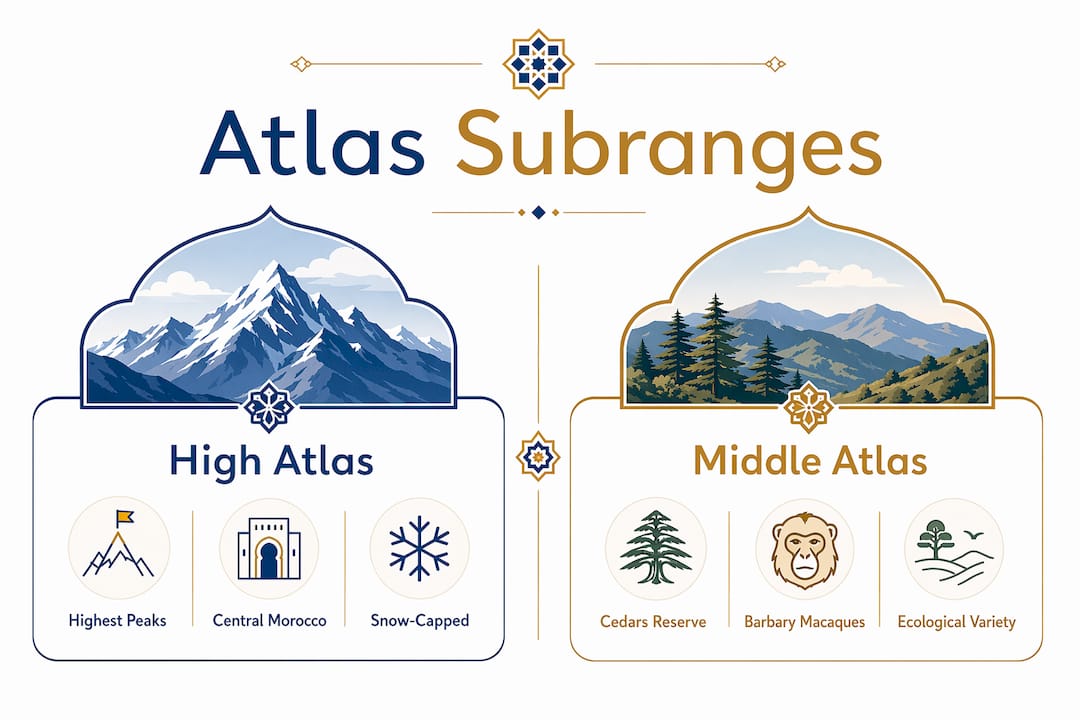
The range is not a single wall of rock. It divides into five distinct subranges, each with its own character, elevation, and ecosystem.
| Subrange | Location | Key Feature |
|---|---|---|
| High Atlas | Central Morocco | Highest peaks, including Toubkal |
| Middle Atlas | North-central Morocco | Cedar forests, lakes, Barbary macaques |
| Anti-Atlas | Southern Morocco | Arid plateaus, ancient geology |
| Tell Atlas | Northern Algeria and Tunisia | Mediterranean-facing slopes |
| Saharan Atlas | Southern Algeria | Transition zone toward the Sahara |
The High Atlas runs about 700 kilometers from Morocco’s Atlantic coast to the Algerian border. Snow covers its peaks from October through June, and mountain passes cut through the range at significant elevation. The Tizi n’Tichka Pass sits at 2,260 meters and connects Marrakech to Ouarzazate. Driving through it gives you one of the most dramatic landscape transitions you will find anywhere in Africa.
The range’s climatic role is just as significant as its physical scale. The Atlas acts as a barrier separating Mediterranean and Atlantic climates from the Saharan interior. One side of Tizi n’Tichka receives reliable winter rainfall and supports green valleys. The other side drops into dry, ochre-colored plains that eventually become the Sahara. That contrast is visible in a single afternoon of driving.
The Middle Atlas deserves more attention than it typically gets. This subrange holds the Atlas Cedar Biosphere Reserve, which contains 75% of the world’s Atlas cedar population. That figure reflects how globally rare this ecosystem is. Tourism and agricultural pressure are stressing these forests, which makes responsible travel here more than a courtesy. It is a genuine conservation issue.
Wildlife in the Atlas Mountains reflects this ecological variety. The Middle Atlas supports Barbary macaques, the only wild primates in Africa north of the Sahara. Golden eagles patrol the High Atlas ridgelines. Mouflons, a wild sheep species, inhabit the rocky upper slopes. Travelers focused on wildlife in the Atlas Mountains should target the Middle Atlas in spring, when forest cover is dense and animal activity peaks.
How do you trek and hike in the Atlas Mountains?
Hiking in the Atlas Mountains centers on Mount Toubkal, but the range offers far more than one summit. The trail network spans everything from half-day valley walks to multi-week circuits through remote Amazigh villages.
Trekking mount toubkal: what to expect
The standard Toubkal trek follows a 3-day itinerary starting from Imlil, a village about 60 kilometers south of Marrakech. The structure is straightforward.
- Day 1: Drive from Marrakech to Imlil, then hike to the Toubkal Refuge at 3,207 meters. This leg involves an elevation gain of 1,467 meters and takes roughly 4–5 hours.
- Day 2: Summit push from the refuge to the 4,167-meter peak, gaining 960 meters. Most trekkers start before dawn to reach the top by mid-morning and descend back to the refuge by early afternoon.
- Day 3: Descend from the refuge to Imlil and return to Marrakech.
This pacing exists for a reason. Ascending too quickly causes altitude sickness, which ranges from headaches and nausea to more serious symptoms. The 3-day structure builds in acclimatization time at the refuge before the summit push. Skipping it to save a day is the most common mistake first-time trekkers make.
Licensed guides cost 500–1,000 MAD per day as of early 2026. Hiring one is strongly recommended, not just for navigation but for safety on the upper scree slopes, which become genuinely dangerous in icy conditions. A guide also handles logistics at the refuge and can read weather changes faster than any app.
Other trails worth your time
The best trails in the Atlas Mountains extend well beyond Toubkal. The M’Goun Massif circuit in the Central High Atlas is a 4–6 day trek through gorges and high plateaus that sees a fraction of Toubkal’s traffic. The Azzaden Valley route out of Imlil offers a quieter alternative for trekkers who want alpine scenery without summit pressure. For a shorter experience, the walk from Setti Fatma up through the Ourika Valley waterfalls takes about 2 hours and suits all fitness levels.
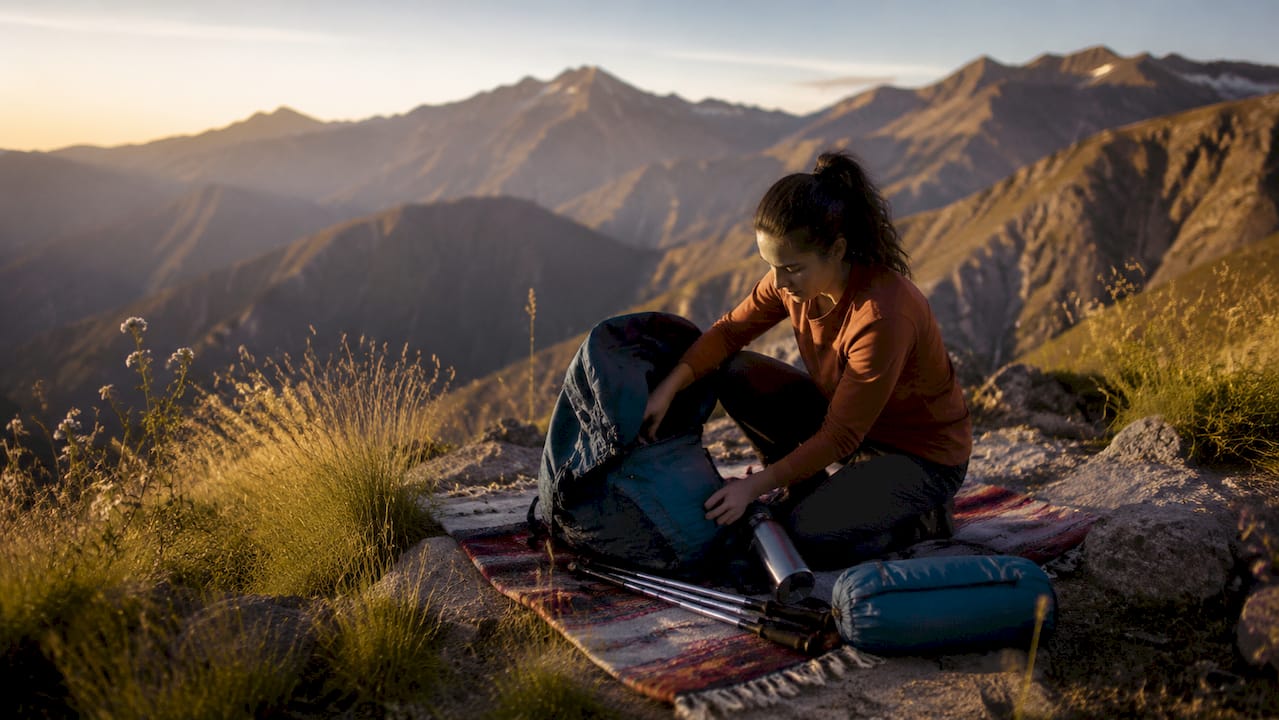
Fitness requirements vary sharply by route. Toubkal demands solid cardiovascular fitness and experience with long ascents. Valley walks and village-to-village routes are accessible to most travelers with basic hiking experience. Gear for any serious trek should include layered clothing, waterproof boots, trekking poles, and a headlamp for pre-dawn summit starts.
Pro Tip: Book your Imlil guesthouse at least two weeks ahead between April and June, when the trail is at peak capacity. Arriving without a reservation in high season means sleeping on a refuge floor.
The best seasons for trekking in the Atlas Mountains are spring (April through June) and fall (September through November). Summer is viable at altitude but brutally hot in the valleys. Winter treks are possible with crampons and ice axes, but they require technical mountaineering experience.
What cultural experiences do the Atlas Mountains offer?
The Atlas Mountains are home to Amazigh (Berber) communities who have maintained distinct languages, architecture, and traditions for centuries. This is not a reconstructed cultural experience for tourists. These are living communities with their own rhythms, and engaging with them thoughtfully is the most rewarding part of any Atlas Mountains travel guide.
Life in amazigh villages
Amazigh villages in the High Atlas are built from pisé, a compressed earth and straw material that keeps interiors cool in summer and warm in winter. Flat rooftops double as drying areas for herbs, corn, and walnuts. The architecture blends into the hillside so completely that villages can be hard to spot from a distance.
Key cultural experiences available to visitors include:
- Homestays and guesthouses: Many villages operate family-run guesthouses where you sleep in traditional rooms and eat home-cooked tagines. This is the most direct way to support local economies.
- Artisan crafts: Amazigh women produce hand-woven carpets with geometric patterns specific to their region. Buying directly from the weaver cuts out middlemen and keeps income local.
- Local festivals: The Rose Festival in Kelaat M’Gouna (held each May) and various moussems (local religious celebrations) offer genuine cultural access. Dates shift annually, so check before planning around them.
- Traditional cuisine: Expect slow-cooked lamb tagine, couscous on Fridays, and argan oil used in both cooking and as a table condiment. Mint tea is served at every social interaction, and refusing it is considered impolite.
Responsible tourism in the Atlas Mountains means more than not littering. Photography of local women requires explicit permission. Bargaining aggressively in village markets undercuts livelihoods. Dressing modestly in villages, covering shoulders and knees, signals respect and opens doors that casual tourist behavior closes.
Pro Tip: Learn five words of Tamazight, the Amazigh language, before arriving. “Azul” means hello. The response you get from locals when you use it is worth every second of practice.
For travelers who want to combine Berber village experiences with broader Moroccan cultural context, pairing an Atlas stay with a visit to Marrakech’s medina creates a sharp and instructive contrast. You can also explore home exchange options in Marrakech as a base before heading into the mountains.
What practical tips should travelers know before visiting?
The Atlas Mountains reward preparation. Several logistical realities catch first-time visitors off guard, and knowing them in advance changes the quality of your trip significantly.
Getting around the mountains
Road distances are misleading. A 100-kilometer drive often takes 3 hours on winding mountain roads. Build that math into every day’s plan. Renting a 4×4 vehicle is worth the extra cost for any route beyond the main Marrakech-to-Ouarzazate highway. Local drivers use a quick horn beep before blind bends as a warning to oncoming traffic. Follow that practice if you are driving yourself.
Accommodation options
The range offers a wider spread of accommodation than most travelers expect:
- Luxury mountain lodges: Properties like Kasbah du Toubkal near Imlil offer high-end rooms with mountain views and full service.
- Eco-lodges: Several operators in the Middle Atlas run solar-powered lodges with locally sourced food.
- Village guesthouses: Basic but authentic, these are the best option for cultural immersion and cost roughly 200–400 MAD per night, including dinner.
- Mountain refuges: The Toubkal Refuge provides dormitory beds for trekkers. Book ahead in peak season.
Weather, water, and health
Weather in the High Atlas changes fast. Morning sun can become afternoon hail at elevation with almost no warning. Pack a waterproof layer regardless of the forecast. Temperatures at the Toubkal refuge drop below freezing even on summer nights.
Water is scarce in parts of the range. The Atlas Cedar Biosphere Reserve faces pressure from tourism on its water resources. Carry a water filter or purification tablets rather than buying single-use plastic bottles. This reduces both waste and your environmental footprint in a region where both matter.
Health precautions beyond altitude awareness include sun protection at elevation, where UV exposure is significantly higher than at sea level. Carry a basic first aid kit with blister treatment, since even short hikes on rocky terrain can cause foot problems quickly.
Key takeaways
The Atlas Mountains reward travelers who prepare for both physical challenge and cultural depth, making them one of North Africa’s most complete adventure destinations.
| Point | Details |
|---|---|
| Scale and geography | The range spans 2,500 km across three countries, with Morocco holding the highest peaks and most dramatic terrain. |
| Toubkal trekking | Follow the 3-day itinerary from Imlil to manage altitude safely; hire a licensed guide for 500–1,000 MAD per day. |
| Cultural access | Amazigh villages offer homestays, crafts, and festivals that provide genuine cultural immersion when approached respectfully. |
| Driving realities | A 100 km mountain drive takes about 3 hours; use a 4×4 and learn local road customs before self-driving. |
| Environmental responsibility | The Atlas Cedar Biosphere Reserve holds 75% of the world’s cedar population and needs careful, low-impact tourism. |
Why the atlas mountains surprised me more than any other destination
I have planned and led tours across Morocco for years, and the Atlas Mountains still catch me off guard. Not because of the peaks, though Toubkal’s summit view is genuinely extraordinary. What surprises me is how many travelers arrive with a single goal, usually Toubkal, and miss the range’s actual depth.
The M’Goun circuit, for example, is a better trek for most travelers than Toubkal. It is longer, more varied, and far less crowded. The villages along the route have had less exposure to mass tourism, which means interactions feel more natural and less transactional. I recommend it to anyone who asks what I would do if I had a week and no agenda.
The cultural side is where I see the most missed opportunities. Travelers rush through Amazigh villages on the way to a summit and skip the guesthouse dinner that would have been the highlight of their trip. Sitting with a family over a shared tagine, watching the host pour tea from a height to create foam, and listening to stories told through a translator: that is the Atlas at its best.
My honest warning is about timing. The window between late April and early June is the best in the range. Wildflowers cover the lower slopes, snow still caps the peaks, and the light in the late afternoon turns the valleys gold. Miss that window and you are either fighting summer heat in the valleys or winter ice on the trails. Plan around it.
— Moroccotours.co
Plan your atlas mountains trip with Moroccotours
Moroccotours designs private, expert-led tours that take the logistics out of Atlas Mountains travel without removing the authenticity. From luxury Morocco tours that include high-end mountain lodges and private guides to guided trekking itineraries built around your fitness level and cultural interests, every package is built around your specific goals. The team handles mountain road transfers, guesthouse bookings, licensed guide arrangements, and cultural access that independent travelers often miss. If you want the Atlas Mountains done properly, Moroccotours builds the itinerary that gets you there.
FAQ
What is the highest peak in the Atlas Mountains?
Mount Toubkal is the highest peak at 4,167 meters (13,671 feet), located in Morocco’s High Atlas range. It is the tallest mountain in North Africa.
How long does it take to trek Mount Toubkal?
The standard trek takes 2–3 days starting from the village of Imlil, following a structured itinerary that includes an overnight stay at the Toubkal Refuge for acclimatization.
When is the best time to visit the Atlas Mountains?
Spring (April through June) and fall (September through November) offer the most reliable weather for hiking and cultural visits. Summer is hot in the valleys; winter requires technical gear at altitude.
Do I need a guide to hike in the Atlas Mountains?
A licensed guide is strongly recommended for Toubkal and any high-altitude route. Guides cost 500–1,000 MAD per day and provide navigation, safety support, and local knowledge that significantly improves the experience.
What wildlife can I see in the Atlas Mountains?
The Middle Atlas is home to Barbary macaques, golden eagles, and mouflon. The Atlas Cedar Biosphere Reserve also supports rare plant species and fragile forest ecosystems that are best visited with a responsible tour operator.