
Discover Morocco’s Coastal Towns: Culture, and Adventure
Most travelers picture Morocco and immediately think of the Sahara’s towering dunes or the labyrinthine souks of Marrakech. It’s an understandable association, but it leaves out something extraordinary. Morocco’s Atlantic and Mediterranean coastline stretches for nearly 1,800 miles, threading through fishing villages, surf breaks, and lagoons that feel nothing like the Morocco you’ve read about. These Morocco coastal towns offer a slower, richer, and surprisingly version of the country. Whether you’re planning a romantic escape, a family adventure, or a solo cultural journey, the coast delivers experiences that the desert and the imperial cities simply cannot replicate.
Table of Contents
- The allure of Morocco’s coastal getaways
- Spotlight on top coastal towns: What makes each unique
- Local culture, creative scenes, and authentic encounters
- Seamless: Modern comfort, eco-experiences, and personal service
- Planning your Moroccan coastal escape: Tours, timing, and itineraries
- Our perspective: Rethinking and authenticity on Morocco’s coast
- Ready for your Moroccan coastal journey?
- Frequently asked questions
Key Takeaways
| Point | Details |
|---|---|
| Cultural fusion | Morocco’s coastal towns uniquely blend top-tier comforts with vibrant local traditions and creative scenes. |
| Distinctive towns offer variety | From surfer’s paradises to serene lagoons, each coastal destination has its own signature experience. |
| Immersive adventures await | Interactive activities and creative local encounters make for a richer, more personal vacation. |
| Seamless planning possible | Personalized tours and hospitality services ensure a relaxed and elegant journey along the Moroccan coast. |
The allure of Morocco’s coastal getaways
There’s a reason experienced travelers keep returning to Morocco’s coast. It isn’t just the scenery, though the Atlantic light hitting whitewashed walls at sunset is genuinely stunning. It’s the feeling that you’ve found a version of Morocco that hasn’t been packaged and sold a thousand times over.
Morocco’s coastal towns contrast busier imperial cities like Marrakech by offering relaxed, authentic vibes with manageable medinas, year-round winds for watersports, and less commercial development. This matters enormously for travelers who want genuine connection rather than a curated performance. You can walk through a coastal medina without being followed by persistent vendors. You can sit in a café and watch fishermen unload their morning catch. That kind of unhurried authenticity is increasingly rare and deeply valuable.
The coastal towns also cater exceptionally well to upscale tastes. seekers find high-end riads, beach clubs, spas, and eco-resorts combining Moroccan craftsmanship with modern comforts, often with private transfers and expert local guides for seamless cultural depth. This isn’t generic five-star. It’s that feels rooted in place, where the tilework was laid by a local artisan and the breakfast spread features ingredients sourced from the cooperative down the road.
Here’s what sets Morocco’s coastal towns apart from every other beach destination in the Mediterranean or beyond:
- Year-round wind consistency that makes them world-class destinations for kitesurfing, windsurfing, and surfing
- Smaller, more walkable medinas that reward slow exploration without the sensory overload of Fes or Marrakech
- Vibrant creative communities of artists, musicians, and craftspeople who have settled in these towns precisely because of their relaxed energy
- Direct access to natural wonders including lagoons, argan forests, and protected bird sanctuaries
- A genuine blend of cultures where Amazigh, Arabic, Portuguese, and French influences coexist in architecture, food, and daily life
“The coast offers something the imperial cities cannot: the feeling that you have stumbled upon Morocco rather than been shown it.”
If you want a trip that balances cultural richness with genuine relaxation, the Morocco Signature Tour highlights exactly this kind of layered coastal and cultural experience. The coast isn’t a compromise. For many travelers, it becomes the highlight of their entire Morocco journey.
Spotlight on top coastal towns: What makes each unique
Understanding that Morocco’s coast is special is one thing. Knowing which town fits your travel style is another. Three destinations stand out for travelers: Agadir, Taghazout, and Oualidia. Each has a distinct personality, and each rewards a different kind of visitor.
Agadir is Morocco’s most developed beach resort city. It was almost entirely rebuilt after a devastating earthquake in 1960, which means its architecture is modern and its infrastructure is genuinely world-class. The beach is wide, clean, and stretches for miles. International hotel brands sit alongside boutique properties, and the dining scene ranges from fresh seafood shacks to sophisticated rooftop restaurants. Agadir and Taghazout provide beach resorts, surfing spots, and relaxation with modern facilities and proximity to argan oil cooperatives. A visit to one of these cooperatives, where Amazigh women produce the world’s most prized culinary and cosmetic oil, is one of the most memorable half-day excursions you can take from Agadir.
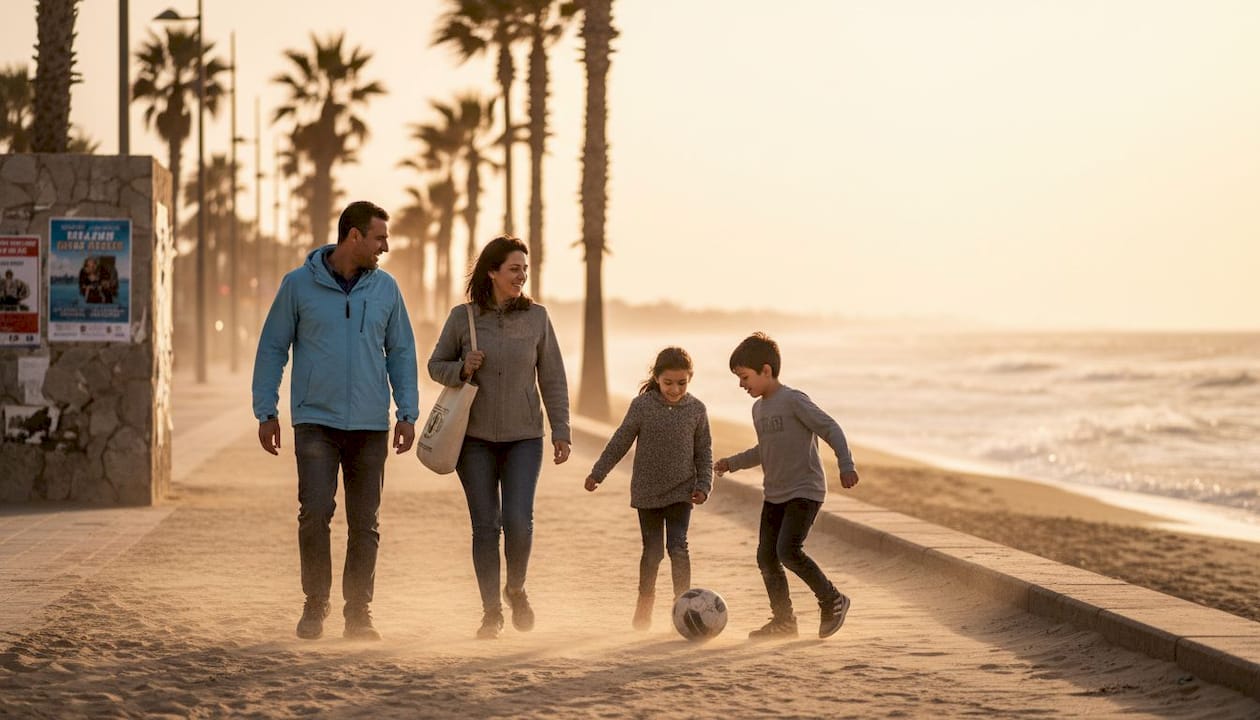
Taghazout, just 20 kilometers north of Agadir, operates on an entirely different frequency. It was a quiet fishing village before the global surf community discovered its legendary point breaks. Today it sits in a fascinating middle ground: still small and soulful, but equipped with excellent surf camps, yoga retreats, and boutique guesthouses with ocean views. The pace here is slow and intentional. You wake up to the sound of waves, eat grilled fish for lunch, and watch the sunset from a rooftop terrace. For couples or solo travelers who want beauty without bustle, Taghazout is close to perfect.
Oualidia is the most underrated of the three. Oualidia is renowned for its serene lagoon, oyster farms, birdwatching, paddleboarding, and resorts like La Sultana with private pools and gourmet seafood. The lagoon is protected and extraordinarily calm, making it ideal for kayaking and paddleboarding even for beginners. The oysters here are farmed in clean Atlantic waters and served fresh at waterside restaurants. It’s the kind of place where you can spend three days doing almost nothing and feel completely restored.
| Town | Best for | Signature experience | Level |
|---|---|---|---|
| Agadir | Families, first-timers | Beach clubs, argan cooperatives | High |
| Taghazout | Surfers, wellness seekers | Surfing, yoga, sunset rooftops | Mid to high |
| Oualidia | Couples, nature lovers | Lagoon kayaking, fresh oysters | Very high |
Key activities across these three towns include:
- Surfing and kitesurfing at Taghazout’s world-famous breaks
- Oyster tasting and lagoon paddleboarding in Oualidia
- Argan oil cooperative tours near Agadir
- Spa treatments featuring traditional hammam rituals
- Private boat excursions along the Atlantic coast
Pro Tip: When booking accommodations in any of these towns, specifically request a private guide for at least one full day. A knowledgeable local guide transforms a pleasant visit into a genuinely immersive experience, opening doors to artisan workshops, family-run restaurants, and hidden viewpoints that no guidebook lists. This is especially valuable for a Moroccan honeymoon holiday tour, where personal touches make all the difference.
Local culture, creative scenes, and authentic encounters
The cultural life of Morocco’s coastal towns is one of their most underappreciated qualities. These aren’t just pretty places to lie on a beach. They are living communities with deep artistic traditions, layered histories, and a creative energy that draws painters, writers, musicians, and filmmakers from around the world.
The unique attractions include Gnawa music, artisan workshops, fresh sardines on grill street, quad biking on beaches, and a blending of Arabic and Amazigh and Portuguese influences in coastal architecture. Each of these elements tells a story about how Morocco’s coast became what it is today.
Gnawa music deserves particular attention. It’s one of the world’s most distinctive musical traditions, rooted in the spiritual practices of sub-Saharan African communities brought to Morocco centuries ago. Hearing it performed live, especially in an intimate coastal setting rather than a tourist-facing venue, is an experience that stays with you. The rhythms are hypnotic, the instruments unusual, and the communal energy is unlike anything you’ll encounter in a concert hall.
The architecture along the coast is equally telling. In Essaouira, a town worth adding to any coastal itinerary, Portuguese ramparts frame Atlantic views while blue- and white-painted streets recall Andalusian influences. In smaller villages, Amazigh geometric patterns appear on doorways and textiles alongside Arabic calligraphy. This is not a museum exhibit. It’s simply how people live here, and that naturalness makes it far more compelling.
| Cultural element | Where to find it | Best time |
|---|---|---|
| Gnawa music | Essaouira festivals, coastal cafés | June (Gnawa Festival) |
| Artisan workshops | Medinas, cooperative studios | Morning hours |
| Fresh sardine grills | Harbors and fish markets | Midday |
| Amazigh textile crafts | Weekly souks, rural cooperatives | Weekend markets |
Here are five immersive cultural activities every coastal visitor should prioritize:
- Attend a Gnawa music session in a local café or during the Essaouira Gnawa Festival, held each June and drawing international artists alongside local masters
- Join an artisan workshop where you can try your hand at traditional pottery, leather dyeing, or weaving under the guidance of a master craftsperson
- Walk the harbor at dawn in any fishing town and watch the boats return, then buy directly from fishermen and arrange for a local restaurant to cook your catch that evening
- Take a quad biking excursion along the beach and into the surrounding landscape, which often reveals Amazigh villages and argan forests inaccessible by road
- Visit a weekly souk in a smaller coastal town, where locals shop for produce, spices, and household goods in a setting completely untouched by tourism
“The coast doesn’t perform its culture for visitors. It simply lives it, and that’s exactly what makes it so compelling.”
For travelers who want to go deeper into Morocco’s cultural fabric, a Morocco group tour with a cultural focus can structure these encounters into a coherent and deeply satisfying journey.
Seamless: Modern comfort, eco-experiences, and personal service
Morocco’s coast doesn’t announce itself with marble lobbies and uniformed doormen, though those exist too. More often, it reveals itself quietly: in the handwoven blanket on your bed, the cedar-scented steam of a private hammam, or the moment your guide arranges an impromptu lunch at a family home because you mentioned you loved couscous.
Seekers find high-end riads, beach clubs, spas, and eco-resorts combining Moroccan craftsmanship with modern comforts, often with private transfers and expert local guides for seamless cultural depth. The best properties on the coast have mastered this balance. They offer genuine comfort without stripping away the Moroccan character that makes staying here so different from a resort in the Maldives or the Algarve.
Eco-conscious travel is increasingly central to the coastal Morocco experience. Several properties have built their entire identity around sustainability, using solar energy, sourcing food from local farms, employing staff from surrounding villages, and minimizing plastic use. Staying at one of these properties doesn’t require sacrificing comfort. In many cases, the food is better because it’s fresher, the service is warmer because the staff have a genuine stake in the property, and the experience feels more meaningful because your visit contributes directly to the local economy.
What personalized looks like in practice on Morocco’s coast:
- Private airport transfers in comfortable vehicles with a knowledgeable driver who can brief you on the region during the journey
- Tailored excursions built around your specific interests, whether that’s photography, cooking, surfing, birdwatching, or all four
- In-room hammam treatments performed by trained therapists using traditional black soap and argan oil
- Private cooking classes with a local chef who takes you to the market first, then guides you through preparing a full Moroccan feast
- Sunset sailing on a traditional wooden vessel with a curated mezze spread and local wine
Pro Tip: When researching accommodations, ask directly whether the property holds any local sustainability certifications or participates in community employment programs. Properties that can answer this question specifically and enthusiastically tend to offer a far more authentic and rewarding stay than those that simply use the word “eco” in their marketing materials.
For travelers who enjoy combining coastal relaxation with outdoor pursuits, an eco-friendly golf holiday near Agadir pairs beautifully with beach days and cultural excursions. And if you want a broader overview of what Morocco’s premium experiences look like end to end, the Morocco Highlights Tour weaves coastal into a complete national itinerary.
Planning your Moroccan coastal escape: Tours, timing, and itineraries
Getting the timing right makes a significant difference on Morocco’s coast. Unlike the desert, where extreme summer heat limits comfortable travel to specific windows, the coast is genuinely accessible year-round. That said, each season brings a different character.
Spring (March to May) is widely considered the ideal time for most travelers. Temperatures are warm but not hot, the landscape is green from winter rains, and the tourist crowds haven’t yet arrived. It’s also an excellent time for birdwatching in Oualidia’s lagoon, where migratory species stop on their journey between Europe and Africa.
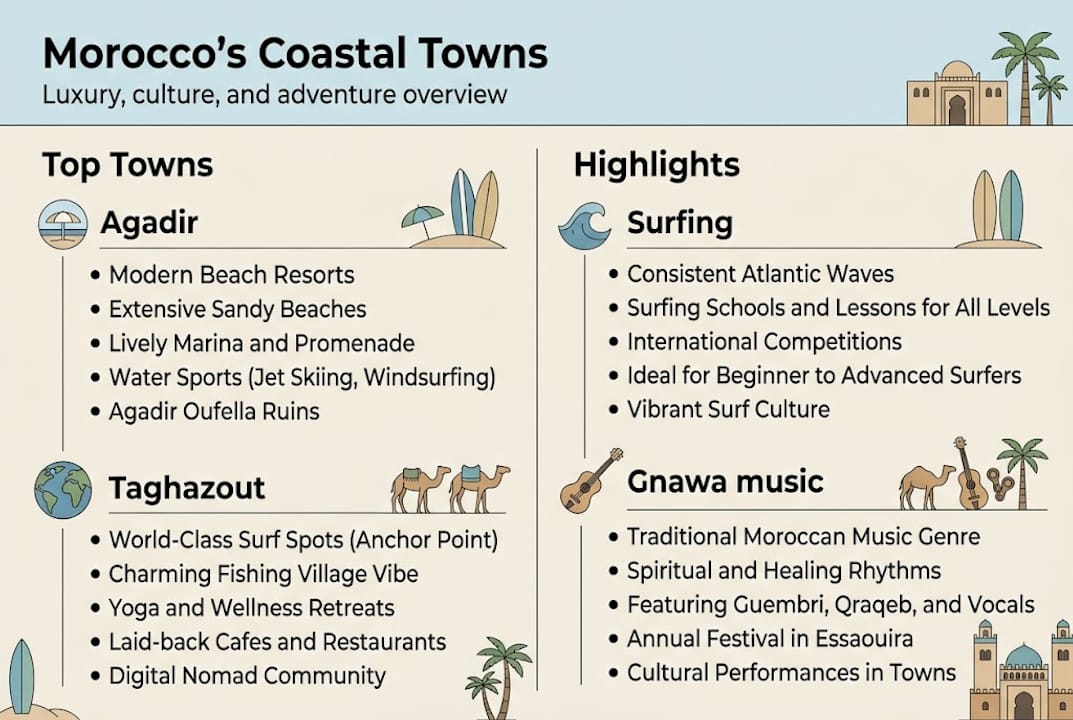
Summer (June to August) brings the warmest beach weather and the most vibrant social scene, particularly in Agadir. The Essaouira Gnawa Festival in June is a world-class cultural event worth planning a trip around. Be aware that July and August see the highest prices and the most visitors, so booking well in advance is essential.
Fall (September to November) is the surfer’s season. The Atlantic swells build through September and peak in October and November, making Taghazout’s breaks some of the best in the world during this window. The weather remains warm, and the crowds thin out considerably after the summer peak.
Winter (December to February) is quieter and cooler, but rarely cold in the beach towns. Agadir and Taghazout provide beach resorts, surfing spots, and relaxation with modern facilities even in winter, making them popular escape destinations for Europeans seeking sunshine during the gray northern months.
Here’s how to structure a well-rounded coastal Morocco trip:
- Define your priorities before you book anything. Are you primarily here for beach relaxation, surfing, cultural exploration, culinary experiences, or a combination? Your answer shapes everything from which towns you visit to what type of accommodation suits you best.
- Choose a base town and make day trips rather than moving every night. Agadir works well as a base for exploring the Souss Valley, argan cooperatives, and Taghazout. Oualidia is better suited as a dedicated retreat destination.
- Build in cultural half-days even if your trip is primarily beach-focused. A morning at an artisan cooperative or a harbor walk costs nothing but adds enormous richness to your experience.
- Book private transfers between towns rather than relying on public transport. The journey between Agadir and Essaouira, for example, passes through an extraordinary landscape that deserves to be seen at your own pace with someone who can explain what you’re looking at.
- Contact a specialist tour operator early, especially for peak season travel. Personalized itineraries take time to build properly, and the best guides and properties book up months in advance.
A well-designed coastal itinerary might look like this:
- Days 1 to 3: Agadir, beach acclimatization, argan cooperative tour, hammam experience
- Days 4 to 5: Taghazout, surf lesson or yoga retreat, sunset rooftop dinner
- Days 6 to 8: Oualidia, lagoon kayaking, oyster tasting, La Sultana spa day
- Days 9 to 10: Essaouira, medina walk, Gnawa music evening, Atlantic rampart views
For families, this kind of itinerary adapts beautifully. The Morocco Family Vacation tour is specifically designed to balance adult with activities that genuinely engage children, from camel rides to cooking classes to beach games.
Our perspective: Rethinking and authenticity on Morocco’s coast
Here’s something we’ve noticed over years of designing Moroccan travel experiences: the travelers who are most transformed by Morocco are almost never the ones who came for the obvious things. They came for the Sahara and left talking about a conversation with a fisherman in Oualidia. They came for the souks of Marrakech and found their most meaningful moment watching the Atlantic from a Taghazout rooftop at dawn.
Conventional wisdom still treats Morocco’s coast as a secondary option, a beach add-on to the “real” Morocco of the imperial cities and the desert. We think that’s backwards. The coast is where Morocco’s complexity becomes most accessible. The cultural layers are visible without being overwhelming. The is genuine without being alienating. The pace allows you to actually absorb what you’re experiencing rather than rushing to the next landmark.
There’s also something important about the creative communities that have taken root in these coastal towns. Artists, musicians, and craftspeople choose to live here because the environment feeds their work. When you travel in places like that, their energy is contagious. You start noticing things differently. You slow down. You ask questions you wouldn’t think to ask in a more commercialized destination.
The real of Morocco’s coast isn’t the thread count of your sheets or the size of your pool, though both can be excellent. It’s the quality of your attention. These towns reward travelers who are willing to show up without a rigid agenda and let the place surprise them. That’s the kind of travel that actually changes you.
Ready for your Moroccan coastal journey?
The coastal towns of Morocco are waiting to show you a side of the country that most travelers never discover. At MoroccoTours.co, we specialize in building personalized itineraries that capture exactly this kind of layered, luxurious, and genuinely authentic experience. Whether you’re planning a romantic escape with a Morocco travel package focus, a family adventure, or a solo cultural journey, we handle every detail so you can simply arrive and be present. Our expert local guides, handpicked accommodations, and private transfers ensure that your coastal Morocco trip feels effortless and extraordinary. Explore our Morocco Signature Tour as a starting point, or reach out to our team to build something entirely your own.
Frequently asked questions
Which Moroccan coastal towns are best for travelers?
Agadir, Taghazout, and Oualidia are the top choices, with beach resorts and surfing in the first two and a world-class lagoon resort experience at properties like La Sultana in Oualidia. Each town offers a distinct atmosphere, so your choice depends on whether you prioritize activity, wellness, or serene natural beauty.
Are Morocco’s coastal towns family-friendly?
Absolutely, with modern resort facilities in Agadir and Taghazout providing gentle beaches, paddleboarding, and cultural activities suitable for all ages. The manageable scale of these towns also makes them far easier to navigate with children than Morocco’s larger imperial cities.
What unique cultural experiences can travelers find on the Moroccan coast?
Expect Gnawa music, artisan workshops, fresh sardine grills at harbor markets, and architecture that blends Arabic, Amazigh, and Portuguese influences in ways you won’t find anywhere else. These experiences are woven into daily life rather than staged for tourists, which makes them far more memorable.
Is it easy to combine beach relaxation with cultural activities in Morocco’s coastal towns?
Yes, because coastal towns offer relaxed vibes and manageable medinas alongside world-class beaches, making it simple to spend a morning exploring an artisan souk and an afternoon on a sun lounger. Most cultural attractions are within easy reach of the main resort areas, requiring no complicated logistics.