
Morocco Atlas trekking: your guide to authentic mountain adventure
- The Atlas Mountains in Morocco are accessible and suitable for all levels, from beginners to experienced hikers.
- Guided, customizable treks offer cultural immersion, scenic variety, and options for comfort experiences.
- Proper planning, acclimatization, and respecting safety protocols are essential for a safe and rewarding trek.
Most people hear “Atlas Mountains trekking” and picture seasoned climbers with ice axes and oxygen tanks. That image couldn’t be further from reality. The Atlas range in Morocco is one of the most accessible, culturally rich, and genuinely rewarding trekking destinations on the planet, and it welcomes everyone from first-time hikers to experienced mountaineers. Whether you want to summit North Africa’s highest peak or sip mint tea in a Berber village after a gentle valley walk, this guide breaks down exactly what Atlas trekking is, what to expect, and how to plan an experience that fits your pace, budget, and appetite for adventure.
Table of Contents
- What is Morocco Atlas trekking?
- Why choose the Atlas Mountains for trekking?
- How and personalized trekking is changing the Atlas experience
- Safety, guides, and practical planning
- What most trekkers miss about the Atlas Mountains
- Discover your perfect Atlas adventure with our curated tours
- Frequently asked questions
Key Takeaways
| Point | Details |
|---|---|
| Atlas trekking defined | Trekking in Morocco’s Atlas Mountains spans rugged adventure to comfort, with options for all experience levels. |
| Mandatory guides | Since 2018, a certified trekking guide has been required for all routes to ensure safety and cultural respect. |
| Options available | Personalized itineraries now blend authentic mountain culture with modern amenities and support services. |
| Preparation matters | Layered clothing, water purification, and acclimatization are essential for a safe and rewarding trek. |
| Cultural immersion | True highlights come from engaging with Berber villages and embracing local mountain hospitality. |
What is Morocco Atlas trekking?
Atlas trekking in Morocco means traveling on foot through the Atlas Mountain range, a dramatic spine of peaks, valleys, gorges, and plateaus that stretches roughly 2,500 kilometers across Morocco, Algeria, and Tunisia. The Moroccan section alone covers three distinct ranges: the High Atlas, the Middle Atlas, and the Anti-Atlas. Each offers a completely different character, altitude, and cultural flavor.
The High Atlas is the star of the show. It contains Jbel Toubkal, which stands at 4,167 meters and holds the title of the highest peak in North Africa. But here’s what most people miss: you don’t have to summit Toubkal to have a transformative Atlas experience. The range is threaded with hundreds of trails, ranging from easy half-day valley walks to demanding multi-day ridge traverses.
The main types of Atlas treks include:
- Day hikes: Accessible from Marrakech in under two hours, these routes wind through villages like Imlil and Setti Fatma, offering dramatic scenery without requiring overnight gear.
- Multi-day expeditions: Routes like the classic Toubkal circuit or the M’Goun traverse cover 50 to 120 kilometers over four to ten days, crossing high passes and remote Berber communities.
- Cultural walking tours: Lower-altitude routes focused on visiting traditional villages, meeting local families, and exploring ancient irrigation systems called khettaras.
- Comfort treks: Guided itineraries where support teams carry gear, prepare gourmet meals, and arrange stays in mountain lodges or tented camps.
| Trek type | Duration | Altitude range | Difficulty |
|---|---|---|---|
| Valley day hike | 4 to 8 hours | 1,200 to 2,000m | Easy to moderate |
| Toubkal summit | 2 to 3 days | Up to 4,167m | Moderate to hard |
| M’Goun traverse | 6 to 10 days | 2,000 to 3,900m | Moderate to hard |
| Cultural village walk | 2 to 4 days | 1,000 to 2,500m | Easy to moderate |
| Guided trek | 3 to 7 days | Flexible | Customizable |
One of the most important things to understand is the climate. Temperatures in the Atlas can swing from minus 5°C at high altitudes in winter to 35°C in valley floors during summer. As the Atlas Mountains Hiking Guide makes clear, trekkers must acclimatize properly using the climb-high-sleep-low method, carry trekking poles for scree descents, purify all water sources, and layer clothing for extreme temperature swings. Guides became mandatory after 2018, and winter trekking requires technical gear, including crampons and ice axes.
The good news: a well-planned Atlas trek is entirely customizable. You can go rugged and self-sufficient or fully supported and luxurious. You can explore it solo with a guide or as part of a small private group. Our Atlas & Sahara trekking tour is a great starting point for understanding what a curated itinerary looks like in practice.
Why choose the Atlas Mountains for trekking?
With the world full of great trekking destinations, why does the Atlas consistently draw travelers back? The answer lies in a combination of factors that very few ranges on earth can match simultaneously.
Geographic and scenic variety is the first reason. Within a single week of trekking, you can move from lush cedar forests in the Middle Atlas, through barren lunar plateaus, across dramatic gorges carved by ancient rivers, and into rose-pink valleys dotted with kasbahs (traditional fortified homes). The Anti-Atlas in the south offers a completely different palette: rust-colored rock, prehistoric rock carvings, and a stark desert-meets-mountain aesthetic that feels like another planet.
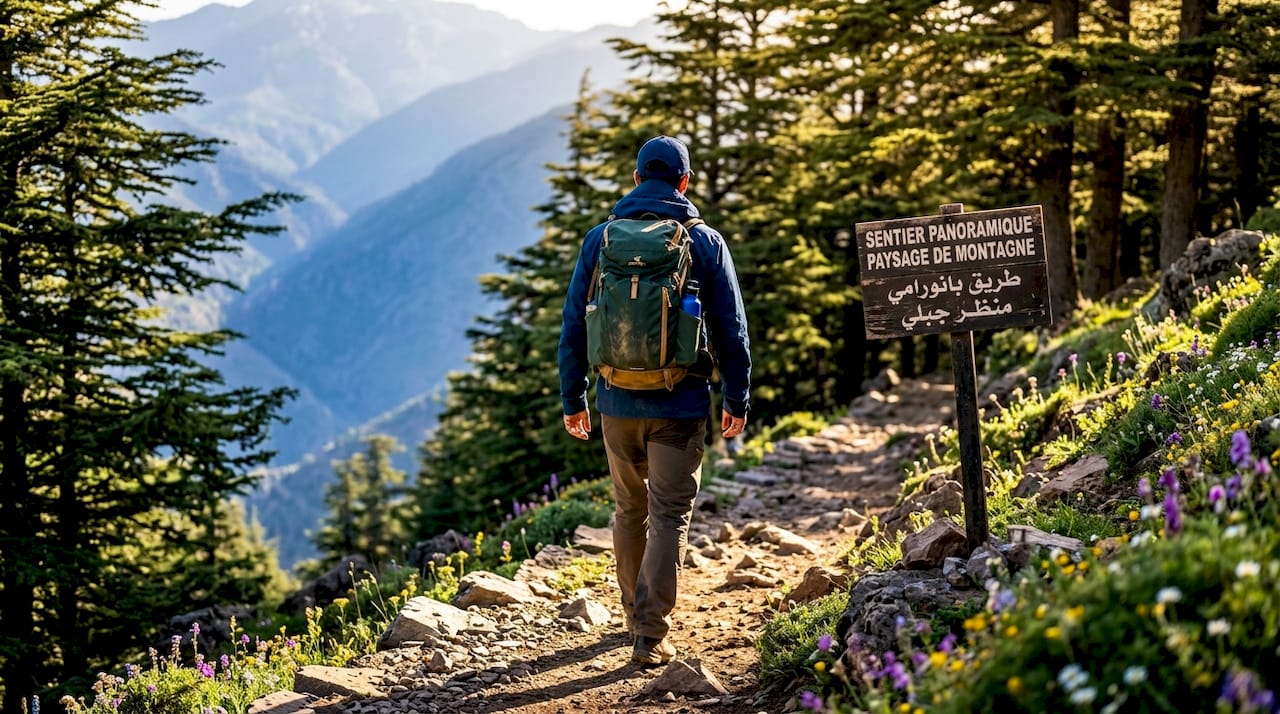
Berber culture is the second and arguably most powerful draw. The indigenous Amazigh people, commonly known as Berbers, have lived in these mountains for thousands of years. Their villages are not tourist reconstructions. They are living, breathing communities where hospitality is a deeply held value. Trekkers regularly find themselves invited into homes for tea, welcomed at local markets, and treated to meals cooked over open fires. This level of authentic human connection is increasingly rare in heavily touristed mountain destinations.
| Destination | Cultural immersion | Altitude | Accessibility from major city | Options |
|---|---|---|---|---|
| Atlas Mountains, Morocco | Very high | Up to 4,167m | 2 hours from Marrakech | Growing rapidly |
| Alps, Europe | Moderate | Up to 4,808m | Varies | Extensive |
| Himalayas, Nepal | High | Up to 8,849m | 1 to 2 days from Kathmandu | Limited at altitude |
| Andes, Peru | High | Up to 6,768m | Several hours | Moderate |
Biodiversity surprises most visitors. The Atlas is home to Barbary macaques, Barbary leopards (rarely seen but present), golden eagles, and over 2,000 plant species, including endemic wildflowers that bloom across high meadows in spring. The cedar forests of Azrou in the Middle Atlas are particularly spectacular and often overlooked by trekkers focused solely on the High Atlas.
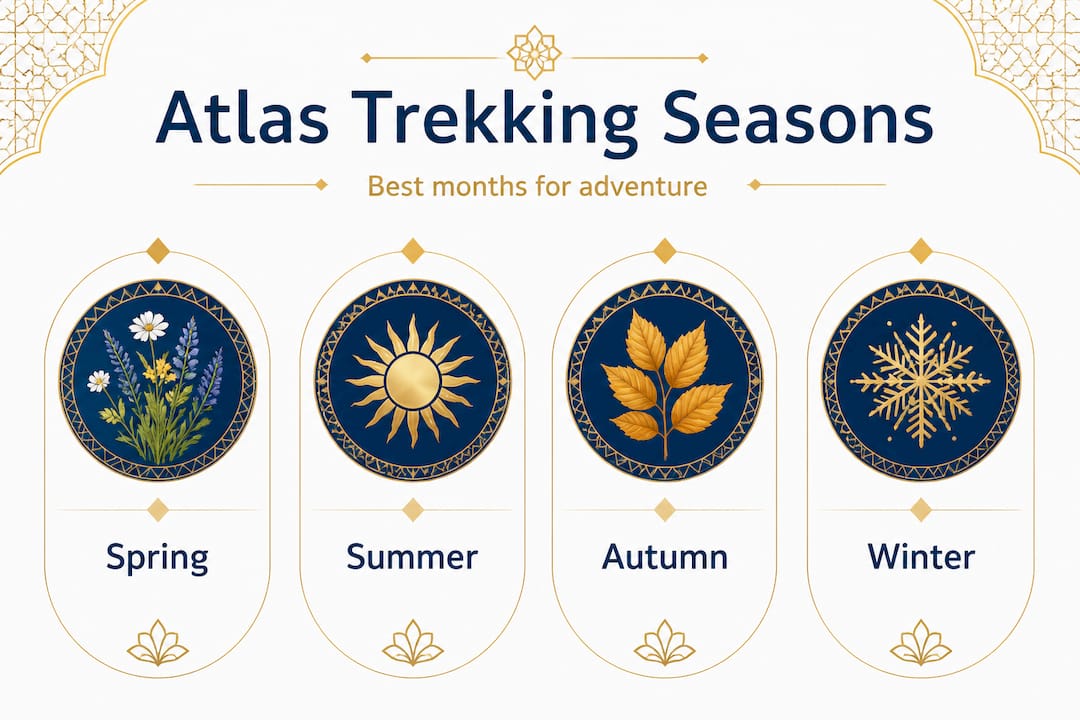
Year-round accessibility is another major advantage. Spring (April and May) brings wildflowers, flowing streams, and comfortable temperatures. Summer (June through August) is hot in valleys but perfect for high-altitude routes. Autumn (September and October) delivers crystal-clear skies and golden light. Winter (November through March) transforms the range into a snowy wilderness ideal for snowshoeing and ski touring, though it requires more technical preparation.
Pro Tip: If you want the most dramatic photography conditions, plan your trek for late October or early November. The summer crowds have gone, the air is sharp and clear, and the morning light on snow-dusted peaks is genuinely breathtaking.
The Atlas Mountains Hiking Guide notes that temperature swings between minus 5 and 35°C are common across seasons, which means proper layering is essential regardless of when you go. Pair your Atlas trek with a visit to Morocco’s imperial cities by checking out the Morocco highlights tour for a fuller picture of what the country offers beyond the mountains.
How personalized trekking is changing the Atlas experience
There’s a persistent idea that trekking must be uncomfortable to be authentic. The Atlas Mountains are quietly dismantling that myth. Over the past decade, a new generation of curated, comfort-focused trekking experiences has emerged, and they are every bit as culturally rich as the more rugged alternatives.
What does Atlas trekking actually look like? It starts with the planning. A private guide, fluent in both Tamazight (the Berber language) and English or French, designs a route around your fitness level, interests, and schedule. You’re not following a fixed group itinerary. Your days start when you want, stop where you want, and include the experiences that matter most to you.
Key features of Atlas trekking experience:
- Private certified guides who double as cultural interpreters, not just route finders
- Support teams including muleteers (handlers who use mules to carry gear and supplies) so you walk with only a daypack
- Mountain lodges and gîtes (traditional Moroccan guest houses) offering comfortable beds, hot showers, and home-cooked meals
- Tented camps at strategic high-altitude locations with proper bedding, lighting, and catered dining
- Gourmet trail meals prepared by dedicated camp cooks using fresh local ingredients: tagines, couscous, fresh-baked bread, and Moroccan salads
- Flexible pacing that allows for side trips to waterfalls, ancient granaries, or artisan workshops in villages
The quality of village hospitality in the Atlas is something that consistently exceeds expectations for first-time visitors. Berber families take genuine pride in welcoming guests, and the warmth you experience in a remote mountain village is not manufactured for tourism. It’s simply how life works in these communities.
Support infrastructure has also transformed who can access the Atlas. Older travelers, families with teenagers, and people recovering from injuries have all completed multi-day Atlas treks with the right support team. Mules carry the heavy gear. Guides set a pace that works for the group. Rest days are built into longer itineraries. The mountain becomes accessible without losing any of its wildness.
As the Atlas Mountains Hiking Guide emphasizes, mandatory guides since 2018 and the need for technical gear in winter apply to all trekkers, including those on itineraries. Comfort doesn’t eliminate the mountain’s challenges. It simply means you face them better prepared and better supported.
Pro Tip: Even on a fully supported trek, wear your own broken-in boots, not new ones. Blisters are the number one reason trekkers cut trips short, and no amount of support fixes a blister problem that starts on day one.
You can explore our Atlas trekking packages and our popular desert and mountain combination tours that pair High Atlas trekking with nights in the Sahara for a genuinely unforgettable contrast.
Safety, guides, and practical planning
Safety in the Atlas Mountains is not something to improvise. The range looks approachable from Marrakech, and in good conditions it is. But weather changes fast, trails are not always marked, and altitude affects people differently. Good planning is what separates a transformative trip from a dangerous one.
Here are the six most important steps for planning a safe Atlas trek:
- Book an accredited guide. Since 2018, Moroccan law requires all trekkers to use a licensed guide on Atlas routes. This isn’t bureaucratic red tape. It’s a genuine safety measure. Accredited guides know the trails, speak to local communities, understand weather patterns, and carry first aid training. Booking professional trekking guides through a reputable operator ensures your guide holds the correct certification.
- Acclimatize properly. The climb-high-sleep-low method means ascending to higher altitudes during the day and returning to sleep at lower elevations. For the Toubkal summit, most guides recommend spending at least one night at the Toubkal Refuge (3,207m) before attempting the summit push. Rushing acclimatization causes altitude sickness, which can become life-threatening above 3,500 meters.
- Pack for temperature extremes. The Atlas is not a tropical mountain. Even in summer, nights above 3,000 meters can drop below freezing. A proper packing list includes a moisture-wicking base layer, an insulating mid-layer, a waterproof shell, sun protection (UV intensity increases significantly at altitude), trekking poles, and a headlamp. Winter trekkers need crampons, ice axes, and gaiters.
- Purify all water. Mountain streams in the Atlas look pristine, but livestock grazing upstream means contamination is a real risk. Carry a water filter or purification tablets for any water you collect from natural sources.
- Plan for the seasons. Spring and autumn are the safest and most comfortable windows for most routes. Summer is viable at altitude but brutally hot in lower valleys. Winter requires technical gear and should only be attempted by experienced trekkers with appropriate equipment.
- Consider your fitness honestly. Many Atlas routes are moderate, not extreme. But “moderate” in mountain terms still means consecutive days of uphill walking with a pack. Build your fitness before arrival with regular hiking or stair climbing. If you’re bringing family members with varying fitness levels, look at family trekking options designed specifically for mixed-ability groups.
“Acclimatize using the climb-high-sleep-low method, use poles for scree descents, purify all water sources, layer for temperature swings between minus 5 and 35°C, and remember that guides are mandatory post-2018 for all Atlas routes. Winter trekking requires technical gear including crampons and ice axes.”
The Toubkal summit, for context, involves a 1,200-meter elevation gain on the summit day over loose scree. It’s not technical climbing, but it demands fitness, good footwear, and a willingness to move slowly. Most fit adults in reasonable health can do it with proper preparation and a good guide.
One thing many travelers underestimate is the psychological challenge of multi-day trekking. By day three or four, fatigue accumulates, and the mental game becomes as important as the physical one. Building rest afternoons into your itinerary, staying well-hydrated, and eating enough calories each day makes a significant difference to how you feel by the end of the week.
What most trekkers miss about the Atlas Mountains
After years of arranging Atlas treks for travelers from dozens of countries, we’ve noticed a consistent pattern. The guests who arrive focused entirely on summiting Toubkal or covering maximum distance often return home talking about something completely different. Not the summit. Not the distance. The moment a village elder invited them into his home for argan oil and bread. The afternoon they spent watching a shepherd move his flock across a ridge at sunset. The sound of a river they followed for three hours through a canyon they hadn’t planned to enter.
The Atlas Mountains reward slowness in a way that few destinations do. The trails are not a race course. They are corridors through living communities, ancient landscapes, and a culture that has remained largely intact despite the pressures of modernity. When you rush through them chasing a summit or a kilometer count, you miss the actual point.
This is where the real of Atlas trekking reveals itself. Not in the thread count of your lodge bedding or the quality of your camp dinner, though both matter. The real is time. Time to sit with a Berber family and learn three words of Tamazight. Time to follow a side trail to a waterfall that isn’t in any guidebook. Time to watch the light change on the Toubkal massif from your terrace while drinking coffee at 7 in the morning.
We’ve seen guests arrive with rigid itineraries and leave wishing they’d built in more flexibility. The Atlas Mountains Hiking Guide rightly emphasizes safety protocols like acclimatization and proper gear, and those are non-negotiable. But within that safety framework, the best Atlas experiences happen when you leave room for the unexpected.
Our honest advice: plan your route, prepare your gear, book your guide, and then hold your daily schedule loosely. The Atlas will show you something you didn’t plan for, and it will almost certainly be the thing you remember most. Travelers who pursue deeper trekking experiences with this mindset consistently report the highest satisfaction, not because the logistics were perfect, but because they were present enough to notice what was happening around them.
The other thing most trekkers miss is the post-trek integration. Many visitors rush back to Marrakech the moment they finish their last trail day. The villages around Imlil, Aroumd, and the Azzaden Valley deserve at least one unhurried afternoon after a trek. Walk without a destination. Buy something from a local artisan. Eat lunch at a family-run café. The transition from mountain to city is its own kind of experience, and it’s worth savoring.
Discover your perfect Atlas adventure with our curated tours
At MoroccoTours.co, we specialize in exactly the kind of Atlas trekking this guide describes: personalized, culturally rich, expertly guided, and designed around your preferences rather than a fixed group schedule. Whether you want to summit Toubkal with a private guide and stay in a mountain lodge or spend five days walking between Berber villages with a support team carrying your gear, we build itineraries that fit the way you travel.
Our Atlas & Sahara Trekking Tour combines High Atlas trails with nights in the Sahara Desert, creating a journey through Morocco’s most dramatic landscapes. For travelers who want to pair mountain adventure with Morocco’s imperial cities and cultural highlights, our Morocco Highlights Tour weaves trekking into a broader Moroccan narrative. Browse our full range of Morocco tours to find the starting point that excites you most, and reach out to our team to customize every detail.
Frequently asked questions
What is the best time of year for trekking in the Atlas Mountains?
Spring (April to May) and autumn (September to October) offer the best weather conditions for most routes, with comfortable temperatures, clear skies, and manageable trail conditions. As the Atlas Mountains Hiking Guide notes, layering for temperature swings is essential in any season, making preparation equally important regardless of when you go.
Are guides required for Atlas trekking in Morocco?
Yes, hiring an accredited guide became mandatory in 2018 for safety and site preservation across Atlas routes. Booking through a reputable operator ensures your guide holds the correct government-issued certification.
Is Atlas trekking suitable for beginners?
Many Atlas routes are well within reach for beginners, provided you prepare for altitude changes, pack appropriate layers, and trek with a certified guide who can set a pace that matches your fitness level. Valley walks and lower-altitude cultural routes are ideal starting points.
What should I pack for a trek in the Atlas Mountains?
Bring moisture-wicking layers, a waterproof shell, trekking poles for scree descents, water purification tablets or a filter, sun protection, and a headlamp. Winter trekkers should add crampons, ice axes, and gaiters to that list.