
Rabat Travel Guide: Morocco’s Underrated Capital
- Rabat, Morocco’s capital, offers a calm, authentic experience with world-class historic sites and modern attractions.
- Its Medinas are spacious and less chaotic, while iconic landmarks like Hassan Tower and Chellah reveal layered history.
- The city’s coastal setting, cultural sites, and relaxed vibe make Rabat a surprisingly rewarding destination beyond its typical transit role.
Most travelers fly into Morocco and head straight for Marrakech or Fes, barely giving Rabat a second thought. That’s a mistake worth correcting. Rabat, Morocco’s capital city, holds a population of roughly 515,000 in the city proper and sits on the Atlantic coast with a calm that most Moroccan cities simply can’t offer. The historic sites are world-class, the medina won’t swallow you whole, and the food scene rewards anyone willing to explore. This guide covers everything you need to plan a genuinely rewarding visit.
Table of Contents
- Key takeaways
- Rabat’s most iconic cultural sites
- Navigating Rabat’s medina and markets
- Dining, street food, and café culture
- Outdoor activities and modern attractions
- Practical planning tips for your visit
- My honest take on why Rabat hits differently
- Plan your Rabat experience with Moroccotours
- FAQ
Key takeaways
| Point | Details |
|---|---|
| Underrated capital city | Rabat offers a calmer, more authentic alternative to Marrakech and Fes without sacrificing cultural depth. |
| Rich historical landmarks | Hassan Tower, the Mausoleum of Mohammed V, Kasbah of the Udayas, and Chellah are all within easy reach. |
| Relaxed medina experience | Rabat’s medina is more spacious and less aggressive than other Moroccan medinas, making it ideal for first-time visitors. |
| Coastal and modern appeal | Atlantic beaches, surf culture, green gardens, and a brand-new Grand Theatre round out the city’s appeal. |
| Practical access | Rabat is reachable via Casablanca Airport or Rabat-Salé Airport, with an efficient tram system connecting the city. |
Rabat’s most iconic cultural sites
Few cities pack as much layered history into a small geographic area as Rabat does. The Rabat cultural sites you’ll encounter here span Roman antiquity, Islamic dynasties, and French colonial architecture, sometimes within a single afternoon of walking.
Hassan Tower is the city’s defining landmark, and it earns that status. The minaret stands 44 meters tall but was originally designed to reach 80 meters, which would have made it the tallest minaret in the world. Construction stopped in 1199 following the death of Sultan Yaqub al-Mansur, and the tower has stood incomplete ever since. What you see today is a monument to Almohad dynasty ambition that was never quite realized. The surrounding plaza, filled with rows of broken columns from the incomplete mosque, adds to the atmosphere in a way that feels genuinely ancient rather than staged for tourism.
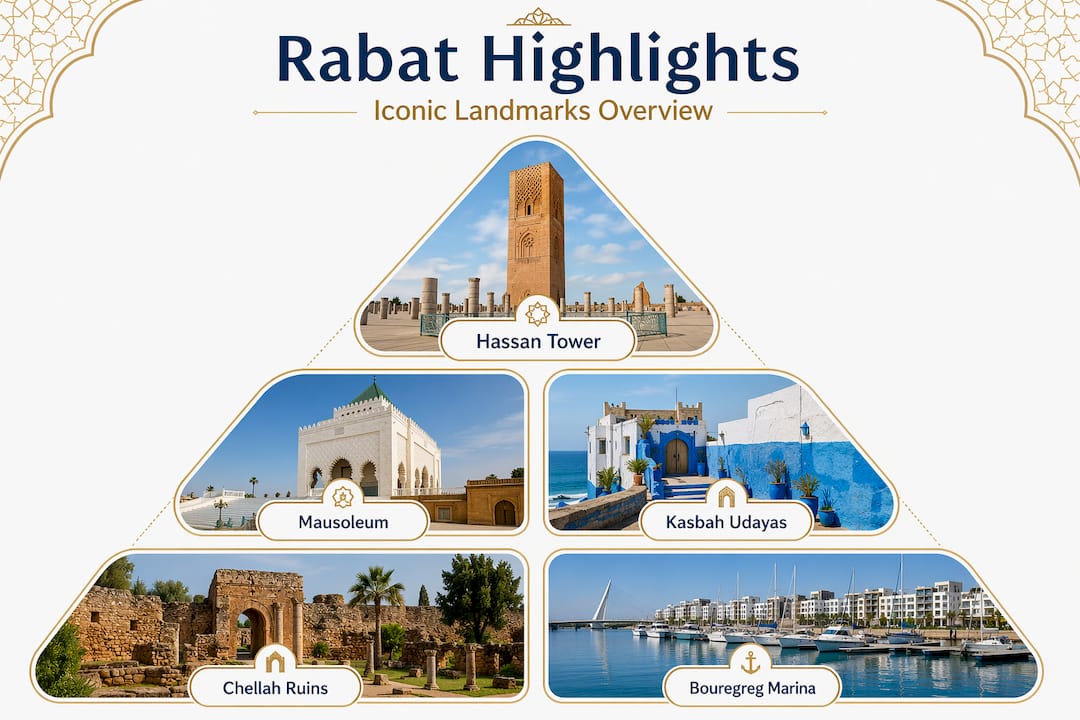
Directly across the plaza stands the Mausoleum of Mohammed V, where Morocco’s beloved king and his two sons are interred. The interior is open to non-Muslim visitors, which is relatively rare for sacred spaces in Morocco. The marble craftsmanship, hand-painted ceilings, and royal guards in traditional dress make it one of the most visually striking interiors you’ll find anywhere in the country.
The Kasbah of the Udayas sits at the mouth of the Bouregreg River, where it meets the Atlantic, and it functions as both a historic fortress and one of the best spots in Rabat for coastal views. The blue-and-white painted alleys within the Kasbah echo Chefchaouen but feel far less curated and crowded. You can walk the sea walls, look out over the river toward the city of Salé on the opposite bank, and then descend into the Andalusian Gardens below.
Chellah is perhaps the most atmospheric site in the city. It layers Roman ruins from the ancient city of Sala Colonia beneath a 14th-century Muslim necropolis, all enclosed within crumbling medieval walls. Storks nest at the top of the minarets from spring through summer, adding an almost surreal quality to the site. It’s the kind of place you can spend an hour absorbing without feeling like you’re checking a box.
- Hassan Tower and Mohammed V Mausoleum: Located on the same plaza, these are best visited together in the morning before tour groups arrive.
- Kasbah of the Udayas: Budget at least 90 minutes to explore the alleys and the Andalusian Gardens beneath the walls.
- Chellah: Opens daily; arrive in the late afternoon when the light softens and the storks become more active.
- Royal Palace (Mechouar Palace): You cannot enter the palace grounds, but the ornate brass gates and surrounding gardens on Avenue Mohammed V are worth seeing from the exterior.
Pro Tip: If you visit Hassan Tower at sunrise, you’ll have the plaza almost entirely to yourself. The light hits the sandstone columns and tower in a way that no tourist photography fully captures.
Navigating Rabat’s medina and markets
Rabat’s medina is the version of a Moroccan medina that first-time visitors often wish they had started with. The alleys are notably wider and less chaotic than those in Marrakech or Fes, and the vendors tend to let you browse without the persistent sales pressure you encounter in more tourist-saturated cities. That doesn’t mean the medina lacks character. It’s very much a working neighborhood where locals shop, eat, and socialize alongside any visitors who wander in.
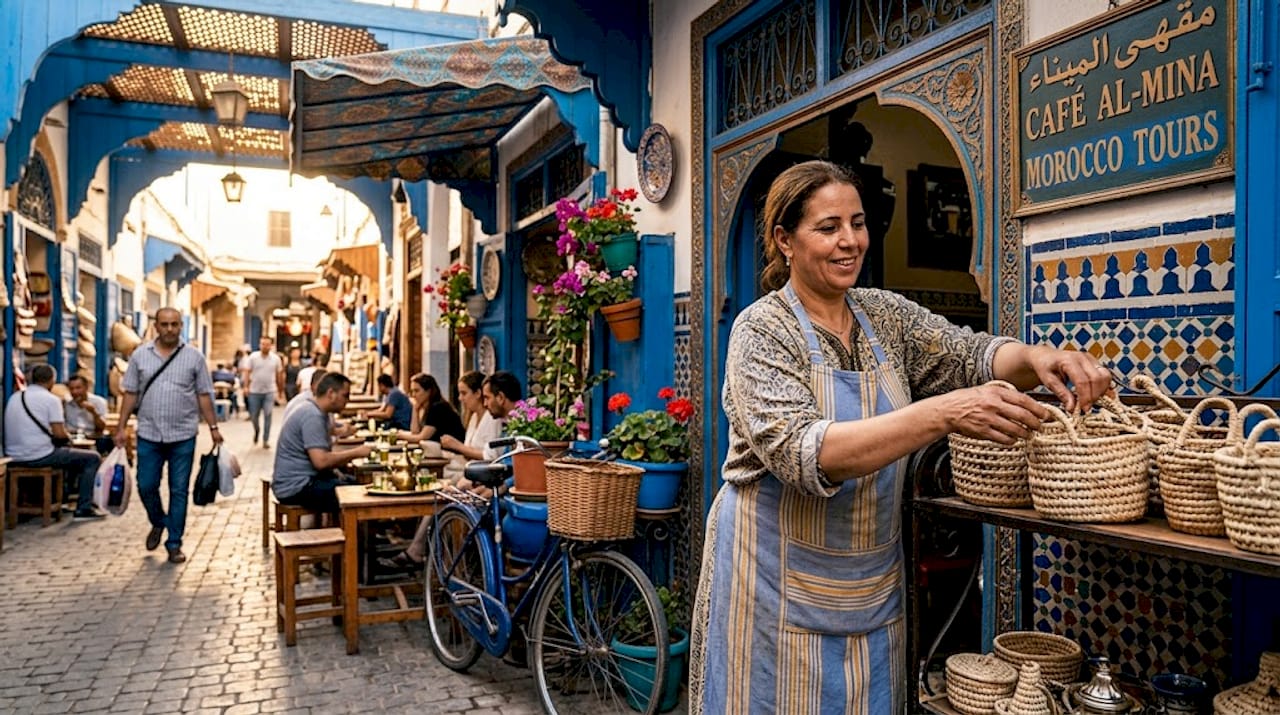
The best entry point for orientation is Bab el Had, the main gate to Rabat’s medina and one of the city’s primary social hubs. On Sundays, the area hosts a large open-air market that draws local shoppers rather than tourists, making it one of the most unfiltered glimpses into everyday Rabat life you can find. Produce, household goods, secondhand clothing, and street food all compete for space in a way that feels genuinely local.
One practical note: GPS is unreliable inside the medina due to the dense, irregular street layout. Bab el Had serves as a critical orientation anchor. Once you locate it, you can navigate outward from there with reasonable confidence. Here’s a practical approach to working through the medina:
- Enter through Bab el Had and spend a few minutes getting your bearings by observing the flow of foot traffic.
- Head south along Rue Souika, the medina’s main commercial artery, where you’ll find the densest concentration of spice vendors, fabric sellers, and food stalls.
- Peel off into the smaller side streets to find traditional craft workshops, including coppersmiths and leather tanners, operating in storefronts barely wider than a doorway.
- Look for the souks dedicated to specific trades: the jewelry souk near the Grand Mosque and the carpet merchants toward the medina’s northern end.
- Exit back through Bab el Had or continue east toward the Mellah, Rabat’s historic Jewish quarter, which has its own distinct architectural character.
If you’re visiting during Ramadan, the medina experience transforms completely after sunset. The Iftar rush fills the streets with families; food vendors fire up grills, and the entire neighborhood takes on a festival atmosphere that lasts well past midnight. It’s one of the most memorable versions of the medina you can experience.
Pro Tip: Bring cash in small denominations when shopping in the medina. Many vendors don’t accept cards, and breaking a 200-dirham note at a small stall can create unnecessary friction.
Dining, street food, and café culture
Eating well in Rabat requires very little effort. The city has a food culture rooted in slow-cooked tradition, and the Moroccan dishes available here represent the cuisine at its most honest.
What to eat:
- Bastilla: The classic Moroccan savory-sweet pastry, often made with pigeon or chicken, almonds, and cinnamon. Rabat restaurants tend to serve more refined versions than what you find at tourist-facing places in Marrakech.
- Harira: The thick lentil and tomato soup that serves as a daily staple for most Moroccan families. Order it at a medina restaurant in the morning for an authentic breakfast experience.
- Grilled sardines: Given Rabat’s Atlantic location, fresh sardines are cheap, plentiful, and excellent. Street vendors near the medina sell them grilled on charcoal with nothing more than lemon and salt.
- Mint tea: Not a meal, but a ritual. Café culture in Rabat is strong, and sitting at an outdoor table on the Corniche Bouregreg with a pot of sweet tea and a pastry is one of those experiences that doesn’t photograph well but stays with you.
For a more substantial sit-down meal, Rue Jeddah in the Agdal neighborhood offers a concentrated stretch of restaurants ranging from traditional Moroccan to international options. The neighborhood skews younger and more local, meaning you’ll typically get better value and more authentic food than in the tourist-facing restaurants near the medina entrance.
On the question of alcohol: Morocco permits it legally, and Rabat has licensed venues where wine, beer, and spirits are available. Upscale hotels, certain restaurants in Agdal and Hassan neighborhoods, and a handful of bars serve alcohol openly. Public drinking is not practiced and considered disrespectful, so keep consumption to licensed premises.
Outdoor activities and modern attractions
The version of Rabat that most travel articles miss is the one facing the ocean. The city’s Atlantic coastline near the Kasbah of the Udayas has developed a genuine surf culture, and the stretch of beach below the fortress walls draws both local surfers and visitors looking for a different kind of Moroccan experience. The waves aren’t competition-grade, but they’re consistent and the setting is hard to beat.
For contrast, consider how Rabat’s outdoor and modern offerings compare across different traveler interests:
| Attraction | Best for | Time needed |
|---|---|---|
| Rabat Beach and surf area | Beach lovers, surfers | Half day |
| Andalusian Gardens (Kasbah) | Relaxation, photography | 1 hour |
| Nouzhat Hassan Garden | Families, picnics | 1 to 2 hours |
| Corniche Bouregreg promenade | Evening walks, café stops | 1 to 2 hours |
| Grand Theatre | Arts and culture events | Evening program |
| Mohammed VI Tower area | Modern architecture fans | 30 to 45 minutes |
The Grand Theatre, which opened in April 2026 with an indoor auditorium seating 1,800 and an open-air amphitheater for 7,000 spectators, represents a significant addition to Rabat’s cultural calendar. If you’re visiting between spring and autumn, check the performance schedule before you arrive. International acts, Moroccan musical performances, and theatrical productions have all been announced for the inaugural season.
Nearby, the Mohammed VI Tower rises 250 meters above the Bouregreg Marina development, signaling how seriously Rabat takes its role as a modern capital. The Marina district itself has restaurants, a waterfront promenade, and views back toward both Rabat and Salé that are particularly good at dusk.
Practical planning tips for your visit
Getting to Rabat is straightforward from two directions. Casablanca’s Mohammed V International Airport handles most international arrivals, and a direct train to Rabat takes about 45 minutes. Alternatively, Rabat-Salé Airport handles a smaller volume of flights, primarily from European destinations, and sits about 10 kilometers from the city center.
Once you’re in Rabat, getting around is easier than in most Moroccan cities:
- The Rabat-Salé Tramway connects the two cities and covers most major tourist zones, including Hassan, Agdal, and the medina entrances. Single tickets are inexpensive, and the tram runs frequently.
- Petite taxis (small orange cabs) are metered and reliable within the city. Always confirm the meter is running at the start of the ride.
- Walking works well in the Medina and Hassan neighborhoods, but the city is spread enough that trams and taxis fill genuine gaps.
When to visit: Spring (March through May) and autumn (September through November) offer the best combination of mild weather and manageable crowds. Summer brings heat, and the Atlantic coast can get windy. Ramadan timing shifts each year but offers a culturally rich experience if you’re prepared for adjusted restaurant hours.
Accommodation options range from traditional riads in and near the medina, which tend to be more intimate and atmospheric, to modern hotels in the Agdal and Hassan neighborhoods. For an experience closer to the authentic side of Rabat, look for riads within or just outside the medina walls. For more comfort and easier access to restaurants, the Agdal district delivers.
Pro Tip: Book accommodations at least three weeks in advance if your trip falls near Ramadan or any major national holiday. Rabat’s hotel inventory is smaller than Marrakech’s, and decent rooms at good prices sell out faster than most travelers expect.
My honest take on why Rabat hits differently
I’ve spent time in most of Morocco’s major cities, and I’ll be direct: Rabat is the one that surprised me most. I went in with modest expectations because every traveler I spoke to treated it as a transit stop rather than a destination. I came out thinking it might be the single best city for someone who wants Morocco to feel real rather than performative.
What I’ve found is that the cities with the biggest reputations often deliver the most manufactured experiences. Marrakech’s Djemaa el-Fna is spectacular on paper but exhausting in person if you’re there during peak season. Fes’s medina is legitimately one of the world’s great urban experiences, but it asks something of you. Rabat asks less and gives more consistently.
The coastal element changes everything. Sitting at a café on the Bouregreg with the Atlantic light coming in and watching locals rather than tour groups going about their afternoon, you realize this is what most people are actually searching for when they book a trip to Morocco. They want to feel like they’re somewhere real. Rabat delivers that without the performance tax.
The misconception I hear most often is that Rabat “doesn’t have much to do.” What people actually mean is that it lacks the manufactured tourist infrastructure of bigger cities. That’s a feature, not a flaw. The best things to do in Rabat require nothing more than walking, eating, and paying attention.
— Moroccotours.co
Plan your Rabat experience with Moroccotours
Rabat works beautifully as the opening chapter of a longer Morocco story. Moroccotours builds Morocco tour packages that use Rabat as either a starting point or a key stop, pairing it with the Sahara, the Atlas Mountains, and other imperial cities in itineraries designed around your pace and interests.
If you want to see more of the country, the 14-day Morocco Highlights Tour covers Rabat alongside Fes, Merzouga, Marrakech, and the coast. Prefer something more focused? The 10-day Morocco Signature Tour combines cultural depth with adventure, including private guides, hand-selected accommodations, and flexible scheduling. Every itinerary Moroccotours offers is customizable, so whether you want more time in Rabat’s medina or want to move quickly toward the desert, the trip adapts to you.
FAQ
What are the must-see attractions in Rabat?
The top Rabat attractions include Hassan Tower, the Mausoleum of Mohammed V, Kasbah of the Udayas, and the Chellah ruins. All four sites are within a short distance of each other and can be covered in one full day.
How does Rabat’s medina compare to Marrakech or Fes?
Rabat’s medina is notably more spacious, cleaner, and has far less aggressive vendors than the medinas of Marrakech or Fes, making it a more relaxed experience for first-time visitors to Morocco.
What is the best time to visit Rabat?
Spring (March through May) and autumn (September through November) offer the most comfortable weather for exploring Rabat. These seasons avoid summer heat and provide good conditions for both sightseeing and beach time.
How do I get around Rabat?
The Rabat-Salé Tramway covers most key areas of the city efficiently and cheaply. Petite taxis with meters are the best option for cross-town trips or reaching sites not on the tram line.
Is Rabat safe for tourists?
Rabat is widely considered one of Morocco’s safest cities for tourists. As Morocco’s capital, it has a strong security presence, and the relatively low level of tourist-targeted activity makes it a comfortable environment for independent travelers.