
Merzouga, Morocco: Your Desert Adventure Guide
- Merzouga is a small Moroccan village on the edge of the Sahara, offering immersive Berber culture and dramatic dunes.
- Visitors should explore sustainable camps, local traditions, and activities like camel treks, stargazing, and desert markets for a deeper experience.
- Responsible tourism and longer stays ensure the community’s well-being and environmental preservation.
Most travelers picture a desert trip as a camel ride followed by a night in a tent and sunrise photos. Merzouga completely reframes that expectation. Sitting on the edge of the Sahara in southeastern Morocco, this small village is the entry point to one of the most dramatic natural formations in Africa. But what makes it genuinely extraordinary is not just the scale of the dunes. It is the living Berber culture threaded through every tea ceremony, the ethical tensions inside the booming tourism economy, and the sheer variety of experiences available once you know where to look.
Table of Contents
- Key Takeaways
- Merzouga and the Erg Chebbi dunes
- Berber culture and local community life
- Things to do in Merzouga
- Planning your trip to Merzouga
- My honest read on what Merzouga actually requires
- Plan your Merzouga experience with Moroccotours
- FAQ
Key Takeaways
| Point | Details |
|---|---|
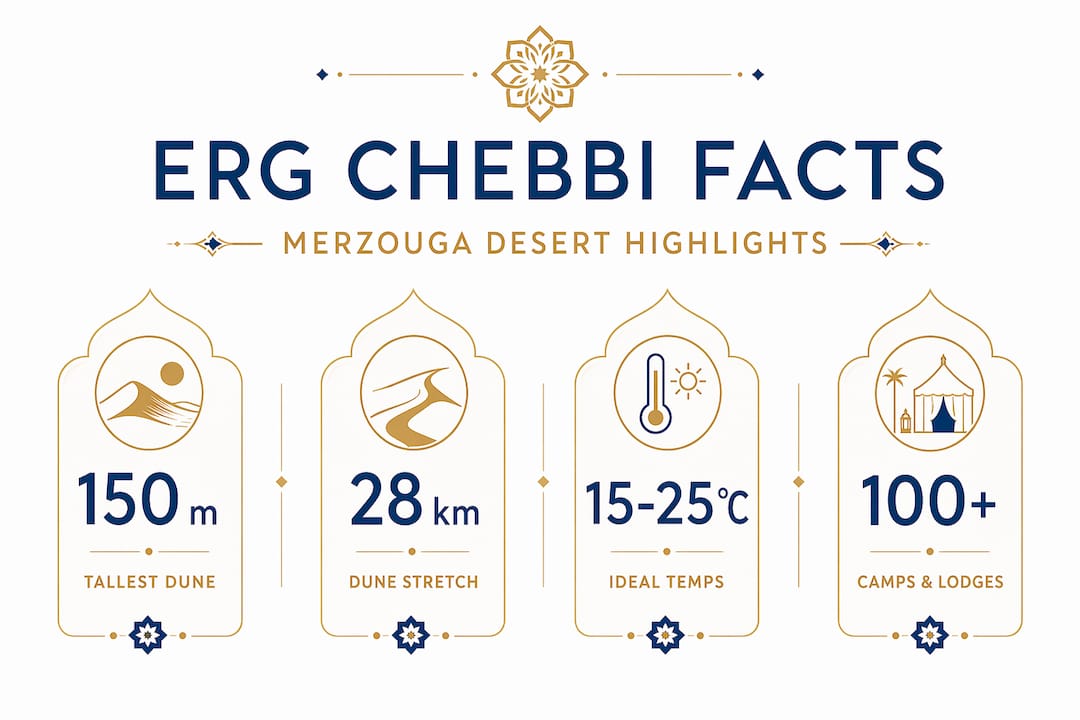
| Erg Chebbi’s scale is extreme | Dunes reach 150 meters tall across a 28 km stretch, making it one of Morocco’s most dramatic natural sites. |
| Visit between October and April | Temperatures are manageable during these months; summer heat makes daytime activities unsafe. |
| Culture goes far deeper than camels | Berber oral traditions, music festivals, and tea rituals offer authentic immersion most itineraries skip. |
| Choose your camp deliberately | Eco-conscious camps using solar power preserve both the dunes and the local water supply. |
| Sustainable tourism supports communities | Spending with locally owned operators directly prevents rural outmigration from Merzouga’s region. |
Merzouga and the Erg Chebbi dunes
Merzouga is not a city. It is a modest desert village, and its power comes entirely from what surrounds it: Erg Chebbi, one of Morocco’s largest sand seas. The dunes reach 150 meters tall and stretch 28 kilometers from north to south, creating an orange and amber wall of sand visible from miles away. At sunrise and sunset, the light turns the dunes into something that looks more painted than real.
What makes Erg Chebbi geologically distinctive is its isolation. Unlike many Saharan ergs that blend gradually into rocky terrain, Erg Chebbi rises sharply from flat, stony hammada desert. The contrast is stark and visually arresting, particularly when you crest a ridge and the dune sea appears without warning. The geological formation of Erg Chebbi also carries the traces of ancient Saharan trade routes that once moved gold, salt, and slaves across this terrain.
Here is a quick overview of the climate conditions you should factor into your planning:
| Month range | Average daytime temp | Conditions |
|---|---|---|
| October to April | 15°C to 25°C | Ideal for all activities, mild nights |
| May to June | 30°C to 38°C | Warm but manageable in early morning |
| July to September | 40°C to 45°C | Dangerously hot; outdoor activity risky |
| November to February | Cooler nights, 5°C to 8°C | Pack layers; dunes can be cold after dark |
The optimal travel window is October through April. During summer, surface sand temperatures can exceed 70°C, making midday activity genuinely dangerous, not just uncomfortable.
Pro Tip: Pack a headlamp for dune hiking at dawn. The light is best in the first 30 minutes after sunrise, and the dunes are cool enough to climb without overheating. Most camps do not provide good lighting for the walk out.
Sustainability is a real issue in this fragile environment. The dunes are delicate ecosystems with minimal vegetation holding them in place. Unregulated vehicle traffic and overwater use by tourism camps are already causing measurable harm. When you choose your accommodation and tours, that choice has a direct environmental consequence.
Berber culture and local community life
The village of Merzouga sits within a region shaped by Amazigh (Berber) history stretching back thousands of years. The local population is predominantly from the Ait Atta and Ait Khebbach tribal confederations, and their cultural identity remains remarkably intact despite the pressure of modern tourism. Understanding this changes how you travel here.
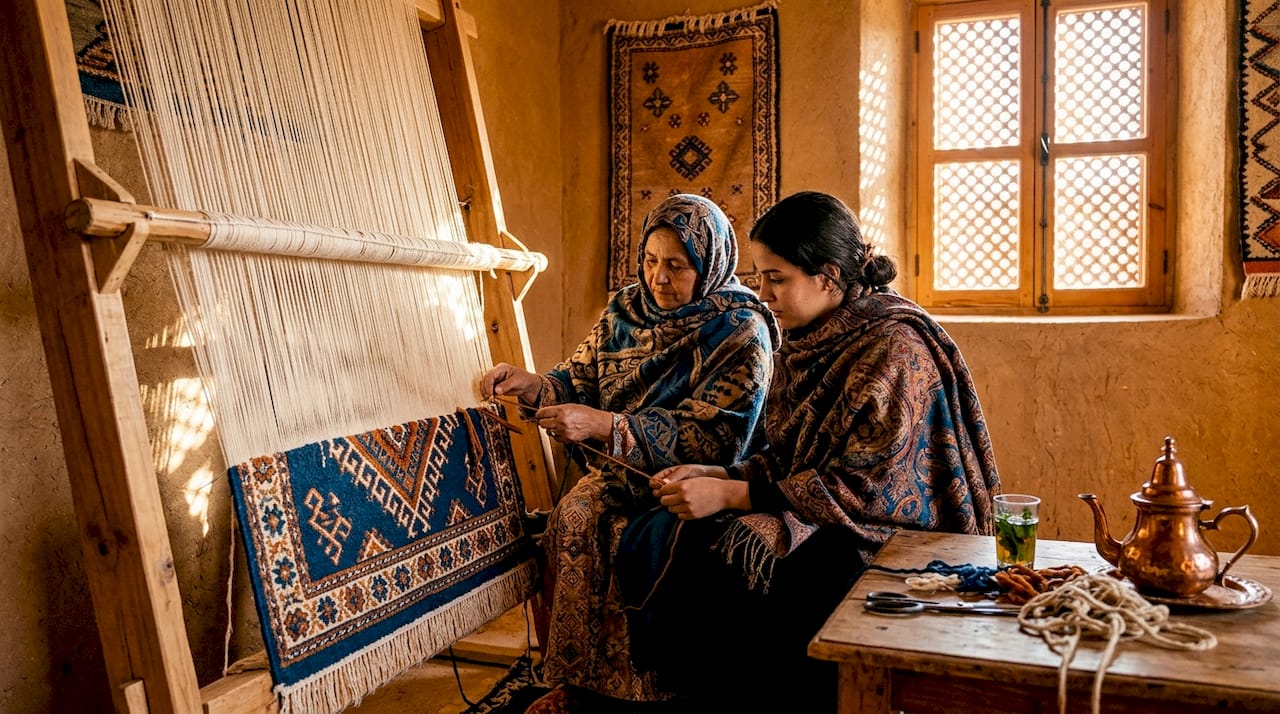
Berber identity in Merzouga is maintained through oral traditions, weaving, and seasonal festivals that also draw cultural tourists. These are not performances staged for visitors. They are living practices. The Gnawa music festival held annually near Merzouga, for example, celebrates West African and Berber spiritual music traditions with percussion, call-and-response singing, and colorful ceremony. Attending it is a completely different experience from watching a sunset camel photo op.
Things to know about local culture before you arrive:
- Greeting people in Tamazight (Berber) or Darija (Moroccan Arabic) earns genuine warmth. Even a simple “Azul” (hello in Tamazight) signals respect.
- The tea ceremony is not optional hospitality. Refusing it, or rushing through it, is seen as dismissive. Sit down. Accept the three glasses. Ask about the mint variety.
- Photography of locals, particularly women, requires explicit permission. Asking respectfully, in Arabic or French, is the norm.
- Markets and souks in nearby Rissani are working commercial spaces, not tourist attractions. Bargain fairly but do not treat vendors as entertainment.
- Desert tourism prevents migration by generating income that keeps families in the region. Spending with locally owned guesthouses and cooperatives channels money directly into that stability.
Traditional Berber weaving cooperatives near Merzouga produce kilims and blankets using centuries-old techniques. Buying directly from these cooperatives (rather than from a middleman shop in a city) puts money in the right hands and gives you a product with genuine provenance.
Pro Tip: Ask your camp host to arrange an evening with a local Gnawa musician rather than the generic drumming session some camps package automatically. The difference in quality and authenticity is significant, and the musician earns more directly.
The caravan history of this region adds another layer of depth. Rissani, just 22 kilometers from Merzouga, was once a key hub on the trans-Saharan trade route. Its old medina and the ruins of Sijilmasa, a major medieval trading city, are within easy reach and almost entirely overlooked by visitors focused only on the dunes.
Things to do in Merzouga
Merzouga offers far more variety than most travel content suggests. Here is a prioritized breakdown of the best activities, ordered by depth of experience.
- Merzouga camel trekking into the dunes: This remains the signature experience, and for good reason. A properly guided camel trek into the interior of Erg Chebbi at dawn or dusk takes you far enough from the village to lose sight of infrastructure entirely. The silence at the top of a high dune, with the wind moving sand across the surface, is unlike anything replicable. Look for operators who use well-maintained camels and employ local Berber guides who know the dune terrain by name.
- Overnight desert camp experience: The Merzouga camp experience ranges from budget canvas tents to genuinely luxurious glamping setups with private terraces, heated beds, and curated meals. The key distinction is not price. It is who owns and operates the camp. Camps run by local families tend to offer more authentic meals (harira, tagine, msemen) and more meaningful cultural exchange than large corporate-run operations.
- Stargazing in the Sahara: The absence of light pollution around Merzouga makes it one of the best locations in the northern hemisphere for naked-eye astronomy. On a clear winter night, the Milky Way is visible as a solid band overhead. Some specialist guides bring telescopes and can identify specific constellations significant to Berber navigation history.
- Sandboarding and dune climbing: Sandboarding is genuinely entertaining and physically demanding. The return climb up a 100-meter dune after a run down takes real effort. Quad biking is also widely available, though it is the least sustainable option. If you do quads, choose operators who stay on designated tracks rather than free-roaming across the dune surface.
- Visit Dayet Srji: This seasonal lake sits just north of Merzouga and is one of the strangest sights in the region. Dayet Srji attracts flamingos and other migratory birds in wet years, creating a surreal juxtaposition of pink birds against orange dunes. It is best visited in early morning when the light reflects off the water.
- Rissani market day: Held three times per week, the Rissani souk is one of the most authentic rural markets in Morocco. It serves local farmers, traders, and families, not tourists. You will find dates, spices, livestock, and traditional crafts at real prices.
Here is a comparison of the two most popular overnight options:
| Experience type | What you get | Best for |
|---|---|---|
| Budget desert camp | Shared tent, communal dinner, basic facilities | Solo backpackers, short stays |
| Luxury desert camp | Private tent, gourmet meals, guided activities | Couples, honeymoons, special occasions |
Pro Tip: Book a two-night stay if your schedule allows. The first night is about settling in. The second night is when you actually absorb the silence, the stars, and the rhythm of the desert.
Planning your trip to Merzouga
Getting to Merzouga takes planning. The most common route is flying into Casablanca and then driving southeast via Marrakech or Fes. The road trip from Marrakech takes roughly nine to ten hours through the Atlas Mountains, passing Ouarzazate and the Draa Valley. It is a long drive, but the scenery is genuinely spectacular. Alternatively, domestic flights connect Casablanca to Errachidia, the nearest regional airport, cutting the ground journey to about two hours.
Practical checklist before you leave:
- Book accommodation at least three to four weeks ahead, particularly for the October to April peak season. Good camps and riads fill up fast.
- Pack adequate water and sun protection along with layered clothing. Desert nights in winter drop sharply. A light down jacket packs small and earns its weight.
- Bring cash in dirhams. Merzouga has ATMs, but they are unreliable. Stock up in Errachidia or Erfoud before the final leg.
- Carry a scarf or shemagh. It keeps the sun off during the day, the cold off at night, and the sand out of your face during wind.
- Check your camp’s power and water setup before booking. Sustainable camps using solar power and water recycling cause far less environmental harm than those running diesel generators around the clock.
- Confirm your guide’s language skills and local knowledge before committing. A guide who grew up in Merzouga will show you things no itinerary book covers.
On safety: the desert is physically demanding regardless of the season. Stay hydrated well beyond what feels necessary. Altitude changes in the Atlas Mountains on the drive down can catch travelers off guard. If you are prone to motion sickness, take medication before the mountain roads.
Regarding local customs: dress modestly outside your camp. Merzouga is a conservative rural community. Shoulders and knees covered in the village show basic respect and are consistently appreciated.
Pro Tip: If you are traveling between November and February, plan your camel trek for mid-morning rather than dawn. Temperatures are cold enough at sunrise that the experience becomes more about surviving the cold than absorbing the dunes.
My honest read on what Merzouga actually requires
In my experience working with travelers across Morocco, the biggest mistake people make in Merzouga is treating it like a bucket-list checkbox. Arrive, ride a camel, take the sunset photo, and leave. I understand the impulse. The dunes are photogenic, and the experience sounds complete on paper.
But what I have consistently seen is that travelers who stay longer and dig deeper come away with something qualitatively different. The people who sit with a camp host family and learn how to make msemen from scratch. The ones who wake up before dawn and spend two hours climbing to a dune ridge before the first tour group appears. These travelers do not just have better stories. They have a more accurate understanding of what this place actually is.
The sustainability issue is one I feel strongly about. Responsible choices in Merzouga directly affect whether this community thrives or degrades under tourism pressure. I have seen camps that run diesel generators for 18 hours a day, dump greywater near the dunes, and pay guides minimum wage while charging premium rates. Choosing those camps because they are slightly cheaper is a decision with real consequences for the ecosystem and the people who live here year-round.
My advice is this: ask your operator hard questions before you book. Where does your water come from? How do you pay your local staff? Who owns this camp? If they cannot answer clearly, that tells you something.
Merzouga is not just a place to see. It is a place that tests what kind of traveler you are. The desert does not care about your Instagram feed. But the community that lives alongside it absolutely does.
— Moroccotours.co
Plan your Merzouga experience with Moroccotours
Moroccotours designs private and luxury Morocco itineraries that treat Merzouga as far more than a single-night stopover. The curated desert tour packages include guided camel treks, culturally immersive camp experiences with local Berber hosts, and connections to Rissani’s market and the ruins of Sijilmasa. Every itinerary is built around responsible operators who hire locally and use sustainable camp infrastructure.
Whether you are planning a private couple’s retreat, a family desert vacation, or a longer journey through Morocco’s imperial cities and Sahara together, Moroccotours matches you with guides who know this region deeply. Explore the full range of Morocco travel packages and start building an itinerary that does justice to what Merzouga genuinely has to offer.
FAQ
What is Merzouga known for?
Merzouga is the main access point to Erg Chebbi, Morocco’s most iconic sand dunes, reaching up to 150 meters in height. It is also a center of Berber culture, traditional music, and Sahara Desert adventure activities.
When is the best time to visit Merzouga?
The best months to visit are October through April, when daytime temperatures are manageable and nights are comfortable for camping. Summer months bring extreme heat that makes outdoor activity unsafe.
How do I get to Merzouga from Marrakech?
The most common route is a nine-to-ten-hour drive from Marrakech via the Atlas Mountains and Ouarzazate. You can also fly to Errachidia and drive two hours south. Guided tours typically include comfortable private transportation.
What should I look for in a Merzouga desert camp?
Choose camps that are locally owned, use solar power rather than diesel generators, and employ Berber guides from the region. Eco-conscious camp operators reduce environmental harm and put tourism income directly into the local community.
Is Merzouga suitable for families with children?
Yes. Camel trekking, stargazing, and the visit to Dayet Srji Lake are all family-friendly. Luxury camps with private tents and child-appropriate meals make overnight stays comfortable. The drive from Marrakech is long, so plan stops through the Draa Valley to break up the journey.