
Morocco Desert: Your Insider Guide to the Sahara
- Morocco’s desert regions vary greatly in terrain, culture, and experience, making knowledge of each essential for an authentic trip.
- Timing visits during spring or autumn provides the best weather conditions for camel trekking and camping, while prioritizing quality over price enhances comfort and immersion.
Most travelers picture a Morocco desert experience as a single, sweeping sea of golden dunes. In reality, Morocco’s desert regions span dramatically different terrains, cultures, and ecosystems, from the towering orange erg dunes of Merzouga to the rocky, volcanic plateaus of the Agafay. Getting this distinction wrong can tank an otherwise great trip. This guide covers everything that actually matters: where to go, what to do, how to get there, when to go, and how to avoid the traps that turn a dream Moroccan desert adventure into a regret.
Table of Contents
- Key takeaways
- Morocco desert regions you need to know
- Authentic activities and experiences in the desert
- Planning logistics: getting to and around the desert
- When to visit the Morocco desert
- My honest take on the Morocco desert
- Plan your Morocco desert experience with Moroccotours
- FAQ
Key takeaways
| Point | Details |
|---|---|
| Desert diversity matters | Morocco has multiple desert regions with distinct terrain; knowing the difference prevents disappointment. |
| Timing is everything | Spring and autumn offer the most comfortable temperatures for camel trekking and desert camping. |
| Quality over price | Booking private tours and camps directly yields a far better experience than mass-market group packages. |
| Slow down to gain more | Spending at least two nights in the desert transforms the experience from a photo stop into a real encounter. |
| Private tours are worth it | Private desert experiences cost around $350 per person but include flexibility and better accommodations than group tours. |
Morocco desert regions you need to know
Not all desert in Morocco is the same. That sounds obvious, but expecting endless dunes at every desert spot is one of the most common reasons travelers feel let down. Here is a clear breakdown of the main regions and what each one actually offers.
Erg Chebbi and Merzouga
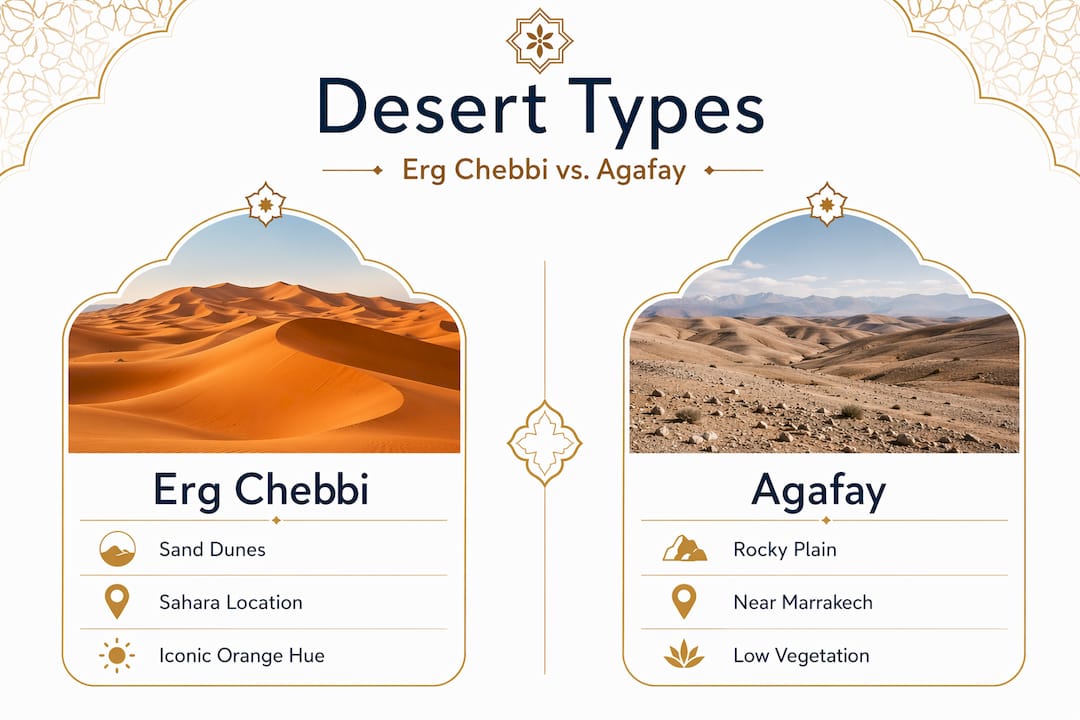
Erg Chebbi is the postcard image of Morocco: enormous, photogenic orange sand dunes near the village of Merzouga in the southeastern part of the country. The dunes reach up to 150 meters high and shift color throughout the day from pale gold at midday to deep amber at sunset. This is the heart of the Sahara Desert proper in Morocco, and it is where most Sahara desert tours are concentrated. Merzouga sits roughly 350 kilometers from Fes and about 550 kilometers from Marrakech, making it a dedicated journey by any standard.
Erg Chigaga
Erg Chigaga, further southwest near M’hamid, is the more remote and less visited alternative. Getting there requires a 4WD vehicle or a private transfer because the road infrastructure is significantly more rugged. The reward is near-total isolation. You will see far fewer tour groups, and the experience of crossing raw desert to reach the camp carries its own satisfaction. If Morocco desert landscapes with zero crowd noise appeal to you, Erg Chigaga deserves serious consideration.
Agafay Desert
The Agafay is a completely different animal. Located just 40 kilometers from Marrakech, it offers a desert-like atmosphere with rocky terrain and Atlas Mountain views without requiring a multi-day drive. It is excellent for day trips or one-night luxury glamping stays. What it is not, and this matters, is a Sahara substitute. Agafay should not be marketed as a Sahara experience. Its beauty is real, but it is a rocky moonscape, not a dune field.
| Region | Terrain | Distance from Marrakech | Best for |
|---|---|---|---|
| Erg Chebbi (Merzouga) | High sand dunes | ~550 km | Classic Sahara experience, photography |
| Erg Chigaga (M’hamid) | Remote sand dunes | ~600 km | Isolation, adventure, 4WD travel |
| Agafay Desert | Rocky plateau | ~40 km | Day trips, glamping, quick escapes |
Key natural features across all three regions include:
- Dry riverbeds (oueds) that fill dramatically after rare rains
- Oasis settlements with date palms, which act as natural markers of water underground
- Diverse desert wildlife including fennec foxes, desert hedgehogs, and scorpions
- Dark skies with some of the lowest light pollution in Africa, ideal for Moroccan desert photography
Authentic activities and experiences in the desert
The best things to do in the Sahara go well beyond riding a camel at sunset and returning to a hotel. The Morocco desert rewards travelers who build in time for real encounters.
Camel trekking
Camel trekking in Morocco is the experience most visitors picture, and done right, it delivers. The classic route departs from Merzouga in late afternoon, reaching a camp deep in the dunes by sunset. The ride typically takes 60 to 90 minutes each way. Your guide will point out dune formations and, if you are lucky, catch a glimpse of desert wildlife along the route.
Pro Tip: Book a sunrise ride on your second morning rather than repeating the sunset trip. The dunes are quieter, the light is extraordinary, and you will often have the landscape entirely to yourself.
Multi-night camping and glamping
One night in the Sahara gives you a taste. Two nights give you the experience. Spending two nights in Merzouga splits naturally between a night at the village edge and a night deep inside the dunes. You get the star show, the total silence before dawn, and enough time to actually decompress. Desert camping in Morocco ranges from basic traditional tents to fully equipped luxury camps with private bathrooms, proper beds, and gourmet Moroccan meals.
Cultural encounters with Berber nomads
Some of the most memorable moments in the Morocco desert have nothing to do with sand. Berber guides share stories about reading weather through wind patterns, about their families’ migration cycles, and about desert plants used for traditional medicine. These conversations are not scripted for tourists. They happen when you slow down and show genuine curiosity.
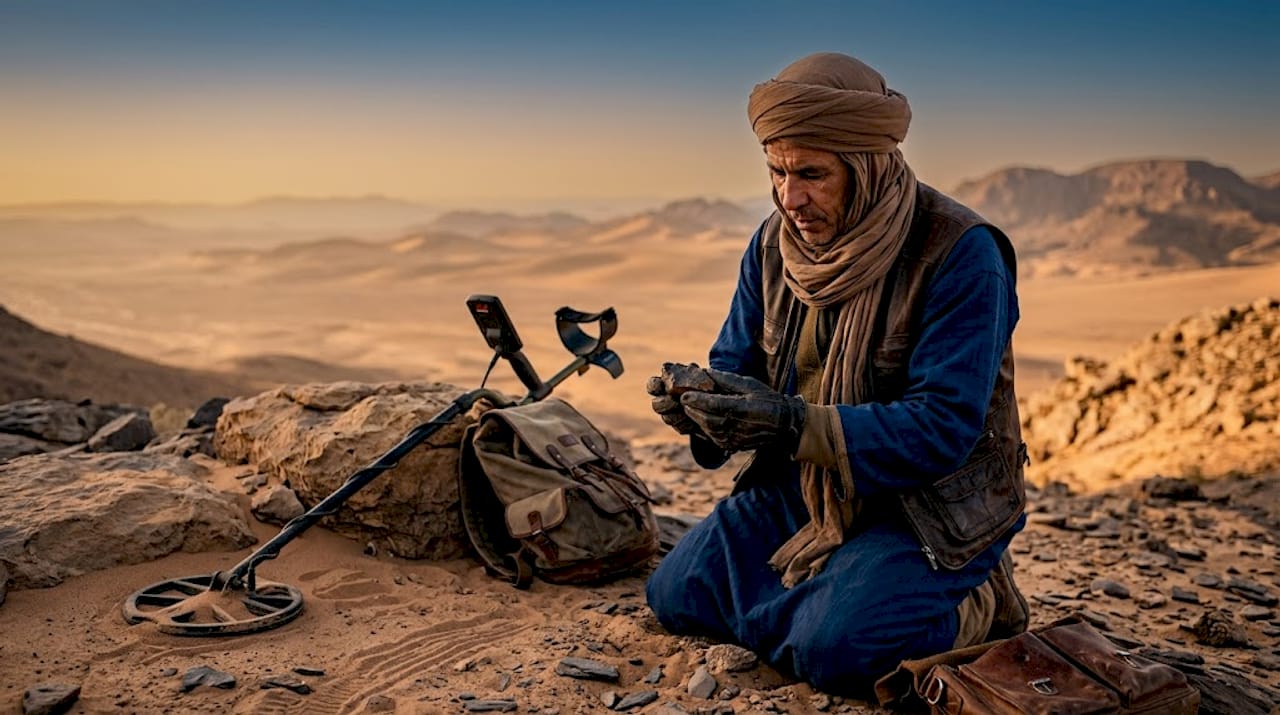
One remarkable cultural detail: local nomads in the region hunt recently fallen meteorites in the Sahara for collectors, and these can fetch over $15,000 per ounce. It is a niche economy hiding in plain sight, and it says a lot about how thoroughly nomads know and use their landscape.
Adventure activities
Beyond camel trekking, the dune fields support quad biking, sandboarding, and photography sessions during the golden hour. Sandboarding is genuinely fun and requires zero experience. Most camps rent boards on-site. Quad biking routes vary in duration from 30 minutes to half a day.
Here is a practical activity sequence for a two-night desert stay:
- Arrive in Merzouga by mid-afternoon and check into your desert-edge riad.
- Late afternoon camel trek to your overnight camp.
- Sunset photography from the dune crest above camp.
- Stargazing session. The absence of light pollution here is spectacular.
- Traditional music and dinner at camp.
- Pre-dawn wake-up for sunrise on the dunes.
- Sandboarding after breakfast before the heat peaks.
- Return to village; optional quad biking or cultural visit in the afternoon.
Respect local etiquette by dressing modestly outside camps, asking before photographing local people, and avoiding bargaining aggressively for artisan goods.
Planning logistics: getting to and around the desert
Route options from major cities
The drive from Marrakech to Merzouga takes 9 to 11 hours through the Atlas Mountains and Draa Valley. Most travelers break it into two days, stopping in Ouarzazate or Dades Gorge. The route from Fes to Merzouga runs about 6 to 7 hours and is generally faster. Both routes are scenic and work well as part of a Morocco itinerary that includes imperial cities.
Transport comparison
- Private tour with driver: Flexible, comfortable, door-to-door. Ideal for families or those wanting control over stops and pace.
- Shared group tour: Budget-friendly but follows a fixed schedule. Often rushed.
- Self-drive: Possible but requires confidence with mountain roads and navigation. Not recommended in winter when passes ice over.
Pro Tip: Booking desert camps directly and arranging private transfers offers the best experience quality and itinerary flexibility. Avoid booking camps through third-party platforms without reading reviews carefully; quality varies enormously.
Cost benchmarks
| Experience type | Approximate cost per person | What is included |
|---|---|---|
| Basic group tour | $120 to $140 | Shared transport, basic camp |
| Private desert experience | ~$350 | Private driver, better accommodations, flexibility |
| Luxury glamping (per night) | $200 to $400 | En-suite tent, gourmet meals, and a private guide |
Packing essentials
Pack for two entirely different climates in the same day. Mornings and evenings in the desert require a light jacket, even in spring. Afternoons can hit 35°C or above. Bring:
- High SPF sunscreen and UV-protective sunglasses
- A headscarf or buff for sand and wind protection
- Sturdy closed-toe shoes for dune walking
- A warm layer for overnight stays, especially October through March
When to visit the Morocco desert
Timing your Morocco desert trip matters more than most travelers expect.
Spring (March to May)
Spring is widely regarded as the best time to visit Morocco desert. Daytime temperatures in the dunes sit between 25°C and 32°C, nights are cool but comfortable, and the light is at its most photogenic. Spring and autumn windows are considered optimal for desert exploration because they avoid extreme temperatures while offering the best trekking conditions. Wildflowers sometimes appear near oasis edges after winter rains, adding unexpected color to Morocco desert landscapes.
Autumn (September to November)
Autumn mirrors spring in quality and is slightly less crowded. September can still carry summer heat into the first few weeks, so early October through November is the sweet spot. Accommodation prices begin to drop in November as the high season winds down.
Winter (December to February)
Winter desert camping in Morocco is entirely possible and has a distinct atmosphere. Cold, crystalline nights are incredible for stargazing. Days are mild and sunny. The risk is overnight temperatures that drop to near freezing in December and January, so packing properly is non-negotiable. Large temperature swings between day and night are a defining feature of the winter desert experience.
Summer (June to August)
Summer is the one season where caution is genuinely warranted. Midday temperatures frequently exceed 45°C in Merzouga. Activities need to be limited to early morning or evening. Some luxury camps do remain open and offer a surreal, extreme-heat experience for the bold, but this is not the season for first-time visitors.
- Spring: Best conditions overall, ideal for camel trekking Morocco and photography
- Autumn: Nearly as good as spring, with fewer crowds
- Winter: Magical atmosphere, but requires serious cold-weather preparation
- Summer: Expert-only territory; heat is dangerous for unprepared travelers
For festival timing, the Sahara Festival in Merzouga (typically held in late autumn or winter) brings traditional music, camel racing, and cultural performances to the desert edge. It is worth building your schedule around if dates align.
My honest take on the Morocco desert
I have worked with travelers visiting Morocco’s desert regions for years, and the pattern I see repeatedly is this: people plan too little time and expect too much from one place.
The travelers who return saying the desert changed them are almost never the ones who rushed through on a two-day coach tour. They are the ones who accepted that getting to Merzouga is half the experience, who spent an extra night at camp, who had an actual conversation with their camel guide about his family’s life between Merzouga and Algeria. Slowing down, as experts consistently recommend, is the single most reliable way to improve your desert experience.
I also want to push back on the tendency to swap the Sahara for the Agafay just because it is closer to Marrakech. The Agafay is genuinely beautiful. But it is not the Sahara, and treating it as a shortcut often leaves travelers feeling they missed something real. If you have the time, go to Merzouga. The distance is part of what makes it profound.
My other consistent recommendation: choose quality over price when it comes to camps. The difference between a boutique camp and a mass-market tent city is not just comfort. It is the ratio of guests to guides, the quality of food, and whether you will spend the night 50 meters from another group’s generator. Read reviews, look at Merzouga options carefully, and book directly with the camp when possible.
Finally, combine the desert with at least one imperial city and one day in the Atlas Mountains. Marrakech to Merzouga via Ait Benhaddou and Dades Gorge is one of the best road trips in North Africa, and the contrast between medina chaos and desert silence makes both experiences richer.
— Moroccotours.co
Plan your Morocco desert experience with Moroccotours
When you are ready to move from research to reservation, Moroccotours offers exactly the kind of hands-on planning that a trip like this requires. The team specializes in private Morocco desert tours that cover the full journey from Marrakech through the Atlas Mountains to the Erg Chebbi dunes, with expert local drivers, curated camp selections, and flexible itineraries that adapt to your pace. Whether you want a luxurious glamping experience under the Sahara stars or a multi-day Moroccan desert adventure that includes Berber cultural visits and camel trekking, the packages are built around what you actually want to do, not what fits a group schedule. Explore the full range of Morocco luxury tour packages and get personalized recommendations from a team that knows the desert well.
FAQ
What is the best time to visit the Morocco desert?
Spring (March to May) and autumn (September to November) offer the most comfortable temperatures for desert activities. These seasons balance warm daytime conditions with cooler nights and are ideal for camel trekking and photography.
How long does it take to get from Marrakech to the Sahara?
The drive from Marrakech to Merzouga takes 9 to 11 hours. Most travelers break the journey over two days, stopping at Ait Benhaddou or Dades Gorge to enjoy the scenery along the route.
Is camel trekking Morocco suitable for beginners?
Yes. Camel trekking is accessible to most fitness levels and requires no prior experience. Rides typically last 60 to 90 minutes each way and are led by experienced Berber guides throughout.
What is the difference between Erg Chebbi and Agafay?
Erg Chebbi is a true Sahara dune field near Merzouga with towering sand dunes up to 150 meters high. The Agafay is a rocky desert plateau near Marrakech with a very different landscape and atmosphere, better suited to day trips than a full Sahara experience.
How much does a private Morocco desert tour cost?
A reputable private desert experience costs approximately $350 per person, which covers a private driver, flexible itinerary, and higher-quality accommodations. Basic group tours run between $120 and $140 per person.