
Morocco Weather: Your Seasonal Travel Guide
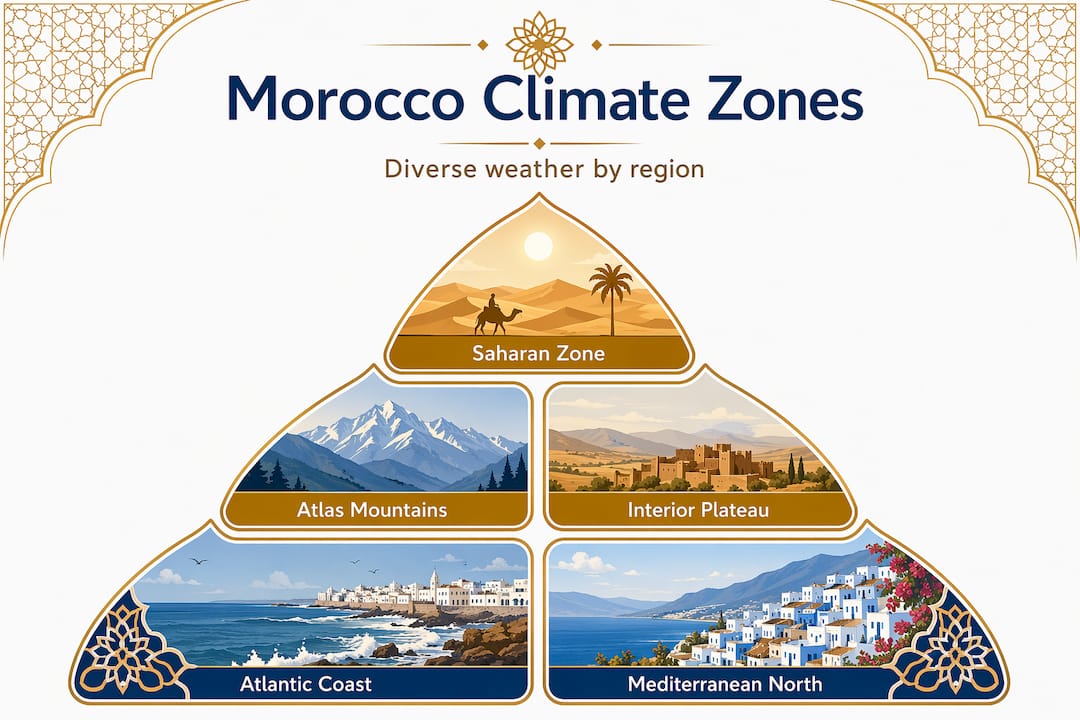
- Morocco’s diverse climate zones require travelers to plan carefully for regional variations in temperature and weather conditions.
- The best times to visit are spring and autumn, when moderate temperatures make outdoor activities more enjoyable and safe.
- Checking localized, current forecasts before traveling helps travelers avoid hazards like heatwaves and mountain snowstorms.
Morocco is one of those places that looks straightforward on a map but surprises nearly every traveler who shows up expecting uniform sunshine. Morocco weather shifts dramatically depending on where you are and when you arrive. The country spans the Atlantic coast, the Mediterranean shoreline, the Atlas Mountains, interior plateaus, and the Sahara Desert. Each zone runs by its own rules. This guide cuts through the generalizations and gives you region-specific, month-by-month clarity so you can plan confidently, pack right, and spend your time on experiences rather than weather surprises.
Table of Contents
- Key takeaways
- Morocco weather: understanding the climate zones
- Month-by-month weather and the best times to visit
- Weather events: heatwaves, snowfall, and what they mean for your trip
- Practical tips for managing Morocco’s climate on the ground
- My honest take on planning around Morocco’s weather
- Plan your Morocco trip with Moroccotours
- FAQ
Key takeaways
| Point | Details |
|---|---|
| Morocco has five distinct climate zones | Coastal, Mediterranean, mountain, plateau, and desert regions each have unique temperature and rainfall patterns. |
| Spring and autumn are peak travel windows | March through May and September through November offer the most comfortable conditions across all regions. |
| Summer heat can be extreme inland | Temperatures regularly exceed 40°C in Marrakech and Fez from June to August, requiring careful midday planning. |
| Mountain weather can shock unprepared trekkers | Snowfall above 2,000 meters can occur even in May, with gusts reaching 85 km/h in plateau provinces. |
| Check forecasts close to your travel date | Recent events confirm that Morocco’s weather can stack multiple hazards at once, so real-time forecasts matter. |
Morocco weather: understanding the climate zones
Most travelers picture Morocco as one big sun-soaked destination. The reality is a country with seven distinct climate subzones packed into a space roughly the size of California. Understanding where you are going changes everything about what to expect.
The Atlantic coast runs from Tangier down through Casablanca and Agadir. This strip benefits from cool ocean currents that keep summers mild and winters mild as well. Atlantic coastal cities average summer temperatures in the mid-70s to mid-80s Fahrenheit, with morning fog appearing frequently. You will not bake in Casablanca in July the way you would in Marrakech.
The Mediterranean north, anchored by Tangier and Tetouan, gets the wettest weather in the country. Rainfall near Tangier exceeds 800 mm annually, dropping sharply as you move south and east toward the Sahara, where less than 50 mm falls per year. The rainy season runs October through April in the north, with essentially dry summers.
The Atlas Mountains function as a climatic wall. Cold air from the north collides with warm Saharan air, producing heavy winter snowfall and cooler-than-expected summers at elevation. The Atlas range creates rain shadows and sharp contrasts that can surprise travelers planning mountain treks, as snow can linger at altitude well into May.
Interior plateaus and the pre-Saharan zone sit in that rain shadow, receiving little moisture and experiencing extreme heat in summer. The Sahara Desert itself is the most predictable zone: hot and dry from late spring through early fall, cold at night year-round, and occasionally subject to dramatic dust storms.
Here is a quick comparison of what average temperatures and rainfall look like across major Moroccan cities:
| City | Climate zone | Avg. summer high | Avg. winter low | Annual rainfall |
|---|---|---|---|---|
| Casablanca | Atlantic coast | 27°C (81°F) | 9°C (48°F) | ~430 mm |
| Tangier | Mediterranean north | 28°C (82°F) | 7°C (45°F) | ~800 mm |
| Marrakech | Interior/pre-Saharan | 38°C (100°F) | 5°C (41°F) | ~240 mm |
| Fez | Interior plateau | 37°C (99°F) | 4°C (39°F) | ~340 mm |
| Ouarzazate | Pre-Saharan | 38°C (100°F) | 3°C (37°F) | ~150 mm |
The Morocco climate diversity visible in that table explains why two travelers visiting the same month can have wildly different experiences depending on their itineraries.
Month-by-month weather and the best times to visit
Timing your Morocco trip around the weather is not just about comfort. It affects which activities are available, how much you pay, and how crowded the sites feel.
January and February bring cool, wet conditions to the north and coast. The Atlas Mountains are in full winter mode, with ski resorts at Oukaïmeden operating and high passes potentially closed. Desert nights drop to near freezing. These months are actually ideal for budget-conscious city explorers who enjoy the medinas without peak crowds.
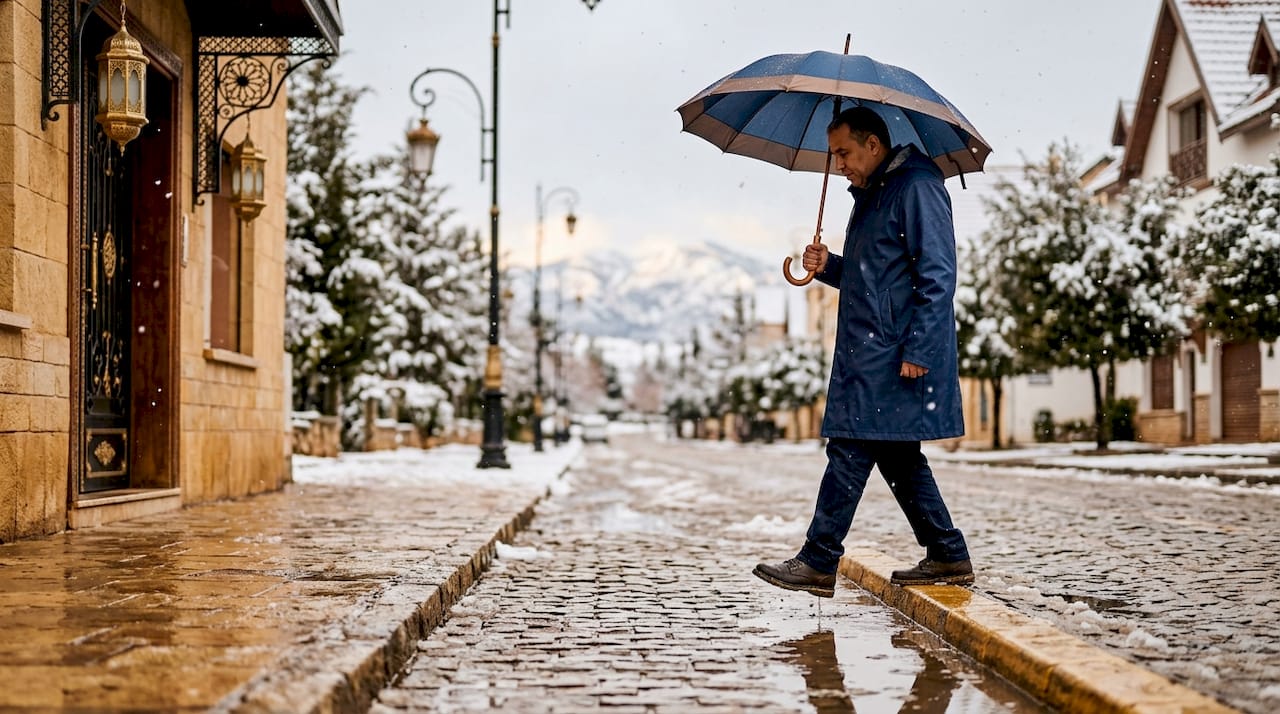
March through May represents the first of two sweet spots. Spring is one of the optimal travel periods across most regions, with comfortable temperatures and blooming landscapes in the valleys. Marrakech sits in the low to mid-20s Celsius. Desert days are warm but manageable. Coastal cities are pleasant and fresh.
June through August is when Morocco’s interior becomes genuinely challenging. Heatwaves linked to recurring atmospheric circulation patterns peak during these months, routinely pushing Marrakech and Fez past 40°C. Coastal travelers fare better, but anyone planning desert or mountain excursions in summer needs to plan around the heat aggressively.
September through November is the second sweet spot, and many experienced Morocco travelers prefer autumn over spring. The post-summer desert cools to manageable daytime highs. Marrakech drops back into the high 20s. Mountain trails reopen from summer maintenance. Coastal areas extend their pleasant season well into October.
December is a quieter month that rewards travelers willing to layer up. The Atlas Mountains offer snow views and ski touring. Imperial cities like Fez and Meknes have crisp, photogenic days. Nights in the Sahara can drop below 5°C, so sleeping in a tent without preparation is genuinely uncomfortable.
Here is a practical month-by-month activity guide:
- January: Best for imperial city tours (Fez, Marrakech, Rabat) and budget travel. Avoid high mountain passes without a guide.
- February: Almond blossom season in the Souss Valley. Good for coastal drives. Mountain treks require snow experience.
- March: Ideal for desert excursions before heat builds. Check out a Morocco desert tour itinerary that includes sunrise camel rides.
- April: Peak wildflower season in the Middle Atlas. Comfortable for hiking, city tours, and coastal travel.
- May: Generally excellent but watch for late-season mountain weather events (see Section 4 below).
- June: Head to the coast. Avoid desert and interior cities between noon and 4 p.m.
- July and August: Agadir and Essaouira are summer favorites. Interior travel requires early-morning starts and strong sun protection.
- September: The desert becomes appealing again. One of the best months for a 4×4 Sahara expedition.
- October: Arguably the single best month for a full Morocco itinerary covering coast, mountains, and desert.
- November: Date harvest season in the south. Comfortable desert nights return. Mountain colors peak.
- December: Winter desert camps and Atlas snowscapes. Cold but uncrowded and dramatic.
Pro Tip: Pack a lightweight down layer even if you are visiting in April or May. Moroccan nights in the desert and mountains drop sharply after sunset, and the temperature swing from afternoon to midnight can exceed 20°C.
Weather events: heatwaves, snowfall, and what they mean for your trip
The season has provided a sharp reminder that Morocco’s weather forecast can shift from uncomfortable to genuinely hazardous with little warning. Two events in May illustrate this clearly.
Morocco’s Directorate General of Meteorology issued an orange-level heat alert covering much of the country, with temperatures hitting 37°C to 44°C across many regions. Marrakech, Fez, and Casablanca all recorded highs between 34°C and 37°C. The alert specified that these extreme heat levels could last multiple consecutive days, with localized thunderstorms adding to the danger rather than relieving it.
At almost the exact same time, a completely different story was unfolding in the mountains. Heavy snowfall between 10 and 25 cm was recorded above 2,000 meters in provinces like Azilal and Midelt from May 14 to 16. Wind gusts in Figuig hit 85 km/h. Trekking routes that were passable one day became inaccessible within hours.
What does this mean in practical terms? Here are the specific risks travelers need to account for:
- Desert and interior travelers face heat that can cause dehydration and heat stroke if midday exposure is not managed. The orange alert applied to areas that travelers routinely visit in spring, assuming the season is “safe.”
- Mountain trekkers and 4×4 route drivers must consult elevation-specific weather warnings before departing. Heat at lower altitudes can coexist with impassable snow above 2,000 meters.
- Multi-region itinerary travelers face the most complex risk profile. Moving from a coastal city to the High Atlas to the desert in a single week means dressing and planning for three entirely different weather environments.
The concept of “hazard stacking” applies here. When heatwaves coincide with thunderstorms and high winds, risks compound. A thunderstorm that would be a minor nuisance in moderate heat becomes a much more serious concern when temperatures are already pushing heat tolerance limits.
“The events are not outliers. Morocco’s climate creates conditions where extreme heat, mountain snow, and coastal fog can all occur within the same week. Travelers who check the forecast once and plan around it are not planning carefully enough.” — Moroccan meteorology advisory.
Practical tips for managing Morocco’s climate on the ground
Reading about Morocco’s temperature ranges is one thing. Knowing how to handle them in real time is another.
Layering is non-negotiable. The diversity of Morocco’s climates within a compact geography means a single day can take you from foggy coast to mountain cold to desert heat. Build your packing list around a core layer system: a moisture-wicking base, a fleece or lightweight down mid-layer, and a windproof shell. This combination handles 90% of what Morocco throws at you. It also handles the surprising reality that coastal morning fog and dew can make Casablanca feel chilly even in July.
Time your outdoor activities carefully. Desert and interior plateau heat is most dangerous between 11 a.m. and 4 p.m. Schedule city tours, market visits, and cultural experiences for the morning. Save afternoon time for shaded riads, rooftop tea, or a hammam session. Reserve physical activities like trekking and camel rides for early morning or late afternoon.
Hydration planning is different in different zones. In the desert, you lose water faster than you feel thirsty. Start drinking before you feel the need and carry at least 2 liters per person for any outdoor excursion. In the mountains, cool air masks dehydration, so the same discipline applies. The Atlantic coast is the forgiving exception. Its moderate humidity means you will not deplete water reserves as quickly.
Here are the most important practical tips organized by region:
- Coastal cities (Casablanca, Tangier, Essaouira): Bring a light waterproof layer for winter and a warm layer for foggy summer mornings. Sun protection matters even when it feels overcast.
- Imperial cities (Marrakech, Fez, Meknes): Summer visitors should book accommodations with air conditioning or rooftop pools. Walking the medinas in summer heat requires early starts, ideally by 8 a.m.
- Atlas Mountains: Never start a day trek above 2,000 meters without checking the current weather in Morocco for that specific elevation. Conditions change within hours.
- Sahara and pre-Saharan zone: Bring sun protection rated SPF 50 or higher, a wide-brimmed hat, and closed-toe shoes for walking on hot sand. Nights require a sleeping bag rated to at least 5°C even in autumn.
Pro Tip: Download a weather app that allows location-specific altitude forecasts before any mountain day. Generic city forecasts for Marrakech tell you nothing useful about conditions on the Toubkal trail 70 kilometers away and 3,000 meters higher.
Thinking through your Morocco itinerary region by region, rather than as a single destination, is the single most effective planning decision you can make.
My honest take on planning around Morocco’s weather
I have seen travelers arrive in Marrakech in August expecting the same manageable warmth they experienced in April, and I have watched their trip plans collapse by day two when 42°C made the medina genuinely miserable after 10 a.m. Morocco’s weather rewards research and punishes assumptions.
What I have learned from working with travelers across every season is that the most common mistake is treating Morocco as a single climate destination. Someone will research weather in Marrakech, feel confident, book a tour that includes three days in the High Atlas, and discover that those mountains operate on completely different rules. The Atlas Mountains can deliver blizzard conditions in May while the valley below bakes. I have seen it happen.
The second lesson is about current forecasts specifically. A Morocco weather forecast from a general travel website tells you about averages. The heatwave and the simultaneous mountain snowfall event tell you about reality. Averages are starting points. Actual forecasts, checked 48 to 72 hours before each leg of your trip, are what keep you comfortable and safe.
My practical advice: plan your itinerary around the shoulder seasons whenever flexibility allows. If you must travel in summer, anchor your time on the Atlantic coast and treat any inland excursion as a morning-only activity. If you are trekking in the Atlas, build at least one weather day into your schedule. The mountains will use it.
The travelers who enjoy Morocco most are not the ones who got lucky with weather. They are the ones who planned specifically, packed intelligently, and stayed flexible enough to adjust when conditions shifted.
— Moroccotours.co
Plan your Morocco trip with Moroccotours.co
Getting the weather right is only the first step. Translating that knowledge into a well-timed, memorable trip is where Moroccotours comes in. Moroccotours designs custom luxury itineraries built around Morocco’s seasonal realities, so your desert excursion lands in the October sweet spot, your Atlas trek avoids late-season snowfall, and your coastal days align with the best the Atlantic has to offer. Every package includes private guides who understand local conditions, luxury accommodations selected for the climate zone, and flexible scheduling that can adapt to weather changes. Explore the Sahara Desert tour built specifically for ideal desert weather windows, or browse the full collection of luxury travel packages to find the itinerary that fits your travel style and timing.
FAQ
What is the best time to visit Morocco?
Spring (March to May) and autumn (September to November) are the most comfortable periods across all regions, offering moderate temperatures for desert, mountain, and coastal activities.
How hot does Morocco get in summer?
Inland cities like Marrakech and Fez regularly exceed 40°C from June through August, while Atlantic coastal cities stay considerably cooler, averaging 27°C to 28°C.
Does it snow in Morocco?
Yes. The Atlas Mountains receive significant snowfall in winter, and late-season snowfall above 2,000 meters can occur as late as May, as recorded in the mountain weather events.
What should I pack for Morocco weather?
Pack a layering system covering a light base, a fleece or down mid-layer, and a windproof shell. Add SPF 50 sun protection, a wide-brimmed hat, and closed-toe shoes for desert zones regardless of season.
Is Morocco’s weather the same across the country?
No. Morocco has five distinct climate zones with rainfall ranging from over 800 mm annually near Tangier to less than 50 mm in the Sahara, and temperatures varying by more than 30°C between coastal and interior regions on the same day.