
Morocco Cooking Class Tours: Your Insider Guide
- Morocco cooking class tours offer immersive experiences through souk shopping, hands-on cooking, and communal dining with local hosts.
- These experiences vary by city, with Marrakech providing variety, Fez emphasizing refinement, and Essaouira offering intimacy, all influenced by group size and inclusions.
- To maximize enjoyment, travelers should book early, prioritize full-sequence classes, and confirm language and market availability details.
Morocco cooking class tours are immersive culinary experiences that combine shopping in local souks, hands-on preparation of traditional dishes like tagine and couscous, and communal dining with local hosts. These tours operate across Morocco’s most celebrated cities, including Marrakech, Fez, and Essaouira, and run anywhere from three to five hours. Prices typically fall between $40 and $80 per person for a half-day experience that includes ingredients, instruction, and the meal you prepare. For food enthusiasts who want more than a restaurant meal, these tours deliver direct access to Morocco’s culinary heritage through the people who live it every day.
What Morocco cooking class tours actually include
The structure of a Moroccan culinary tour follows a consistent and satisfying sequence. You start at a local market or souk, cook with a host or chef, then sit down together to eat what you made. Most Moroccan cooking tours treat this full sequence as the defining feature of an authentic experience, and skipping any part of it noticeably reduces the depth of what you take away.
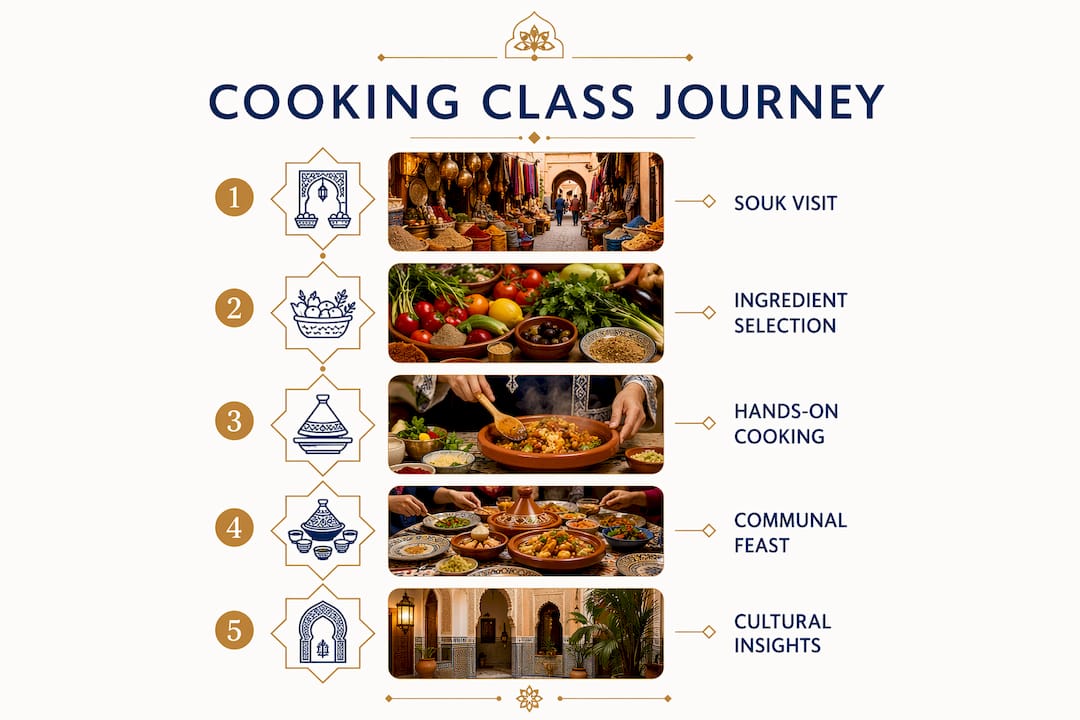
The souk visit: where the experience really begins
The market visit is not a warm-up. It is the foundation of the entire class. You walk through stalls of preserved lemons, fresh cilantro, argan oil, and dried rose petals, selecting ingredients alongside your host. This is where you learn why Moroccan cooking relies on freshness and why the spice combinations are so specific. Without this step, the cooking session becomes a demonstration rather than an education.
The cooking session itself
Once back in the kitchen or riad, the hands-on cooking begins. Typical Marrakech classes last three to four hours total, with one to two hours dedicated to preparing two or three dishes. You will usually work on a tagine, couscous, or pastilla and almost always finish with fresh mint tea. Riad Vendôme in Marrakech, for example, structures its cooking workshop around exactly this sequence: souk shopping, cooking tagine and couscous, then a panoramic rooftop lunch.
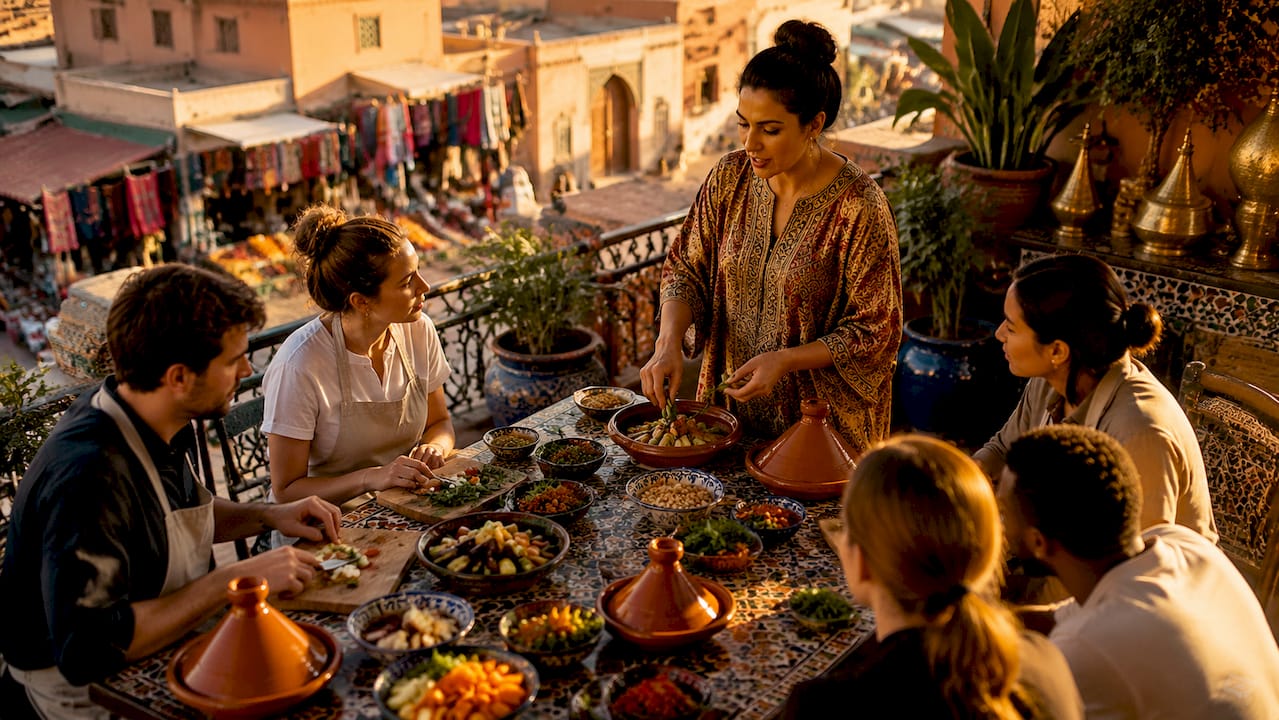
The communal meal
Eating what you cooked with the people who taught you is the payoff. This shared meal is not a formality. It is the moment where the cultural exchange becomes real. You taste the difference between a tagine made with patience and one rushed through a tourist kitchen. The conversation around the table, often covering family recipes, regional variations, and cooking philosophy, adds layers that no cookbook can replicate.
Here is the typical sequence you can expect:
- Souk or market visit to select fresh vegetables, spices, and proteins with your host
- Introduction to ingredients with explanations of regional spice blends like ras el hanout
- Hands-on cooking instruction covering two to three traditional dishes
- Preparation of mint tea as a standalone skill and cultural ritual
- Communal dining featuring everything you prepared during the session
Pro Tip: Ask your host to explain the difference between a Marrakchi tagine and a Fassi tagine during the cooking session. The regional variations in spice use and protein choice reveal more about Moroccan geography and culture than most guided city tours.
How do cooking class tours compare across Moroccan cities?
The city you choose shapes the entire character of your cooking experience. Marrakech, Fez, and Essaouira each offer distinct settings, group sizes, and culinary focuses. The table below breaks down the key differences.
| City | Setting | Group size | Signature dishes | Price range | Standout feature |
|---|---|---|---|---|---|
| Marrakech | Riad or rooftop kitchen | 2 to 20 people | Tagine, couscous, pastilla | €25 to €45 per person | Variety of class tiers and market access |
| Fez | Luxury riad, Palais Amani | Private or small group | Traditional Fassi cuisine | Premium pricing | Rooftop views, refined instruction |
| Essaouira | Local home kitchen | Maximum 10 people | Seafood tagine, mint tea | Mid-range | Intimate, home-cooking atmosphere |
Marrakech: volume, variety, and rooftop dining
Marrakech offers the widest range of cooking class formats in Morocco. Riad Vendôme’s tiered pricing illustrates this well: a Discovery class runs €25, a Full class €35, and a VIP class €45, each with different inclusions such as recipe booklets, spice gifts, and extended market visits. The Mellah market, one of Marrakech’s oldest Jewish quarters, is a common starting point for these tours. Groups can range from two to twenty people, which means the experience varies significantly depending on how many participants share the kitchen.
Fez: luxury and culinary refinement
Fez is where Moroccan cooking class tours take on a more formal, refined character. The Fez Cooking School at Palais Amani offers private classes with souk visits and hands-on instruction over four hours, set against rooftop views of the medina. Fassi cuisine, the traditional cooking style of Fez, is considered by many Moroccan chefs to be the country’s most sophisticated culinary tradition. If you want to learn the techniques behind bastilla au pigeon or slow-cooked lamb mrouzia, Fez is the right city.
Essaouira: small groups and coastal intimacy
Essaouira trades scale for depth. Chef Fatima’s cooking class runs approximately four hours with a maximum of ten participants, focusing on hands-on cooking in a local kitchen with the meal and mint tea included. The coastal location means seafood features prominently, and the smaller group size creates a genuinely personal exchange. Travelers who find Marrakech overwhelming often describe Essaouira’s cooking experiences as the highlight of their entire Morocco trip.
How to choose the right cooking class tour for your travel style
Choosing the right Morocco food experience comes down to five practical factors. Get these right and the class will feel tailored to you rather than generic.
- Duration and timing. Half-day classes (three to four hours) fit easily into a packed itinerary. Full-day options add depth but require a free schedule. Morning classes typically offer the best market access since produce is freshest early.
- Market visit inclusion. Not every class includes a souk visit. Authenticity in Moroccan cooking comes from participating in the full sequence of shopping, cooking, and dining. Prioritize classes that include the market component.
- Group size. Smaller groups with local hosts consistently deliver more personalized, immersive experiences. A class of four people with a native host beats a class of fifteen with a professional instructor every time.
- Language of instruction. Some chefs in Morocco teach only in Arabic or French. If you do not speak either language, confirm that the class includes translation or that the host speaks English. A language barrier during a cooking demonstration is genuinely frustrating and easy to avoid with one email before booking.
- Inclusions and extras. Recipe booklets, spice gift bags, and rooftop dining are not universal. Check what is included before comparing prices. A €35 class with a recipe booklet and spice gift often delivers more lasting value than a €25 class with none of these extras.
Pro Tip: If you are traveling as a couple or solo, look specifically for classes that cap enrollment at eight to ten people. The interaction with your host and fellow participants at that size is qualitatively different from a larger group, and the cooking instruction becomes genuinely hands-on rather than observational.
For travelers combining cooking classes with broader cultural exploration, Moroccotours offers a 9-day culinary journey that weaves market visits and cooking sessions into a full Morocco itinerary.
Booking tips for a memorable cooking class experience
Getting the logistics right before you arrive makes the difference between a smooth, memorable class and a frustrating one. Follow these steps to book with confidence.
- Book at least two weeks in advance during high season. April through June and September through November are Morocco’s peak travel months. Popular classes in Marrakech and Fez fill up fast, and last-minute availability is rare for the best-reviewed experiences.
- Check market availability by day of the week. Markets in Marrakech close Friday afternoons, which affects classes that include a souk visit. Confirm your class timing with the provider if you are booking for a Friday or a public holiday.
- Read the inclusions list carefully. Confirm whether the price covers ingredients, the meal, beverages, transportation to the market, and any take-home items. Two classes priced identically can differ substantially in what they actually provide.
- Dress practically. Wear comfortable, closed-toe shoes for the market walk and clothes you do not mind getting a little dusty or spiced. Aprons are usually provided, but the market portion is outdoors and often crowded.
- Arrive hungry. This sounds obvious, but travelers who eat a large hotel breakfast before a morning cooking class consistently report that the communal meal feels anticlimactic. The meal you cook is the point. Save your appetite for it.
- Combine your class with a broader cultural experience. A cooking class pairs naturally with a medina walking tour, a visit to a tannery in Fez, or an afternoon at a hammam. Moroccotours’ Morocco guided tours offer structured itineraries that integrate cooking workshops with these complementary experiences.
For travelers interested in how culinary tourism works across other Mediterranean destinations, the House in Provence blog offers a useful parallel look at market-based cooking experiences in southern France, which share several structural similarities with Moroccan culinary tours.
Key takeaways
Morocco cooking class tours deliver the most authentic experience when they include the full sequence of souk shopping, hands-on cooking with a local host, and communal dining.
| Point | Details |
|---|---|
| The full sequence matters | Classes that include market visits, cooking, and communal dining are measurably more authentic than partial formats. |
| City choice shapes the experience | Marrakech offers variety and scale; Fez offers refinement; Essaouira offers intimacy and coastal focus. |
| Group size affects quality | Classes capped at eight to ten participants deliver more personalized instruction and cultural exchange. |
| Book early and check inclusions | High-season classes fill weeks in advance; always confirm what the price actually covers before booking. |
| Friday market timing is critical | Marrakech markets close Friday afternoons, so travelers must schedule souk-based classes accordingly. |
Why the souk visit is the part most travelers underestimate
Most travelers book a Morocco cooking class tour for the food. They leave talking about the market. That has been the consistent pattern in my experience working with culinary travelers across Morocco, and it points to something worth saying directly: the souk visit is not a preamble. It is the core of the experience.
Walking through a Marrakech souk with a local host who knows the vendors by name, who argues cheerfully over the price of saffron, and who picks up a bunch of cilantro and explains exactly why it needs to smell a certain way before you buy it, that is the moment the culture becomes tangible. No amount of reading about Moroccan cuisine prepares you for the sensory reality of a medina market at 9 a.m.
I have seen travelers who arrived skeptical about cooking classes leave with a completely different relationship to Moroccan food. The ones who engaged fully with the market portion, who asked questions, and who tasted things before buying—those travelers consistently described the experience as one of the best of their trip. The ones who treated the market as a photo opportunity and rushed through it reported a less satisfying class overall.
The other thing worth saying honestly: class quality varies more than the reviews suggest. A four-star rating on a booking platform does not distinguish between a class run by a third-generation Marrakchi cook in her family kitchen and one run by a hired instructor in a purpose-built tourist riad. Ask specifically about the host’s background before booking. The difference in what you learn and what you feel is significant.
Moroccan cooking tours also reveal something about the culture that purely sightseeing does not. The patience required to make a proper tagine, the precision of the spice ratios, and the ritual of mint tea preparation are not just culinary techniques. They are expressions of hospitality, family structure, and regional identity. A good cooking class makes that connection explicit. A great one makes you feel it.
— Moroccotours.co
Plan your Morocco culinary tour with Moroccotours.co
Moroccotours designs private and luxury Morocco tour packages that integrate authentic cooking class experiences into fully curated itineraries. Whether you want a standalone half-day class in Marrakech or a multi-day culinary package that moves through Fez, Essaouira, and the Atlas Mountains, Moroccotours builds the itinerary around your schedule and interests. Every package includes private guides, vetted local hosts, and premium accommodations. Travelers who want the cooking class experience without the logistical guesswork will find Moroccotours’ approach to be the most direct route to an authentic, well-organized Morocco food experience.
FAQ
What is included in a typical Morocco cooking class tour?
Most Morocco cooking class tours include a guided souk or market visit, hands-on instruction with a local host, preparation of two to three traditional dishes, and a communal meal featuring what you cooked. Some classes also include recipe booklets, spice gifts, and mint tea preparation.
How much do cooking classes in Morocco cost?
Half-day cooking classes in Morocco typically cost between $40 and $80 per person, with ingredients, instruction, and the prepared meal included. Tiered options at venues like Riad Vendôme range from €25 for a Discovery class to €45 for a VIP experience with additional inclusions.
Which city is best for cooking tours in Morocco?
Marrakech offers the widest variety of cooking class formats and price points, making it the most accessible starting point. Fez suits travelers seeking a refined, luxury experience with private instruction, while Essaouira is best for small-group, home-style cooking in an intimate coastal setting.
How far in advance should I book a Morocco cooking class?
Book at least two weeks ahead during Morocco’s peak travel seasons, which run from April through June and September through November. Popular classes at well-reviewed venues in Marrakech and Fez fill up quickly, and same-week availability is rarely guaranteed for the best options.
Do I need to speak French or Arabic to take a cooking class in Morocco?
Not necessarily, but it is worth confirming before you book. Some local chefs teach only in Arabic or French, and a language barrier during hands-on instruction reduces the quality of the experience significantly. Many classes in Marrakech and Fez offer English-speaking hosts or translators, so ask directly when booking.