
Morocco Shopping Tours: Your Insider Guide
- Morocco shopping tours are expert-led explorations of vibrant souks, combining cultural insights with authentic discovery.
- These guided experiences include bargaining support, local guides, and tailored itineraries across markets in Marrakech, Fez, Agadir, and beyond.
- Proper preparation, patience, and curiosity enhance the journey, transforming shopping into meaningful cultural engagement.
Morocco shopping tours are guided market experiences that take you through some of the world’s most atmospheric souks, connecting you with artisan crafts, spice merchants, leather tanners, and centuries-old trade traditions in a single afternoon. These aren’t passive sightseeing stops. They are structured, expert-led excursions through living commercial ecosystems where every alley holds a different specialty. From Marrakech’s iconic Djemaa el-Fna to Agadir’s sprawling Souk El Had, the best guided shopping trips in Morocco combine cultural education with the genuine thrill of discovery. This guide tells you exactly what to expect, where to go, and how to shop like someone who has done it before.
What are the major markets and souks on Morocco shopping tours?
Morocco’s markets divide into distinct personalities, and knowing which one suits your interests saves you time and sharpens your focus.
Marrakech: the undisputed center of souk culture
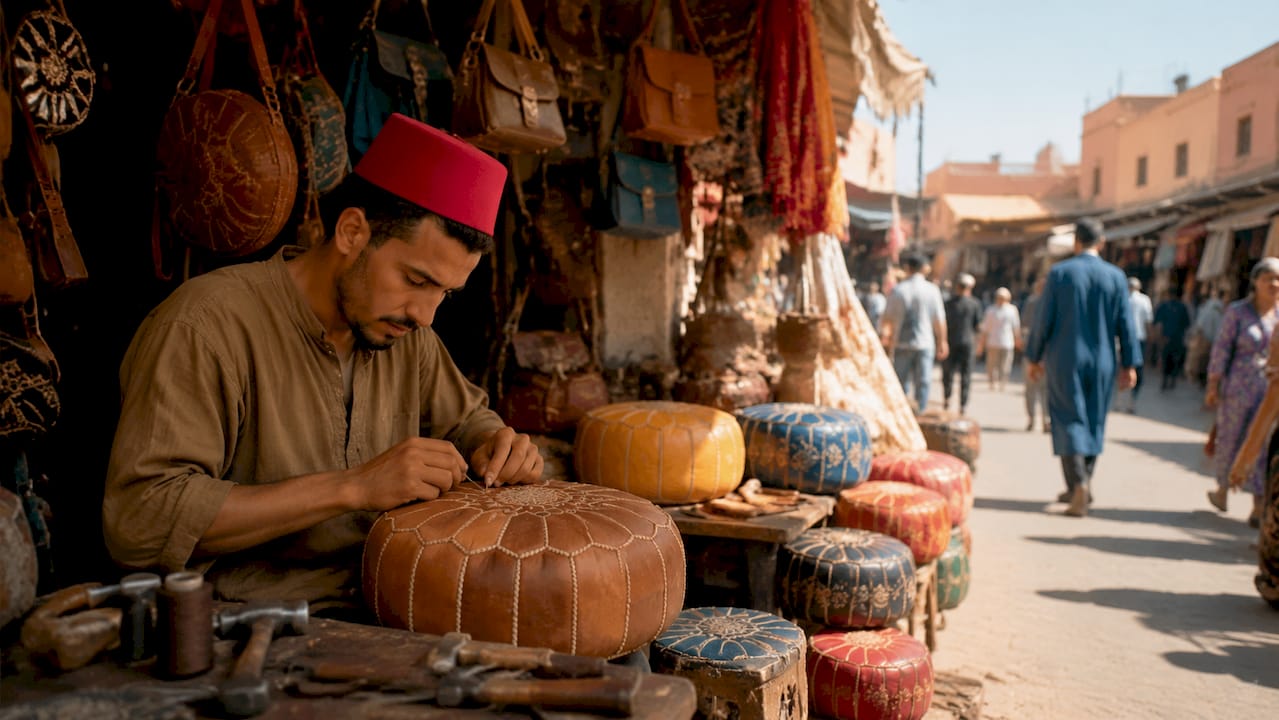
Marrakech’s medina is the reference point for souk shopping in Morocco. The UNESCO-recognized Djemaa el-Fna, listed as intangible cultural heritage in 2008, anchors the entire network of souks that fan out northward from the square. Each alley specializes in a single trade: dyers in one lane, carpet weavers in the next, then metalworkers, and then herbalists. The concentration of craft knowledge in one walkable area is unmatched anywhere in North Africa. Marrakech shopping experiences reward slow walkers who resist the urge to rush.
Agadir: scale and accessibility
Souk El Had in Agadir hosts over 6,000 shops and functions less like a tourist attraction and more like a working city neighborhood. Locals shop here for groceries, clothing, electronics, and household goods alongside the handicrafts that visitors seek. That mix is exactly what makes it feel authentic. Guided tours from Agadir and nearby Taghazout typically last around three hours and cover the market’s main sections without overwhelming you. Note that Souk El Had closes on Mondays, so plan your visit accordingly.
Fez: medieval craft production still in practice
Fez’s medina, a UNESCO World Heritage Site, contains souks that have operated continuously since the 9th century. The tanneries at Chouara are the most photographed, but the real depth lies in the woodworking, brass, and zellige tile sections where craftsmen produce goods using techniques unchanged for generations. A Morocco market tour through Fez requires a guide, not because the souks are dangerous, but because the alleyways genuinely disorient even experienced travelers.
Coastal alternatives worth knowing
Essaouira and Rabat offer calmer Morocco market tours for travelers who find Marrakech’s intensity overwhelming. Essaouira specializes in thuya wood carvings and blue-painted metalwork. Rabat’s medina carries high-quality textiles and traditional Moroccan slippers at prices that tend to be lower than Marrakech equivalents.
Across all these locations, the typical goods include spices, ceramics, textiles, leatherwork, and argan oil, each with regional variations that reflect local production traditions. Buying argan oil in Essaouira, where it is actually produced, differs meaningfully from buying it in a Marrakech tourist shop.
How does bargaining work in Moroccan souks on shopping tours?
Bargaining in Moroccan souks is a cultural practice, not a confrontational transaction. Understanding how it works transforms the experience from stressful to genuinely enjoyable.
The standard negotiation pattern
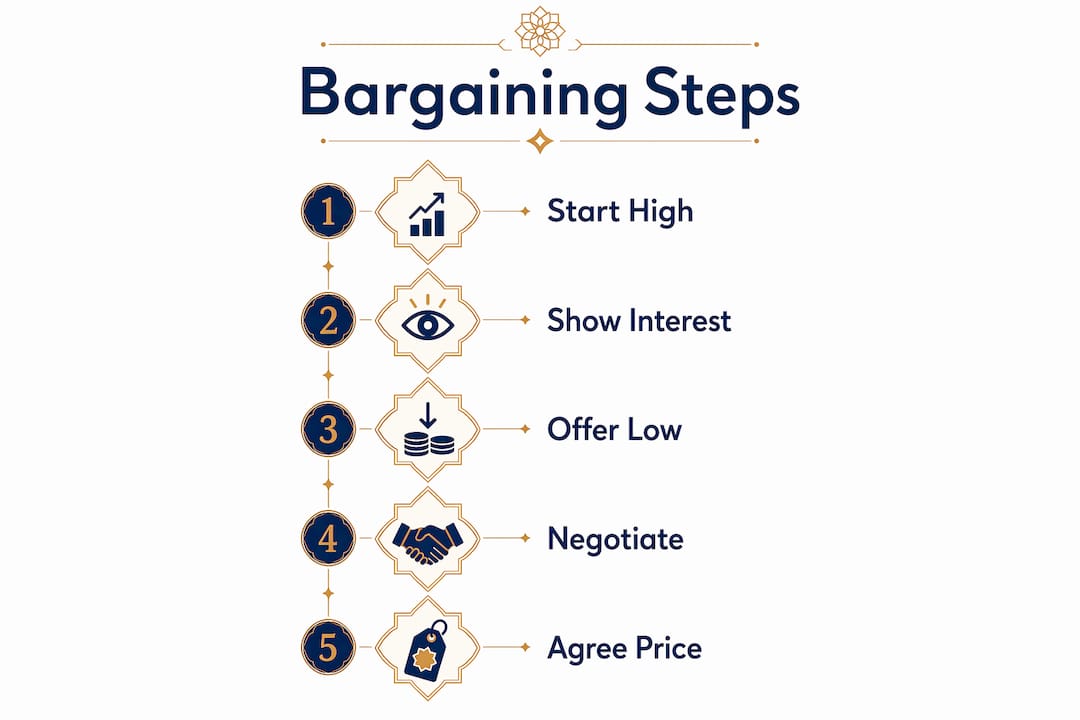
Most items in Moroccan souks have no fixed price, and sellers open with prices that are intentionally high. A seller quoting Dh300 for a leather bag expects to settle closer to Dh150. That 50% reduction is not an insult to the seller. It is the expected rhythm of the exchange. Walking in with that knowledge removes the anxiety that catches most first-time visitors off guard.
How to negotiate without losing the room
Follow this sequence for the best results:
- Browse without urgency. Pick up items, examine them, and ask prices at multiple stalls before committing to any negotiation. This reconnaissance tells you the real price range before you engage seriously.
- Counter at roughly half the asking price. State your counter calmly and with a smile. Aggression ends negotiations; friendliness extends them.
- Let the seller respond and meet somewhere in the middle. Sellers adjust offers across multiple rounds, especially when buyers stay polite and patient.
- Be prepared to walk away. This is the single most effective tactic in any souk. A genuine move toward the door frequently produces a better final offer.
- Only commit when you are satisfied. Once you agree on a price, the deal is done. Backing out after agreeing is considered poor form.
Pro Tip: Do your window-shopping reconnaissance at three or four stalls before you start any serious negotiation. Knowing that the same ceramic bowl costs Dh80 at one stall and Dh200 at another gives you a confident anchor for every conversation that follows.
Bargaining is meant to be social and fun, not a zero-sum contest. Sellers who enjoy the exchange often offer better prices than those who feel pressured. Your guide on a structured shopping tour can step in when language creates a barrier or when a price feels genuinely unreasonable, which is one of the clearest advantages of going guided over solo.
What should travelers expect from guided Morocco shopping tours?
A guided shopping tour is structured differently from a self-directed wander, and those structural differences are where most of the value lives.
Here is what a typical guided tour includes:
- Expert local guide. Guided tours include knowledgeable local guides who explain product origins, quality indicators, and cultural context as you move through the market. This is not a walking commentary. It is practical knowledge that directly affects what you buy and what you pay.
- Transport to and from the market. Most organized tours include pickup and drop-off, which matters in cities like Agadir and Marrakech, where navigating to the medina from resort areas is not straightforward.
- Approximately three hours of structured exploration. Tours cover the market’s main sections without rushing, giving you time to browse, negotiate, and absorb the atmosphere. Three hours is enough to see the highlights and still make considered purchases.
- Bargaining assistance. Your guide knows local price norms and can advise you on whether a quoted price is fair, saving you from overpaying on high-value items like rugs or leather goods.
- Cultural context throughout. The difference between a spice merchant explaining the medicinal uses of ras el hanout and simply buying a bag of powder is the difference between a transaction and a memory.
The neighborhood-like structure of large markets like Souk El Had means that tours are designed to feel exploratory rather than regimented. You are not moving through a checklist. You are moving through a living commercial district with someone who knows every section and can take you to the parts that match your interests. Travelers interested in cooking class tours often find that a souk visit the day before transforms their understanding of Moroccan ingredients.
How to plan your Morocco shopping tour for the best experience
Preparation separates a great shopping day from an exhausting one. These specifics make the difference.
Timing your visit
Morning visits to Souk El Had offer easier navigation, cooler temperatures, and a calmer atmosphere before the midday crowds arrive. Marrakech’s souks hit peak energy in the late afternoon, which creates atmosphere but also congestion. If you want photographs without crowds, go early. If you want the full sensory experience of a market at full volume, go between 3 and 6 p.m.
What to bring
- Cash in small denominations. Cash remains the easiest payment method across all Moroccan markets, and small bills make transactions smoother. Arriving with only large notes creates friction at smaller stalls.
- Comfortable, closed-toe shoes. Medina streets are uneven, often wet near food stalls, and covered in centuries of worn stone. Sandals are a liability.
- A reusable shopping bag or two. Vendors provide plastic bags, but having your own keeps purchases organized and reduces the number of bags you are juggling by the end of the tour.
- A rough budget per category. Decide before you enter what you are willing to spend on textiles, ceramics, and spices separately. This prevents the common mistake of spending everything on the first beautiful rug you see.
Pro Tip: Treat large markets like a neighborhood visit, not a shopping sprint. The travelers who get the best finds are the ones who wander into sections that weren’t on the itinerary. Tell your guide what genuinely interests you and let them adapt the route.
Choosing the right tour also means matching pace to personality. A photography-focused traveler benefits from a Morocco photography tour that builds souk time into a broader visual itinerary. A traveler focused on northern Morocco’s distinct craft traditions gets more from a northern Morocco itinerary that covers Chefchaouen’s, Fez’s, and Tangier’s respective market cultures in sequence.
Key takeaways
Morocco shopping tours deliver the most value when travelers combine expert guidance with genuine curiosity, realistic bargaining expectations, and enough time to explore without rushing.
| Point | Details |
|---|---|
| Bargaining is expected | Initial prices are typically double the final price; counter at 50% and negotiate from there. |
| Guided tours add real value | Local guides provide cultural context, bargaining support, and navigation that self-directed visits cannot replicate. |
| Market choice matters | Marrakech, Fez, Agadir, and Essaouira each offer distinct goods and atmospheres suited to different traveler interests. |
| Timing affects the experience | Morning visits offer calmer conditions; afternoon visits deliver peak atmosphere and energy. |
| Preparation determines outcomes | Cash in small bills, comfortable shoes, and a preset budget per category prevent the most common shopping mistakes. |
What most travelers get wrong about Moroccan market tours
After years of organizing and joining Morocco market tours across Marrakech, Fez, Agadir, and Essaouira, the pattern I see most often is travelers treating the souk as a transaction venue rather than a cultural one. They arrive with a shopping list, move fast, and leave with purchases but without the experience. That is a genuine waste of one of the most distinctive things Morocco offers.
The bargaining conversation is not an obstacle between you and the item you want. It is the point. A seller in the Marrakech medina who spends ten minutes negotiating with you over a pair of babouches is also telling you about the leather, the dye, the region the hide came from, and the family workshop that made them. That context is free, and most people miss it entirely because they are focused on the price.
The other thing I consistently see undervalued is the difference between a knowledgeable local guide and a generic tour operator. A guide who grew up in Fez and knows the tannery families personally will take you somewhere a standard tour never reaches. That access is what separates a luxury Morocco guided tour from a group bus stop at a tourist-facing shop. The price difference is real, but so is the experience difference.
My honest recommendation: resist the urge to optimize for the number of markets visited. One souk explored slowly and with genuine attention produces better memories and better purchases than four souks rushed through in a day. Morocco rewards patience in a way that very few destinations do.
— Moroccotours.co
Plan your Morocco shopping experience with Moroccotours.co
Moroccotours designs private and small-group tours that build authentic souk visits into carefully structured itineraries, pairing expert local guides with flexible pacing so you get the cultural depth without the logistical stress. Whether you want a half-day market excursion in Agadir or a multi-city guided Morocco tour that moves through Marrakech’s, Fez’s, and Essaouira’s distinct craft traditions, the team builds the itinerary around your interests. Every tour includes vetted local guides, private transport, and the kind of insider access that comes from years of working directly with artisan communities. Explore the full range of luxury Morocco tours and find the itinerary that fits your pace.
FAQ
What is included in a typical Morocco shopping tour?
Most guided shopping tours include a knowledgeable local guide, transport to and from the market, and approximately three hours of structured exploration with bargaining assistance. Some tours also provide cultural commentary on products, production methods, and local trade history.
How much should I budget for souk shopping in Morocco?
Budget varies widely by category, but carrying the equivalent of $50 to $150 USD in Moroccan dirhams covers most casual purchases, including spices, ceramics, and small textiles. For leather goods or rugs, budget separately and expect to negotiate from a higher starting point.
Is bargaining mandatory in Moroccan souks?
Bargaining is standard practice across Moroccan souks, where most items carry no fixed price and sellers open with prices roughly double the expected final amount. Politely declining to negotiate is acceptable, but you will almost always pay more than necessary.
What is the best market for first-time visitors to Morocco?
Marrakech’s medina, centered on the UNESCO-recognized Djemaa el-Fna, is the most accessible introduction to souk shopping in Morocco because of its organized layout, variety of goods, and high density of English-speaking guides. Agadir’s Souk El Had is a strong alternative for travelers who prefer a less tourist-oriented atmosphere.
When is the best time to visit Moroccan markets?
Morning visits, typically between 9 a.m. and noon, offer the calmest conditions, cooler temperatures, and easier navigation. Afternoon visits between 3 and 6 p.m. deliver more atmosphere and energy but also more crowds. Souk El Had in Agadir is closed on Mondays regardless of time.