
Morocco Tours from Europe: Easy Travel Planning Guide
- Morocco is an accessible travel destination for Europeans, with short flights and visa-free entry for most.
- Travel options include direct flights from major European cities, ferries from Spain, and various tour types.
Morocco is one of the most accessible exotic destinations for European travelers, sitting just two hours by flight from Madrid or less than an hour by ferry from southern Spain. Morocco tours from Europe require no pre-arrival visa for most EU citizens, allowing stays of up to 90 days. The country packs an extraordinary range of experiences into a compact geography: ancient medinas, Sahara dunes, Atlantic coastlines, and snow-capped Atlas peaks. Moroccotours specializes in private and group itineraries built specifically for travelers departing from Europe, covering everything from imperial city circuits to luxury desert camps.
What makes Morocco tours from Europe so convenient?
Morocco’s geographic position is its biggest selling point for European travelers. Travel from Madrid to Moroccan cities takes as little as two hours by flight. The ferry crossing from Tarifa to Tangier takes under an hour. No other destination outside Europe offers this combination of short travel time and genuine cultural contrast.
Most EU citizens enter Morocco visa-free for stays up to 90 days. That removes one of the biggest friction points in international travel planning. You book your flights, pack your bags, and go.
Direct flight options from major European cities
Direct flights to Morocco operate from a wide range of European hubs:
- Madrid: The closest major European city to Morocco, with multiple daily flights to Marrakech, Casablanca, and Tangier. Fares are competitive and flight times are short.
- Paris: Frequent direct connections to Casablanca, Marrakech, and Fez, making it a strong option for French travelers and those connecting through Charles de Gaulle.
- Amsterdam: Direct routes to Marrakech and Casablanca serve northern European travelers well.
- London: Multiple carriers operate daily to Marrakech, Agadir, and Casablanca.
- Barcelona and Seville: Ideal for travelers who want to combine a Morocco trip with time in Andalusia.
Ferry routes as an alternative entry
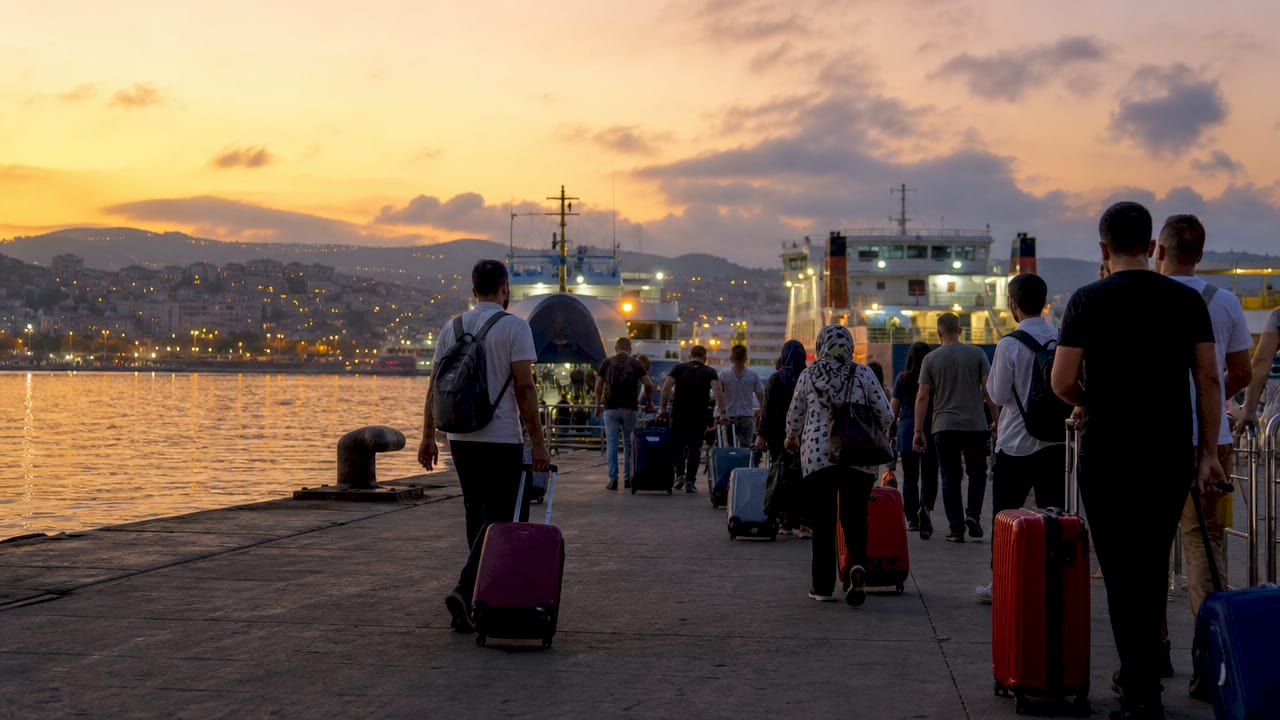
Tangier serves as the primary gateway into Morocco from Europe for travelers arriving by sea. High-speed ferries depart from Tarifa and Algeciras in southern Spain, with the Tarifa crossing taking under 45 minutes. This route suits travelers who are already in Andalusia or who want to experience the dramatic moment of crossing the Strait of Gibraltar. Arranging private transfers from the Tangier ferry port in advance removes arrival stress and gets your tour started on the right foot.
Pro Tip: If you are flying from a northern European city, Casablanca’s Mohammed V International Airport is the best entry point for tours that start in the imperial cities. If your itinerary begins in the north, fly into Tangier or take the ferry from Tarifa.
Which tour types suit different European traveler interests?
Morocco travel packages fall into several distinct categories, and the right one depends on what you want from the trip. Itineraries typically cover imperial cities, desert experiences, coastal relaxation, and traditional riad stays. Knowing the difference between tour styles saves you from booking the wrong experience.
- Small group cultural tours: These tours focus on medina exploration, souks, historic mosques, and local food markets. A typical itinerary covers Marrakech, Fez, Meknes, and Rabat over 8–12 days. Group sizes are usually kept small to allow genuine interaction with local guides and artisans.
- Desert adventure tours: The Sahara Desert experience is the most requested add-on for European travelers. A standard desert circuit from Marrakech covers the Draa Valley, Merzouga dunes, and a night in a luxury desert camp. Camel rides at sunset and stargazing in the Erg Chebbi are highlights that no city tour can replicate.
- Atlas Mountain treks: The High Atlas offers multi-day trekking routes, including paths to Toubkal, the highest peak in North Africa. These tours attract hikers and outdoor travelers who want physical challenge alongside cultural immersion.
- Luxury and private tours: Private tours give you a dedicated guide, a private vehicle, and full flexibility over pace and stops. Moroccotours builds these itineraries around individual preferences, including exclusive riad accommodations and private cooking classes. For travelers who want luxury private experiences, this format delivers the most personalized trip.
- Coastal relaxation tours: Essaouira and Agadir offer Atlantic beaches, fresh seafood, and a slower pace. These destinations work well as the final leg of a longer Morocco circuit, giving travelers time to decompress before flying home.
Pro Tip: Traditional riads offer a level of atmosphere that modern hotels cannot match. A stay in a riad in Fez or Marrakech places you inside the medina, within walking distance of the main sights, and gives you direct access to the kind of hospitality that defines Moroccan culture.
How do combined Morocco and Southern Spain tours work?
Combined tours of Southern Spain and Northern Morocco deepen cultural understanding by tracing the shared Moorish legacy across two continents. The Strait of Gibraltar is only 14 kilometers wide at its narrowest point. The architectural, culinary, and linguistic connections between Andalusia and northern Morocco are visible everywhere once you know what to look for.
A typical combined itinerary runs 10–14 days and covers cities on both sides of the strait. The Spanish side usually includes Malaga, Seville, and Granada. The Moroccan side covers Tangier, Chefchaouen, and Fez. Travelers cross by ferry from Tarifa or Algeciras, which makes the transition from one country to the other feel like a natural part of the journey rather than a logistical interruption.
What the two sides share and where they differ
| Feature | Southern Spain | Northern Morocco |
|---|---|---|
| Moorish architecture | Alcazaba of Malaga, Alhambra of Granada | Kasbah of Tangier, medina of Fez |
| Culinary influence | Tapas with North African spice notes | Tagine, couscous, harira |
| Language | Spanish with Arabic loanwords | Darija, Arabic, Berber, French |
| Pace of life | Relaxed, siesta culture | Medina energy, evening souks |
| Accommodation style | Boutique hotels, paradores | Traditional riads, luxury camps |
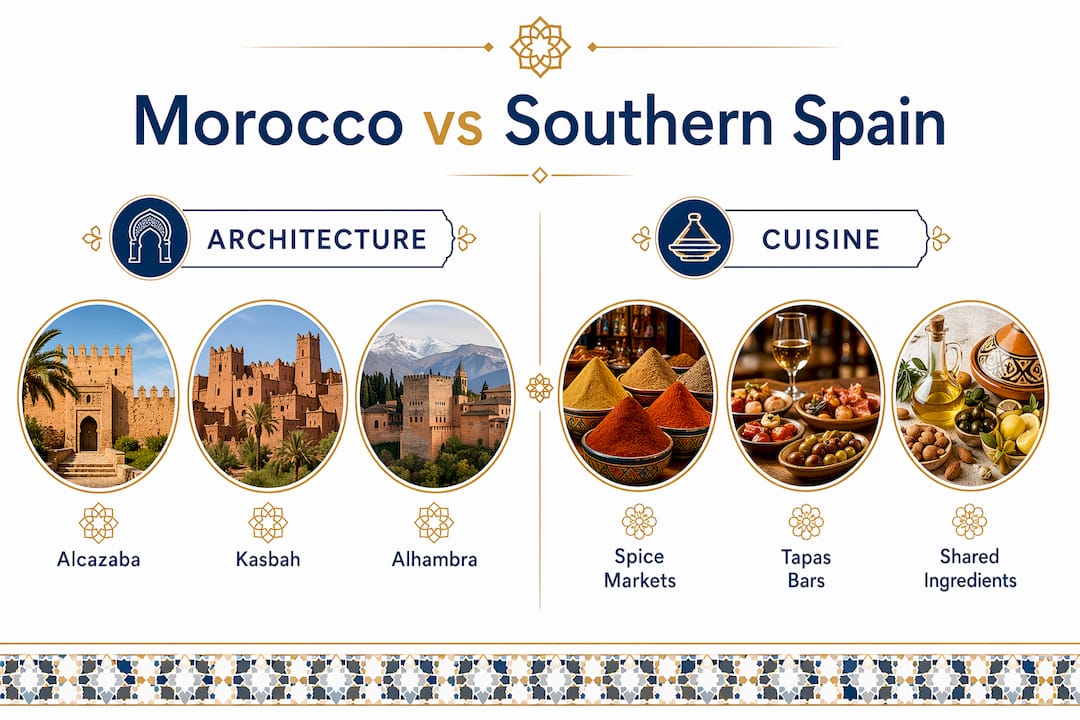
The Alcazaba of Malaga and the Kasbah of Tangier tell the same story from opposite shores. Both were built as fortified hilltop citadels during the period of Moorish rule, and both now offer panoramic views over the strait. Visiting them in sequence gives travelers a physical sense of how connected these two regions once were.
Culinary similarities run deep. The spice markets of Fez and the tapas bars of Seville share ingredients like cumin, saffron, and preserved lemon. Travelers who eat their way through both cities come away with a much richer understanding of Mediterranean food history than any single-country tour provides.
Logistically, the ferry crossing is straightforward. Most combined tour operators handle the crossing as part of the itinerary, including port transfers on both sides. Passport checks at the Moroccan border are standard and quick for EU citizens. The main planning consideration is the direction of travel: starting in Spain and ending in Morocco works well for travelers who want to finish in Marrakech before flying home.
What practical tips should European travelers know before booking?
Booking a Morocco trip from Europe requires a few specific decisions that affect the quality of the experience significantly. Well-established tour providers include transfers, guides, and cultural activities in their packages, which removes the guesswork from daily logistics.
Best travel seasons:
- Spring (march to may): The most popular season. Temperatures are mild across all regions, wildflowers cover the Atlas foothills, and the desert is warm but not extreme.
- Fall (September to November): A close second. Crowds are thinner than spring, and the light in the medinas is exceptional for photography.
- Winter (December to February): Ideal for desert tours. Daytime temperatures in Merzouga are comfortable, and the nights are cold but clear. Avoid the High Atlas in winter unless you are trekking with a specialist guide.
- Summer (June to August): Coastal destinations like Essaouira and Agadir are pleasant, but inland cities like Fez and Marrakech reach extreme heat. Not recommended for first-time travelers.
Key booking considerations:
- Choose your departure city based on direct flight availability. Madrid and Paris offer the most routes and the most competitive fares.
- Decide between a group tour and a private tour before you start comparing packages. Group tours cost less and offer social interaction. Private tours cost more and offer complete flexibility.
- Check what is included in the package price. Meals, internal transfers, and guide fees should be itemized clearly. Packages that bundle these elements save money and reduce planning time.
- Confirm that your tour includes a licensed local guide for medina visits. Unlicensed guides in Fez and Marrakech are common and often lead travelers to commission-based shops rather than genuine cultural sites.
- Verify the accommodation category. Itineraries covering Marrakech, Fez, and Casablanca alongside Sahara excursions vary widely in accommodation quality. Ask for specific property names before booking.
For travelers who want expert guidance on choosing between formats, the Morocco Grand Tour itinerary from Moroccotours covers 17 days from Casablanca to Marrakech and is a strong reference point for what a comprehensive private tour looks like.
Pro Tip: Pack one layer of warm clothing regardless of when you travel. Desert nights drop sharply after sunset, and the Atlas passes can be cold even in May. A lightweight down jacket takes up almost no space and solves both problems.
Key Takeaways
Morocco tours from Europe are among the most logistically simple and culturally rewarding trips available to European travelers, combining visa-free entry, short travel times, and an extraordinary range of itinerary options.
| Point | Details |
|---|---|
| Visa-free access | Most EU citizens enter Morocco without a pre-arrival visa for stays up to 90 days. |
| Short travel times | Flights from Madrid take under two hours; the Tarifa ferry crossing takes under one hour. |
| Tour variety | Options range from small group cultural tours to private luxury desert camps and coastal escapes. |
| Combined Spain-Morocco tours | Linking Andalusia with northern Morocco reveals shared Moorish heritage across two continents. |
| Booking priorities | Confirm what is included in the package price and verify that your guide is licensed before booking. |
What I have learned from years of Morocco travel planning
The most common mistake European travelers make is treating Morocco as a single destination rather than a collection of very different experiences. Marrakech and Fez are not interchangeable. The Sahara is not just a backdrop for photos. Chefchaouen is not simply a blue-painted Instagram stop. Each place has its own rhythm, and the travelers who get the most out of Morocco are the ones who slow down enough to feel it.
My strongest recommendation is to start in Tangier. Most European travelers fly directly to Marrakech, which is understandable, but Tangier is where Morocco begins to make sense. The city sits at the intersection of two continents and three cultures. Spending one or two nights there before heading south gives you a cultural orientation that no guidebook can provide. The medina is walkable, the food is excellent, and the view from the Kasbah across the strait to Spain is one of the most striking sights in the Mediterranean.
The other thing I would push back on is the idea that you need to choose between culture and adventure. The best Morocco itineraries do both. A week that covers Fez’s medieval medina, a night in a desert camp at Merzouga, and a final day in Marrakech’s Djemaa el-Fna square gives you the full picture. That combination is what makes Morocco genuinely different from any other destination within reach of a European traveler.
For luxury travel in particular, Morocco punches above its weight. Private riads, exclusive desert camps, and personal guides who know the country deeply are available at price points that would be impossible in comparable European destinations. The value is real, and it is one of the reasons Morocco keeps drawing repeat visitors from across Europe.
— Moroccotours.co
Moroccotours.co packages built for European travelers
Moroccotours.co designs every itinerary with European departure points, travel preferences, and time constraints in mind. Whether you want a private luxury Morocco trip with exclusive riad stays and a personal guide, or a structured group tour covering the imperial cities and the Sahara, the platform offers clearly priced packages with all logistics handled. Transfers, licensed guides, accommodation, and cultural activities are included and itemized. The Morocco desert tours are among the most requested options for first-time visitors, combining Marrakech, the Draa Valley, and Merzouga into a single coherent circuit. For travelers who want a comprehensive overview before committing, the full Morocco travel packages page is the best starting point.
FAQ
Do EU citizens need a visa for Morocco?
Most EU citizens do not need a pre-arrival visa for Morocco and can stay up to 90 days for tourism purposes.
What is the fastest way to get from Europe to Morocco?
The fastest option is a direct flight from Madrid, which takes under two hours. The Tarifa to Tangier ferry crossing takes under one hour but requires travel to southern Spain first.
What is the best time of year for Morocco tours from Europe?
Spring (March to May) and fall (September to November) offer the most comfortable temperatures across all regions, including the desert and the imperial cities.
What does a typical Morocco travel package include?
Well-structured packages include accommodation, internal transfers, a licensed local guide, and selected meals. Always confirm these elements are itemized before booking.
Can I combine a Morocco tour with a trip to southern Spain?
Yes. Combined tours linking Andalusia and northern Morocco are a popular format, typically covering Malaga or Seville on the Spanish side and Tangier, Chefchaouen, and Fez on the Moroccan side, with a ferry crossing included.