
Food in Morocco: Travel Guide to Moroccan Cuisine
- Moroccan cuisine emphasizes slow-cooked tagines, aromatic spices, and communal dining rituals that reflect its rich cultural history.
- Travelers should follow local customs, such as using bread as a utensil and eating with the right hand, to enhance their food experience.
- Street food is affordable and safe when choosing busy stalls with hot, freshly cooked dishes, and regional diversity creates distinct culinary styles across the country.
Moroccan cuisine is defined by slow-cooked tagines, fragrant spice blends, communal dining rituals, and a street food culture that rewards curious travelers at every turn. Food in Morocco is 99% halal, which shapes every aspect of what locals eat and how they eat it. The flavors lean aromatic rather than fiery, built on cumin, cinnamon, paprika, and ras el hanout rather than raw chili heat. Meals are social events, not quick refueling stops. Understanding that distinction is the key to getting the most out of every table you sit at.
What are the must-try traditional Moroccan dishes?
Traditional Moroccan dishes are built around slow cooking, layered spices, and ingredients that reflect centuries of Berber, Arab, and Andalusian influence. The result is a cuisine that feels both ancient and deeply satisfying.
Tagine
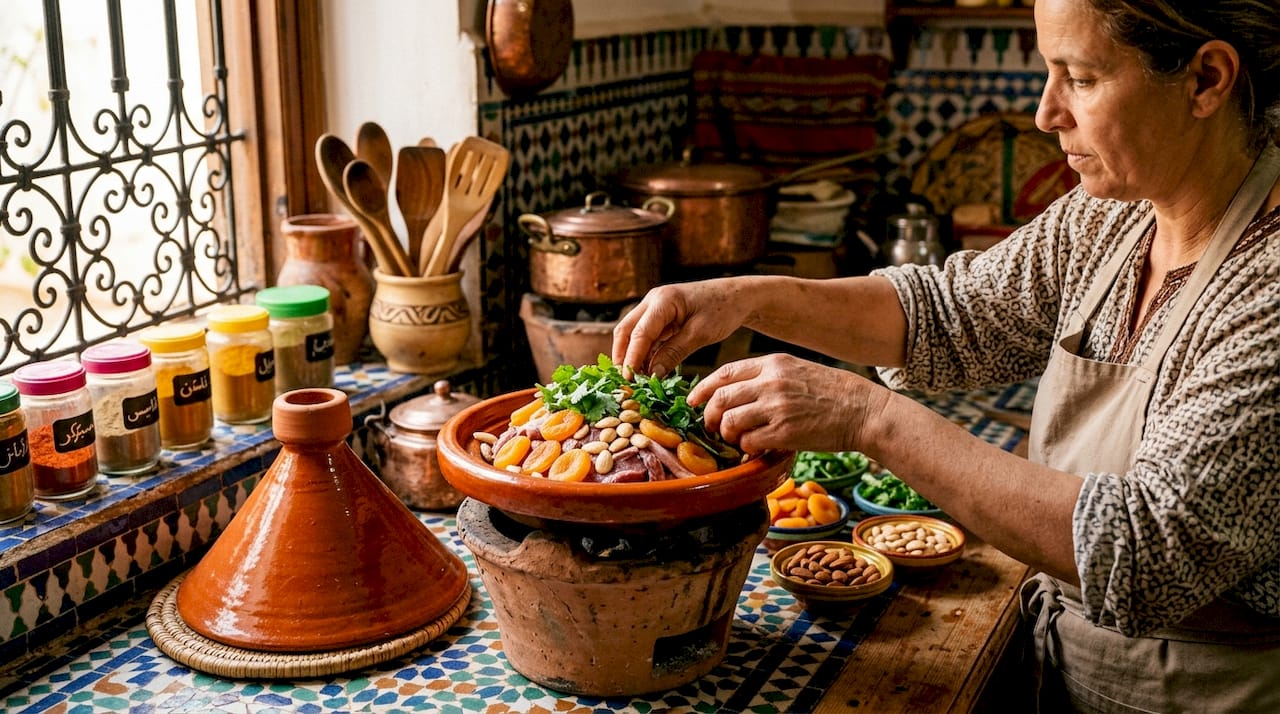
Tagine is Morocco’s most iconic dish. It takes its name from the conical clay pot used to cook it. The slow-cooking method traps steam and returns moisture to the meat, producing tender results that no quick-cook method can replicate. Common versions include chicken with preserved lemon and olives, lamb with prunes and almonds, and kefta (spiced meatballs) with eggs in tomato sauce. Each region puts its own stamp on the recipe, but the cooking method stays the same.
Couscous
Couscous is Morocco’s national dish, and Friday is its dedicated day. Families gather after Friday prayers to share a large communal platter of steamed semolina topped with slow-cooked vegetables and meat. The ritual is so deeply embedded that skipping Friday couscous is genuinely unusual for most Moroccan households. Travelers who time a Friday lunch at a local home or traditional restaurant get a rare window into everyday Moroccan life.
Harira and Ramadan
Harira is a thick tomato and lentil soup seasoned with coriander, ginger, and a squeeze of lemon. It is the dish Moroccans reach for to break the fast during Ramadan, served alongside dates and chebakia (honey-soaked sesame pastries). Outside of Ramadan, harira appears on menus year-round as a warming starter. A bowl costs just a few dirhams at street stalls, making it one of the best-value dishes in the country.
Pastilla
Pastilla is the dish that surprises most first-time visitors. It is a flaky warqa pastry filled with shredded pigeon or chicken, almonds, and eggs, then dusted with powdered sugar and cinnamon. The sweet-savory combination sounds unusual but works beautifully. Pastilla is traditionally served at weddings and celebrations, so finding it on a restaurant menu is a sign you are eating somewhere serious about Moroccan cooking.
Other dishes worth ordering
- Mechoui: Whole lamb slow-roasted in a clay oven until the meat falls from the bone. A specialty of Marrakech’s Djemaa el-Fna square.
- Rfissa: Shredded msemen flatbread soaked in a rich chicken and lentil broth, flavored with fenugreek and ras el hanout.
- Bissara: A thick fava bean soup drizzled with olive oil and dusted with cumin. A popular breakfast in northern Morocco.
- Brochettes: Skewered and grilled lamb or beef, sold at street stalls across the country.
- Zaalouk: A cooked eggplant and tomato salad seasoned with cumin and paprika, served as a cold starter.
Pro Tip: Order zaalouk and bissara as starters before a tagine. Both are cheap, filling, and give you an honest read on a kitchen’s spice work before you commit to a main course.
How do Moroccan dining customs and etiquette enhance the food experience?
Moroccan dining customs are not just background detail. They are the experience itself. Knowing the rules makes you a more welcome guest and a more confident eater.
- Use bread as your utensil. Khobz, the round Moroccan bread, is the primary eating tool at most meals. You tear off a piece and use it to scoop food from the shared platter. Forks exist, but bread is the authentic method. Locals notice and appreciate travelers who make the effort.
- Eat with your right hand only. Using the left hand to eat is considered disrespectful in Moroccan culture. This applies whether you are using bread or fingers. The rule is consistent across the country and across social settings.
- Eat from your side of the platter. Communal dining means everyone eats from the same large dish. Reaching across to the other side is poor form. Stick to the section directly in front of you and let the host serve the choice cuts.
- Accept mint tea when it is offered. Mint tea poured from height into small glasses is Morocco’s universal gesture of welcome. Refusing it is considered rude. The tea is sweet, hot, and refreshing, and the pouring ritual itself is worth watching. Hosts often refill glasses multiple times throughout a meal.
- Expect meals to take time. Slow service and communal meals are central to Moroccan hospitality. Meals are rarely hurried. Waiting between courses is normal and intentional. Rushing a host or asking for the check too early reads as impatience, not efficiency.
Pro Tip: If you are invited to eat in a Moroccan home, bring a small gift of pastries or fruit. Showing up empty-handed is not offensive, but a small gesture earns genuine warmth.
What should travelers know about street food and dining safety in Morocco?
Moroccan street food is one of the great culinary bargains on earth. Street food snacks cost between 5 and 20 MAD ($0.50–$2), and a full street meal runs 30–50 MAD ($3–$5). That price range puts serious, freshly cooked food within reach of any budget.
Choosing safe stalls
The single most reliable safety indicator is crowd size. Busy stalls with high food turnover minimize health risks because food does not sit long enough to spoil. A vendor with a line of locals is almost always a safer bet than an empty stall with a pushy pitch. Stick to food that is visibly hot and cooked to order.
What to eat first
For the first day or two, prioritize cooked dishes. Tagines, harira, brochettes, and cooked salads like zaalouk carry very low risk. Avoid raw salads and unpeeled fruits at unfamiliar stalls until your stomach has adjusted to local water and produce. This is not about fear. It is about giving yourself the best chance to keep eating well for the rest of your trip.
Dining cost breakdown
| Meal type | Price in MAD | Price in USD |
|---|---|---|
| Street snacks (msemen, brochette) | 5–20 MAD | $0.50–$2 |
| Full street meal | 30–50 MAD | $3–$5 |
| Mid-range restaurant dinner | 120–280 MAD | $12–$28 |
| High-end riad dining | 300–500+ MAD | $30–$50+ |
High-end riad dining can exceed 300–500 MAD per person. That price buys an entirely different experience: candlelit courtyards, multi-course Moroccan feasts, and attentive service that turns dinner into an event.
Foods to approach with caution
- Raw salads at low-traffic stalls in your first 1–2 days
- Unpeeled fruit from vendors with no visible refrigeration
- Freshly squeezed juice from stalls where the equipment looks unclean
- Shellfish at inland markets far from the coast
Pro Tip: Djemaa el-Fna square in Marrakech is spectacular but tourist-priced. Walk two streets back from the square and you will find the same dishes at half the cost, eaten by locals.
How does Morocco’s regional diversity influence its cuisine?
Morocco’s geography creates genuinely distinct regional food cultures. Coastal cities, mountain regions, and desert areas each produce different ingredients and cooking styles. A traveler who eats only in Marrakech misses most of the picture.
Coastal cities
Essaouira, Agadir, and Casablanca sit on the Atlantic and serve some of the freshest seafood in North Africa. Grilled sardines are the coastal staple, sold at harbor-side stalls for almost nothing. Calamari, sea bass, and shrimp tagines appear on menus that would not exist 100 miles inland. The Morocco food tour offered by Moroccotours includes coastal stops specifically for this reason.
Mountain and desert regions
The Atlas Mountains and the Sahara edge produce a meat-heavy, spice-forward cuisine. Mechoui (whole roasted lamb) is a mountain celebration dish. Berber tagines from the High Atlas use preserved lemons, wild herbs, and dried fruits that reflect what grows at altitude. Desert towns near Merzouga and Zagora rely on dates, dried meats, and flatbreads cooked directly on hot coals.
Marrakech versus Fes
Marrakech and Fes represent two distinct culinary personalities. Marrakech is theatrical. Djemaa el-Fna square fills every evening with smoke from brochette grills, vendors selling snail soup, and orange juice carts. Fes carries a more refined tradition rooted in Andalusian influence. The city is known for bastilla (its local spelling of pastilla), slow-cooked lamb dishes, and a pastry culture that reflects centuries of royal court cooking. Eating in both cities gives you a far richer read on what Moroccan cuisine actually is.
Produce and pantry staples
Morocco sits at the intersection of Mediterranean and sub-Saharan growing zones. The result is extraordinary produce variety: blood oranges from Marrakech, argan oil from the Souss Valley, saffron from Taliouine, and fresh figs, pomegranates, and dates across the South. Berber communities in the mountains rely on barley, dried legumes, and preserved vegetables through winter. These ingredients show up in dishes you will not find in any other country.
Key takeaways
Moroccan cuisine rewards travelers who slow down, eat communally, and follow local customs at the table.
| Point | Details |
|---|---|
| Aromatic, not spicy | Moroccan food uses cumin, cinnamon, and ras el hanout for depth, not chili heat. |
| Bread is the utensil | Use khobz with your right hand to scoop food from shared platters. |
| Street food is safe and cheap | Choose busy stalls with hot food; full meals cost 30–50 MAD ($3–$5). |
| Regional variety is real | Coastal, mountain, and desert regions each produce distinct dishes and ingredients. |
| Meals are social rituals | Slow pacing and communal sharing are features of Moroccan hospitality, not inconveniences. |
What eating in Morocco actually taught me
Most food guides treat Moroccan cuisine as a checklist. Try tagine. Drink mint tea. Move on. That approach misses the point entirely.
The most memorable meal I have had in Morocco was not at a riad or a restaurant with a TripAdvisor badge. It was a Friday couscous at a family home outside Fes, eaten from a shared platter with people I had just met. The food was extraordinary, but the food was not the point. The point was the two hours of unhurried conversation, the repeated refilling of tea glasses, and the complete absence of any pressure to be anywhere else. That is what Moroccan food culture actually is.
Travelers who approach Moroccan meals with patience get a fundamentally different experience than those who treat restaurants as pit stops. The slow pace is not a service failure. It is the product. When a host keeps refilling your tea glass, they are telling you that you are welcome to stay. Accepting that invitation is the whole game.
My practical advice for first-time visitors: start with a classic chicken tagine and a glass of mint tea on your first evening. Do not try to eat everything at once. Let your palate adjust to the spice combinations before you move to harira, pastilla, and the more complex dishes. And when someone invites you to eat with them, say yes. The food you eat at a stranger’s table in Morocco will outlast any restaurant meal in your memory.
For travelers who want to connect food with culinary travel experiences more broadly, the principle is the same everywhere: the best meals are the ones that teach you something about where you are.
— Moroccotours.co
Moroccotours.co: taste Morocco with a private guide
Moroccotours.co designs luxury Morocco tours that put food at the center of the itinerary, not as an afterthought. Private guides take you to the market stalls, family kitchens, and coastal harbors that most travelers never find on their own. The 9-day culinary tour covers Marrakech, Fes, Essaouira, and the Atlas Mountains, with meals planned around regional specialties at each stop. Every detail, from dietary preferences to dining pace, is arranged in advance. If you want to eat well in Morocco and understand what you are eating, a guided experience is the most direct route to both.
FAQ
What is the most popular food in Morocco?
Tagine is the most widely eaten dish in Morocco, available in every city and region. Couscous is the national dish and holds a special place as the traditional Friday family meal.
Is food in Morocco spicy?
Moroccan food is aromatic rather than spicy. Most dishes use cumin, cinnamon, paprika, and ras el hanout for flavor, and the heat level is mild to medium for most Western palates.
How much does food cost in Morocco?
Street snacks cost 5–20 MAD ($0.50–$2), and a full street meal runs 30–50 MAD ($3–$5). Mid-range restaurant dinners average 120–280 MAD ($12–$28), while high-end riad dining can exceed 300–500 MAD ($30–$50).
Is it safe to eat street food in Morocco?
Street food is generally safe when you choose busy stalls where food is cooked hot and fresh. Avoid raw salads and unpeeled fruit at low-traffic stalls during your first day or two.
What do Moroccans drink with meals?
Mint tea is the universal drink at Moroccan meals, poured from height into small glasses as a sign of hospitality. It is sweet, hot, and typically refilled multiple times throughout a meal.