
Best Time to Visit Morocco: Season-by-Season Guide
- Spring and autumn offer the best weather, crowd balance, and cultural access for traveling in Morocco.
- Coastal towns are suitable year-round, while inland cities and deserts are best visited during milder seasons.
- Planning around regional climate, festivals, and Ramadan enriches the travel experience and optimizes value.
Morocco tricks a lot of travelers. The assumption that summer is the golden window for North Africa leads thousands of people into 104°F heat in Marrakech’s medinas every July, wondering where they went wrong. The truth is that choosing the best time to visit Morocco depends entirely on where you’re going, what you want to experience, and how much you’re willing to trade comfort for price. This guide cuts through the noise and gives you exactly what you need to pick the right window for your trip.
Table of Contents
- Key takeaways
- Best time to visit Morocco: the seasonal breakdown
- Morocco travel best months: what each season offers
- Region-by-region guide to timing your visit
- Cultural and practical timing: Ramadan, festivals, and budgets
- My honest take on choosing when to go
- Plan your Morocco trip with the right timing built in
- FAQ
Key takeaways
| Point | Details |
|---|---|
| Spring and autumn win overall | March to May and September to November deliver the best weather, crowd balance, and cultural access. |
| Summer works only on the coast | Inland cities exceed 40°C in summer; coastal towns like Essaouira stay comfortable near 27°C. |
| Winter saves serious money | Off-peak season cuts accommodation costs by 30 to 50%, ideal for budget-conscious travelers. |
| Ramadan reshapes the experience | Business hours shift and food availability changes, but cultural immersion deepens significantly. |
| Book early for high season | Spring slots fill fast. Booking 2 to 3 months ahead protects both availability and price. |
Best time to visit Morocco: the seasonal breakdown
Morocco does not have one climate. It has four. The Atlantic coast runs cool and breezy year-round. The Sahara Desert swings from scorching days to near-freezing nights. The Atlas Mountains hold snow well into spring. And cities like Fes and Marrakech bake in summer while staying perfectly mild in April. Understanding this geography is the foundation of any smart Morocco travel plan.
Here is how the numbers actually look across regions and seasons:
| Season | Months | Marrakech temps | Coastal temps | Desert temps | Rainfall |
|---|---|---|---|---|---|
| Spring | Mar to May | 20 to 28°C (68 to 82°F) | 18 to 23°C | 25 to 32°C | Low to moderate |
| Summer | Jun to Aug | 38 to 42°C (100 to 108°F) | 22 to 27°C | 40 to 45°C | Minimal |
| Autumn | Sep to Nov | 22 to 30°C (72 to 86°F) | 20 to 25°C | 22 to 35°C | Low to moderate |
| Winter | Dec to Feb | 12 to 18°C (54 to 64°F) | 15 to 20°C | 5 to 18°C | Moderate |
The gap between coastal and inland temperatures in summer is the single most important fact that Morocco newcomers miss. That gap is what makes or breaks a summer trip.
Morocco travel best months: what each season offers
Spring (March to May): the high-water mark
Spring is the peak season for good reason. Temperatures in Marrakech and Fes sit between 20 and 28°C; wildflowers carpet the valleys around the Atlas foothills, and the rose festival in the Dades Valley draws travelers who know Morocco beyond the postcard shots. March 2026 saw an 18% jump in arrivals compared to the prior year, which tells you this window is not a secret anymore.
What you get in spring:
- Comfortable walking temperatures for medina exploration
- The Fes Festival of World Sacred Music (usually May or June)
- Blooming almond and rose landscapes across rural Morocco
- Full access to mountain trails before summer heat sets in
- Longer daylight hours without brutal afternoon sun
The catch is demand. Accommodations fill up, especially around Easter when prices rise 20 to 40% above baseline.
Pro Tip: Book spring accommodations 2 to 3 months in advance. Luxury riads in Marrakech and Fes sell out first. Locking in your riad early also gives you leverage to negotiate experiences like private cooking classes or hammam sessions as part of the package.
Autumn (September to November): the smart traveler’s season
Autumn is arguably the most underrated Morocco travel window. Summer crowds thin out in September, but temperatures remain warm and genuinely pleasant through October. The harvest season brings pomegranate, olive, and date markets to life across the country. The Sahara is still warm enough for comfortable overnight camping without the punishing summer heat.
Morocco’s shoulder seasons offer the best combination of pleasant weather, lighter crowds, and cultural energy. October sits at around 22 to 26°C in most inland cities, which is exactly the temperature range that makes wandering a souk for three hours feel like a pleasure rather than an endurance test.
Summer (June to August): coastal only, please
Inland Morocco in summer is not for the faint-hearted. Temperatures exceed 40°C in cities like Marrakech and Fes, and the streets empty during midday as locals retreat indoors. If you insist on visiting in summer, coastal towns stay comfortable at around 27°C thanks to Atlantic breezes.
Some travelers do manage inland summer well. Timing activities to early mornings and evenings helps considerably, and the dry heat feels less suffocating than humid tropical climates. But you need to confirm your accommodations have working air conditioning before you arrive. Many traditional riads rely on thick walls for natural cooling, which handles mild heat but struggles at 42°C.
Winter (December to February): budget season with caveats
Winter is Morocco’s quiet season, and the savings are real. Accommodation prices drop 30 to 50% compared to the spring peak. Coastal cities like Agadir and Essaouira hold daytime temperatures around 18 to 20°C, making them genuinely pleasant for beach walks and seafood lunches. The challenge comes with the Atlas Mountains, where roads can close from snow, and the Sahara, where nights drop near 0°C. Pack more thermal gear than you think you need for winter desert camping.
Region-by-region guide to timing your visit
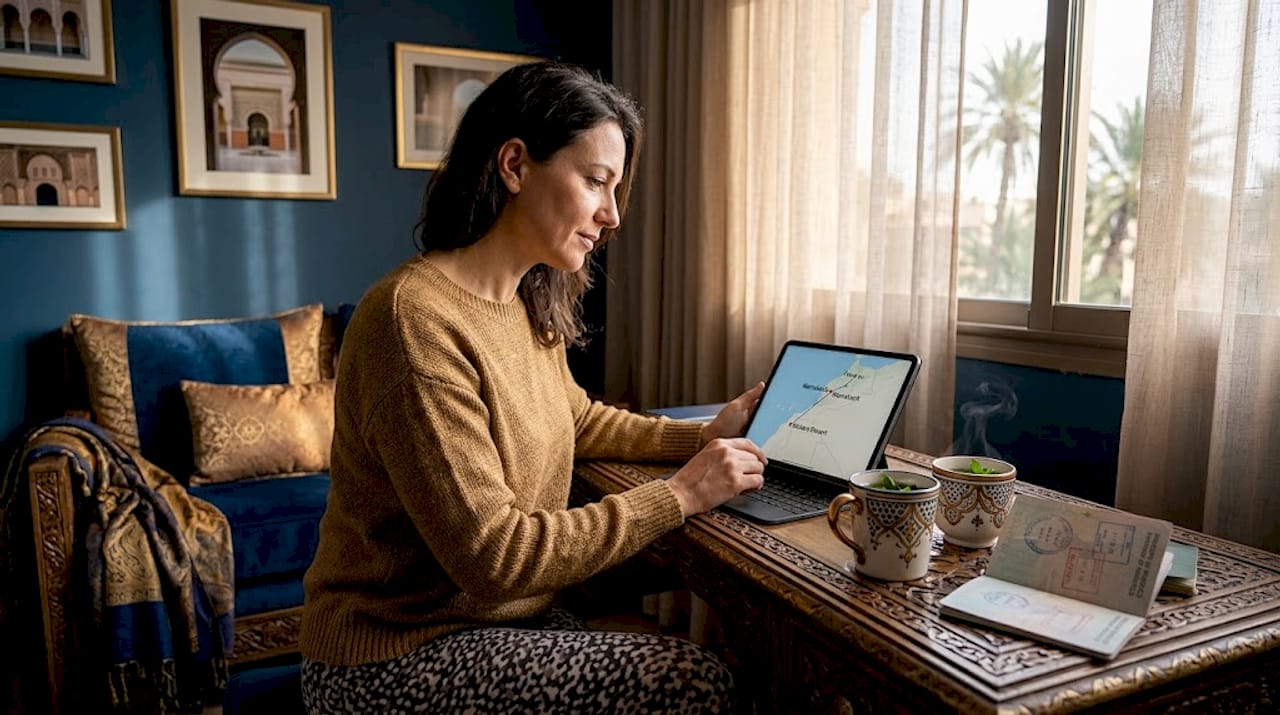
Marrakech and Fes
Both cities shine in spring and autumn. Spring gives you the gardens of Marrakech at their greenest and Fes at its coolest before the summer press. Autumn delivers a golden light that photographers specifically plan trips around. Avoid July and August in both cities unless you are prepared to restructure your day entirely around heat.
Atlas Mountains
For trekking the Atlas, April to June and September to October are ideal. Snow clears from the high passes in April, trails are firm, and wildflowers at altitude make the scenery exceptional. Winter actually draws a small but dedicated ski crowd to Oukaimeden, Morocco’s highest ski resort, which sits at 2,600 meters above sea level. That experience is genuinely surprising and worth knowing about.
Sahara Desert
The ideal time for a desert tour is October through April. Summer heat in the Sahara reaches levels that are difficult to manage even for experienced desert travelers. October and November offer warm days, cool nights, and the kind of star visibility that makes a desert overnight feel worth every dirham. If you are traveling in winter, plan for serious cold after sunset and bring layers you would not expect to need in Africa.
| Region | Best months | Avoid | Notes |
|---|---|---|---|
| Marrakech | Apr, May, Oct, Nov | Jul, Aug | Book early for spring |
| Fes | Mar to May, Sep to Nov | Jul, Aug | Medina is walkable in shoulder seasons |
| Atlas Mountains | Apr to Jun, Sep to Oct | Jan to Feb (snow) | Ski season: Dec to Feb at Oukaimeden |
| Sahara Desert | Oct to Apr | Jun to Aug | Winter nights near freezing |
| Essaouira / Agadir | Year-round | None specifically | Consistent Atlantic breeze |
Coastal towns
Essaouira and Agadir are the exceptions to every seasonal rule. Their Atlantic position keeps summer temperatures manageable and winters mild enough for beach days. If you are traveling with children or heat-sensitive companions, anchoring part of your itinerary in these towns gives everyone a comfortable base while still accessing the wider country.
Cultural and practical timing: Ramadan, festivals, and budgets
Ramadan: plan around it, not away from it
Ramadan shifts every year because it follows the Islamic lunar calendar, moving roughly 11 days earlier each solar year. Traveling during Ramadan changes the rhythm of your trip significantly. Many restaurants close during daylight hours. Shops operate on shortened schedules. Alcohol service disappears from public spaces in many areas.
But the evening experience is unlike anything else. After sunset, the Iftar meal breaks the fast, and the country comes alive with a warmth and communal energy that no other season replicates. Experiencing Ramadan with flexible expectations around service hours gives you a depth of cultural understanding that most Morocco travelers simply never access.
Key festivals and events by season
- Spring: Rose Festival (Dades Valley, May), Fes Festival of World Sacred Music (May or June), Marrakech International Film Festival (typically November but check annual dates)
- Summer: Gnaoua World Music Festival in Essaouira (June), beach season peaks along the Atlantic
- Autumn: Olive harvest celebrations across rural Morocco, date harvest in the Tafilalt oasis region
- Winter: New Year celebrations, quieter medinas, ski season in the Atlas
Pro Tip: If your Morocco itinerary includes significant time in a medina, plan a slow first day. Spending your initial morning in a cafe or a riad courtyard before hitting the souks lets your senses adjust. This kind of soft arrival dramatically reduces the overwhelm that catches first-time visitors off guard.
Budget considerations by season
Winter is the clear winner for value. Spring and early autumn sit at mid-range pricing. The Easter window in spring can spike Riad rates as sharply as any European city during a major holiday. If you want the ideal time for a Morocco trip at the lowest price, January and February deliver the best rates. Just go coastal or plan your desert days around midday warmth and layers for the night.
Mixing an intense city stay with a coastal or desert segment also balances the experience in a way that pure city itineraries rarely do. The contrast of Fes one week and Essaouira the next is one of Morocco’s genuine gifts to travelers who plan thoughtfully.
My honest take on choosing when to go
I’ve worked with travelers heading to Morocco across every season, and the pattern I keep seeing is this: people optimize for the wrong variable. They chase the cheapest flight or the most popular Instagram months without asking whether that timing actually fits what they want from the trip.
Spring is genuinely the best for most people. But autumn? I think it outperforms spring for a certain kind of traveler. The crowd levels are lower, the light is warmer and more dramatic, and the harvest markets add a layer of authentic local life that spring’s festival crowd sometimes overshadows. My recommendation to anyone who has flexibility is to target mid-October without hesitation.
The Ramadan question comes up constantly, and I want to be direct: do not automatically avoid it. If you are someone who travels to understand a place rather than just photograph it, Ramadan in Morocco is one of the most memorable travel experiences in the world. The trade-offs around restaurant hours are real but manageable. What you gain in emotional and cultural depth more than compensates.
In summer: I tell people to avoid inland Morocco in July and August unless they genuinely thrive in heat and have confirmed AC in every accommodation. The exceptions are the coast and travelers with very early and late daily schedules. And winter? Wildly undervalued. A coastal winter trip to Agadir combined with a desert segment is a legitimate hidden gem for travelers who book it knowing what to expect.
The broader lesson is that Morocco rewards travelers who plan with regional awareness rather than treating the country as one monolithic destination. It is not. Each region has its own climate logic, and the best trips I have seen layer those regions against the right season.
— Moroccotours.co
Plan your Morocco trip with the right timing built in
Knowing when to go is one thing. Building an itinerary that actually uses that timing well is another. At Moroccotours, every tour we design accounts for regional climate, cultural calendar, and the kind of experience each traveler is after. The 14-Day Morocco Highlights Tour covers the imperial cities and the Sahara and is specifically calibrated for spring and autumn travel, when every segment lands in its optimal weather window. If you want luxury woven through the adventure, the 10-Day Morocco Signature Tour blends premium accommodations with desert and medina highlights across the most comfortable months. For those drawn specifically to the desert, the 8-Day Morocco Desert Tour works beautifully from October through April. Book early for spring departures. They sell out faster than any other window.
FAQ
When is the best time to visit Morocco overall?
Spring (March to May) and autumn (September to November) are the best overall periods, with temperatures between 20 and 28°C and access to all regions without extreme heat or cold.
Is Morocco worth visiting in summer?
Coastal towns like Essaouira and Agadir stay around 27°C and are worth visiting in summer, but inland cities like Marrakech exceed 40°C and require careful daily planning to manage the heat.
How does Ramadan affect travel in Morocco?
Ramadan shifts the country’s daily rhythm, with restaurants closed during daylight hours and shortened business hours, but evenings become culturally rich and deeply immersive for travelers who plan accordingly.
What is the cheapest time to visit Morocco?
Winter (December to February) offers the lowest prices, with accommodation rates 30 to 50% below spring peak, particularly along the Atlantic coast where daytime temperatures remain mild.
Do I need warm clothes for a Morocco desert trip?
Yes, even in shoulder seasons. Winter desert nights drop near 0°C, and thermal layers plus a heavy jacket are strongly recommended for overnight desert camps regardless of how warm the days feel.