
Essaouira travel guide: culture, and beaches
TL;DR:
- Most travelers underestimate Essaouira’s cultural and historical significance, viewing it as a quick stop from Marrakech.
- The city’s rational 18th-century medina uniquely blends European military architecture with Moroccan urban planning, reflecting its vibrant Atlantic trading past.
- Embracing slow travel and local connections allows visitors to immerse themselves in Essaouira’s creative music scene, coastal relaxation, and authentic cultural experiences.
Most travelers who visit Morocco put Essaouira on a half-day list, sandwiched between a morning in Marrakech and dinner back at the riad. That is a mistake. Essaouira is a UNESCO World Heritage Site with a living creative culture, an Atlantic coastline built for serious kitesurfers, and a medina so architecturally distinct from the rest of Morocco that historians still study it. For travelers who want something more than Instagram checkboxes, this city rewards patience, curiosity, and a well-planned stay.
Table of Contents
- Discovering Essaouira’s medina: a UNESCO World Heritage site
- Essaouira’s vibrant cultural scene and creative music heritage
- Beach relaxation and world-class kitesurfing in Essaouira
- Getting to and around Essaouira: travelers’ practical tips
- Crafting your Essaouira itinerary: balancing culture and relaxation
- Redefining luxury travel in Essaouira: embracing slow cultural immersion
- Plan your luxe Essaouira experience with Morocco Tours
- Frequently asked questions
Key Takeaways
| Point | Details |
|---|---|
| Essaouira medina’s heritage | The medina is a UNESCO World Heritage Site known for its 18th-century fortified design blending Moroccan and European styles. |
| Vibrant cultural life | Essaouira thrives as a creative city of music with festivals and artistic traditions rooted in diverse cultural identities. |
| Year-round beach activities | The city offers excellent kitesurfing from spring through fall and relaxing beach mornings before afternoon winds pick up. |
| Travel tips | Private transfers ensure smooth journeys from Marrakech and the airport, avoiding inconvenient taxi haggling. |
| Luxury travel approach | Staying multiple nights in boutique riads allows you to savor Essaouira’s relaxed pace, sunset culture, and authentic music scene. |
Discovering Essaouira’s medina: a UNESCO World Heritage site
The medina of Essaouira is not like other historic city centers in Morocco. Most old medinas grew organically over centuries, shaped by trade routes, tribal geography, and informal expansion. Essaouira’s medina was designed. Commissioned by Sultan Mohammed III in 1764 and built largely by a French military architect named Théodore Cornut, it follows a rational grid pattern that feels more like a small European port city than a North African market town.
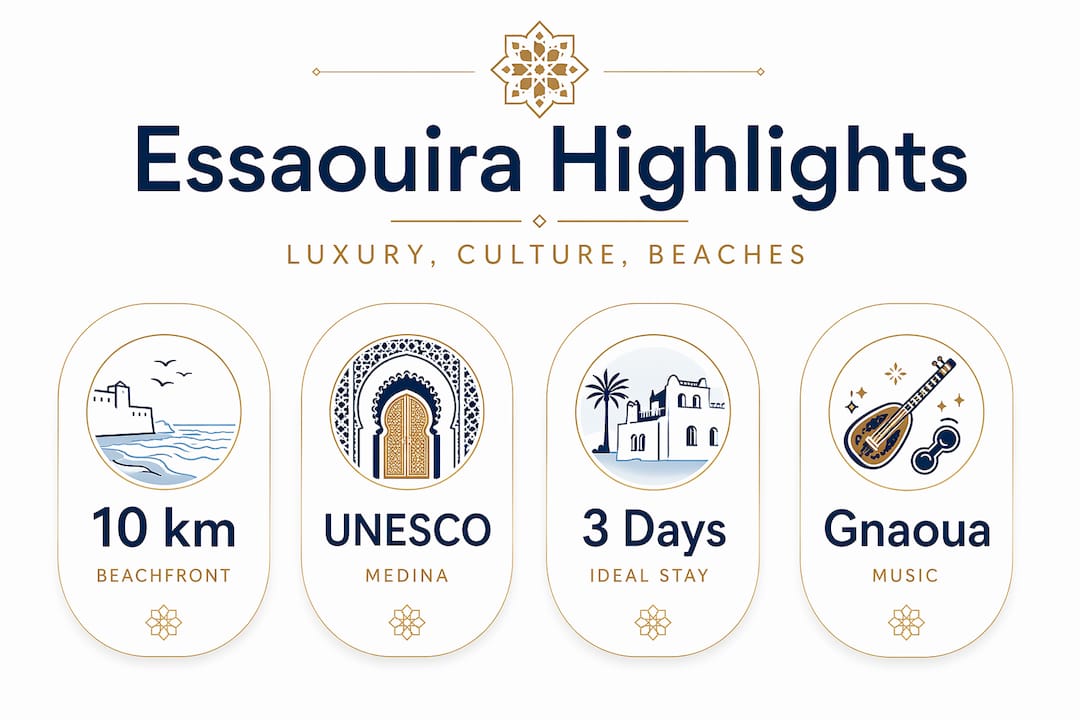
That hybrid character is exactly what makes it so compelling for culturally curious travelers. The medina’s UNESCO inscription in 2001 recognized its exceptional preservation of an 18th-century fortified port city that uniquely blends European military architecture with traditional Moroccan urban planning. Walk the streets for an hour and you will notice the difference immediately: wider lanes, more symmetrical facades, and a sense of breathing room you rarely find in Fes or Marrakech.
Key landmarks worth your time inside the medina:
- Skala de la Ville: The seafront rampart running along the northern edge of the city, lined with Portuguese cannons and offering unobstructed Atlantic views. The sunset here is genuinely exceptional.
- Bab Doukkala: The main landward gate into the medina, built in traditional Moroccan style and still a daily gathering point for locals.
- The Mellah (Jewish Quarter): Essaouira was historically home to a large Jewish merchant community whose commercial influence shaped the city’s trading identity. The Mellah’s crumbling facades and Star of David carvings still visible in doorways tell that story quietly. The Morocco Jewish heritage tour connects this history across multiple cities.
- Artisan souks: Unlike Marrakech’s souks, which can feel aggressive to navigate, Essaouira’s craft markets have a calmer energy. Thuya wood carving is the local specialty, and master craftsmen have workshops scattered throughout the medina.
| Landmark | Type | Best time to visit | Time needed |
|---|---|---|---|
| Skala de la Ville | Rampart viewpoint | Late afternoon | 45 minutes |
| Bab Doukkala | Historic gate | Morning | 15 minutes |
| Mellah quarter | Cultural neighborhood | Morning | 1 hour |
| Thuya wood souks | Artisan market | Midday | 1–2 hours |
| Moulay Hassan Square | Central square, cafes | Anytime | 30 minutes |
The architectural contrast you experience walking Essaouira’s medina is not accidental. It reflects the city’s trading past as a strategic Atlantic port connecting sub-Saharan Africa, Europe, and the Arab world. Portuguese, French, Arabic, Berber, and Jewish influences all left marks on the stone. For travelers interested in going deeper into Morocco’s historic urban legacy, the imperial cities tour highlights paired Essaouira with Fes, Meknes, and Marrakech for a fuller picture.
Essaouira’s vibrant cultural scene and creative music heritage
What separates Essaouira from purely historic destinations is the fact that it is still creating culture, not just preserving it. Essaouira holds UNESCO recognition as a Creative City of Music, with a year-round scene of festivals and urban art fueled by a long history of blended Jewish, Muslim, and Berber identities. That mix is not just demographic history. It actively shapes what you hear in the streets, what you see on gallery walls, and which musicians gather here from across Africa and beyond.
The most famous event is the Gnaoua World Music Festival, held annually in June. Gnaoua music has roots in the spiritual traditions of sub-Saharan African communities brought to Morocco centuries ago. The festival draws international collaborators from jazz, blues, and world music who perform alongside Gnaoua masters in free open-air concerts on Moulay Hassan Square and the beachfront. Tickets for most performances are free, which means the crowds are local and genuine rather than curated tourist audiences.
Cultural events and festivals throughout the year:
- Gnaoua World Music Festival (June): The flagship annual event, attracting 500,000 visitors and internationally recognized musicians.
- Atlantic Andalusia Festival (fall): Celebrates the shared musical heritage of Morocco and Andalusian Spain, with classical and traditional performances in the medina.
- Swira Breaking Jam: A newer contemporary festival centered on hip-hop, breakdancing, and urban art that reflects the younger generation’s creative energy.
- Year-round gallery openings: The medina has a growing number of independent art galleries representing local and international artists drawn to Essaouira’s light and creative atmosphere.
The city’s interfaith cultural identity runs deep. For centuries, Jewish merchants, Sufi Muslim brotherhoods, and Amazigh (Berber) communities coexisted here in ways that shaped distinct artistic and musical vocabularies. That layered history is part of what UNESCO recognized, and it is something you feel walking through the city at dusk when street musicians warm up near the square.
Beach relaxation and world-class kitesurfing in Essaouira
Essaouira’s beach stretches for roughly 10 kilometers south of the medina. Wide, flat, and buffered by Atlantic winds, it is one of the most unusual beach environments in Morocco. The local nickname, “the Windy City of Africa,” is not a marketing phrase. It is an accurate description that has significant practical implications for how you plan your day.
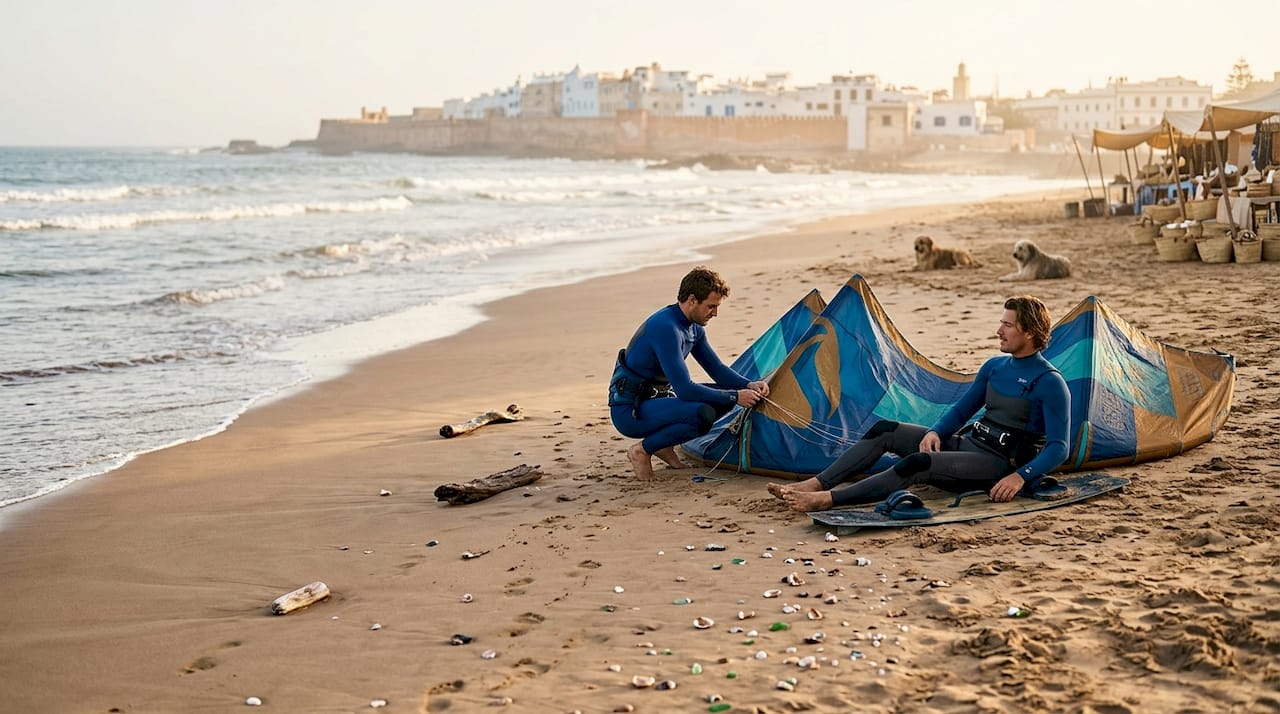
Essaouira offers peak kitesurfing conditions from April to October, when trade winds blow steadily between 18 and 30 knots, making it ideal for all skill levels. Several established kitesurf schools operate near the beach with certified instructors and quality equipment rentals. Whether you are a first-timer wanting a two-hour taster lesson or an experienced rider looking for consistent daily sessions, the infrastructure is solid.
Beach planning essentials for travelers:
- Go in the morning. Winds are typically light before noon, making the first half of the day genuinely pleasant for sunbathing, reading, or a relaxed beach walk. By early afternoon the wind picks up significantly, which is perfect for kiters but not ideal for stretched-out relaxation.
- Beach clubs and sunbeds. A small number of beach clubs have appeared near the north end of the beach offering sunbeds, food service, and basic facilities. These are not Ibiza-style operations. They are simple and appropriate to the city’s vibe.
- Camel rides. Available on the beach and genuinely popular with international visitors. Worth doing once for the novelty.
- Swimming. The Atlantic currents can be strong, especially in the afternoon. Always check local conditions. The beach is more suited to wading and shoreline walking than deep-water swimming.
Pro Tip: Book your kitesurf lessons for consecutive mornings rather than afternoons. Instructors often have more time and patience early in the day, and you will have calmer water for your first sessions before the full wind arrives.
For travelers building unique itineraries in Morocco, Essaouira’s beach adds a rare coastal dimension that most Morocco itineraries skip entirely in favor of desert or medina experiences.
Getting to and around Essaouira: travelers’ practical tips
Essaouira sits on Morocco’s Atlantic coast, roughly 175 kilometers west of Marrakech. There is no train connection. Your options are road travel or flying into Essaouira-Mogador Airport, which receives a limited number of direct European flights.
Arriving from Marrakech:
The drive from Marrakech takes 2.5 to 3 hours by private transfer, typically costing €70–90 depending on vehicle class. Shared buses operate for around €10 but involve waiting, crowded stations, and no flexibility on timing. For a trip, the private transfer is the obvious choice. The road winds through the foothills of the Atlas Mountains and across the argan tree plain, which is genuinely beautiful and worth enjoying from a comfortable vehicle.
- Book your private transfer in advance. Last-minute bookings from Marrakech still work, but peak season can limit vehicle availability for quality operators.
- Combine the drive with a stop. Argan cooperatives run by women’s collectives operate along the road to Essaouira and offer genuine production tours and product purchases. A 20-minute stop adds context to the landscape you are driving through.
- From Essaouira-Mogador Airport. The airport is approximately 15 km from the medina and is not walkable. Pre-arranged private taxis cost €15–20 and are the standard choice. Do not count on rideshare apps for this route.
- Getting around the city itself. The medina is entirely walkable once you are inside it. Petit taxis cost roughly $1–2 to reach the medina from outside and are plentiful. For day excursions to the beach or Argan country, a private driver arranged through your accommodation or tour operator is the most efficient option.
Pro Tip: Avoid treating Essaouira as a day trip from Marrakech. Three hours of travel each way for three hours of rushed medina wandering is a poor exchange. A Morocco itinerary that builds in two or three nights here gives you time for the city to actually unfold.
Crafting your Essaouira itinerary: balancing culture and relaxation
The core tension most travelers face in Essaouira is simple: there is more to see and feel here than a single day allows, and the city punishes rushing. Here is how a well-structured multi-day stay actually works.
Three-day framework:
- Day one: Orient and explore. Arrive late morning, check into your riad, and spend the afternoon walking the medina without a fixed agenda. Find the Skala ramparts before sunset. Dinner at a seafood restaurant near Moulay Hassan Square. In the early evening, listen for live music coming from the square or nearby cafes.
- Day two: Beach morning, culture afternoon. Head to the beach by 8 am for the calm morning window. Back to the medina by noon. Visit the Sidi Mohammed Ben Abdallah Museum for local arts and history. Afternoon stop in a thuya wood workshop. Sunset from a rooftop terrace with mint tea. Check the cultural calendar for evening concerts or gallery events.
- Day three: Day trip or deeper medina. The Diabat ruins (a small, partially preserved historic site south of the city along the beach) are worth a morning walk. Alternatively, visit the argan cooperatives east of town before an early-afternoon departure.
| Stay length | Experience depth | Best for |
|---|---|---|
| 1 day (day trip) | Surface only, no evening culture | Not recommended for travelers |
| 2 nights | Medina and beach basics, one evening | Minimum for a meaningful visit |
| 3 nights | Full medina, beach mornings, evening music | Ideal for most itineraries |
| 5 nights | Festival attendance, day trips, workshops | Best for immersive cultural visits |
For accommodation, boutique riads inside the medina walls are the clear choice. Staying in a boutique riad rather than rushing through as a day visitor gives you slow-paced access to sunset rooftops and nighttime music that define the Essaouira experience. Look for properties near the skala for easy access to both the beach and the heart of the medina.
Pro Tip: If your visit coincides with the Gnaoua Festival in June, book accommodation at least three months in advance. Properties fill completely and rates rise significantly during festival week. A culinary tour in Morocco that concludes in Essaouira during festival season makes for an unusually complete journey. The Morocco signature tour can be structured to include the Gnaoua Festival with priority event access.
Redefining travel in Essaouira: embracing slow cultural immersion
Here is a perspective worth sitting with: the travelers who leave Essaouira most satisfied are rarely the ones who spent the most money. They are the ones who slowed down enough to let the city reach them.
Experts describe Essaouira as a “slow” destination where the primary activity is essentially wandering through the medina and absorbing the coast, a complete contrast to the sensory intensity of Marrakech. That framing sounds simple, almost dismissive. It is actually the most accurate description of what makes this city special. The value here is not in ticking boxes. It is in the accumulation of small, unhurried moments: the smell of thuya sawdust drifting from a craftsman’s door; the sound of Gnaoua percussion bleeding through a riad wall at 10 pm; and a rooftop breakfast with a view across Atlantic-blue walls to the water.
Typical travel frameworks impose a schedule on destinations. Essaouira resists that. The medina’s layout, the wind patterns, the festival calendar, the pace of the souks: all of it operates on its own rhythm. The travelers who try to force an itinerary onto this city spend their energy fighting it. The ones who build generous time margins and follow curiosity spend their energy enjoying it.
That does not mean arriving without preparation. Knowing which riads offer real rooftop access, which restaurants actually source fresh Atlantic seafood, and which music venues host intimate performances outside festival season—that local knowledge is where genuine travel insight lives. It comes from operators with real relationships in the city, not from booking platforms that treat Essaouira as interchangeable with any other beach destination.
Integrating a local creative workshop into your stay, whether that is a thuya carving session, a traditional cooking class, or a private concert with a Gnaoua musician, creates a connection to place that no hotel amenity can replicate. That is the version of unique travel worth building around. It asks something of you as a traveler. And it gives considerably more in return.
Plan your Essaouira experience with Morocco Tours
Essaouira deserves more than a rushed afternoon, and planning a truly personalized visit requires knowing which riads have genuine rooftop access, which local guides understand the city’s musical heritage, and how to build a flexible itinerary that leaves room for the city to surprise you. That is exactly what Morocco Tours specializes in. From private transfers along the scenic Marrakech road to exclusive stays in boutique riads and curated introductions to local artists and musicians, every detail is arranged in advance so you arrive ready to enjoy rather than organize. Explore the 10-day Morocco tour that includes Essaouira as a coastal highlight, the 14-day Morocco highlights tour connecting imperial cities with Atlantic coast time, or browse the full range of Morocco travel packages to find the itinerary that fits how you travel.
Frequently asked questions
What is the best time of year for kitesurfing in Essaouira?
The peak kitesurfing season runs from April to October, when trade winds blow steadily between 18 and 30 knots, creating reliable conditions for all skill levels.
How do I get from Marrakech to Essaouira comfortably?
A private transfer from Marrakech takes 2.5 to 3 hours and costs approximately €70–90, combining comfort and flexibility that shared buses cannot match.
Is Essaouira appropriate for travelers seeking a relaxing experience?
Yes. Essaouira’s slow pace and beachfront medina setting make it one of Morocco’s most naturally suited destinations for unhurried, high-quality travel focused on culture and coastal relaxation.
What cultural experiences are unique to Essaouira?
Essaouira’s UNESCO Creative City status reflects its unmatched blend of Gnaoua music traditions, a UNESCO-listed medina, and a living artistic community shaped by centuries of Jewish, Berber, and Muslim coexistence.
Can I easily reach Essaouira’s medina from the airport?
The airport sits about 15 km from the medina and is not walkable. Pre-arranging a private transfer costing €15–20 is the standard and most comfortable approach for a smooth arrival.