
Tangier travel guide: luxury, culture, and history
TL;DR:
- Tangier’s rich history as an international zone has created a unique blend of European and Moroccan cultures evident in its architecture, language, and social fabric.
- Visitors can explore its layered sites, enjoy luxurious accommodations like the Fairmont Tazi Palace, and experience the city’s genuine openness through guided cultural tours.
- Staying prepared with trusted transport, licensed guides, and understanding its diverse heritage ensures a safe and deeply enriching luxury experience.
Few cities in the world have been shaped by as many competing civilizations as Tangier. Positioned where the Atlantic meets the Mediterranean and Europe faces Africa across just 14 kilometers of open water, this Moroccan city spent three decades as a fully internationalized zone, attracting painters, diplomats, spies, and writers who found nowhere else quite like it. That layered past is not a footnote. It is the entire point. This guide covers everything a luxury traveler needs: the history behind the culture, where to sleep and eat well, how to get around safely, and which experiences justify making Tangier a destination rather than a stopover.
Table of Contents
- The cultural crossroads of Tangier: history and identity
- Experiencing Tangier: luxury accommodations and dining
- Navigating Tangier: transport, safety, and expert travel tips
- Top cultural and historic sites to explore in Tangier
- Why Tangier’s layered culture offers unmatched luxury experiences
- Plan your bespoke luxury journey in Tangier with Morocco Tours
- Frequently asked questions
Key Takeaways
| Point | Details |
|---|---|
| Tangier’s unique cultural fusion | Tangier’s history as an international zone blends Moroccan and European cultures uniquely for luxury travelers. |
| Luxury accommodations | Properties like Fairmont Tazi Palace offer exquisite heritage settings with modern comforts. |
| Best travel times | Spring and autumn are ideal for visiting with pleasant weather and smaller crowds. |
| Safety tips | Stay alert, use licensed guides, agree on taxi prices, and avoid isolated areas for a safe visit. |
| Exclusive cultural experiences | High-end visitors enjoy personalized tours of historic museums, tapas culture, and coastal sites. |
The cultural crossroads of Tangier: history and identity
Tangier is not a typical Moroccan city, and understanding why requires going back further than most travel guides bother. Phoenician traders established a port here around 1000 BCE. Romans followed, calling it Tingis and making it a provincial capital. Arab, Berber, Portuguese, Spanish, and British powers each held the city at different points over the following centuries, leaving behind mosques, fortifications, churches, and architectural hybrids that no single cultural tradition can fully claim.
The defining chapter, however, came in the 20th century. Tangier served as an international zone from 1925 to 1956, governed collectively by European powers and Morocco, with no single country in charge. That borderless status made Tangier genuinely unlike anywhere else on the planet. Currency speculation was legal. Censorship was minimal. People of vastly different nationalities, religions, and backgrounds lived and worked in close proximity with few of the restrictions that governed other cities.
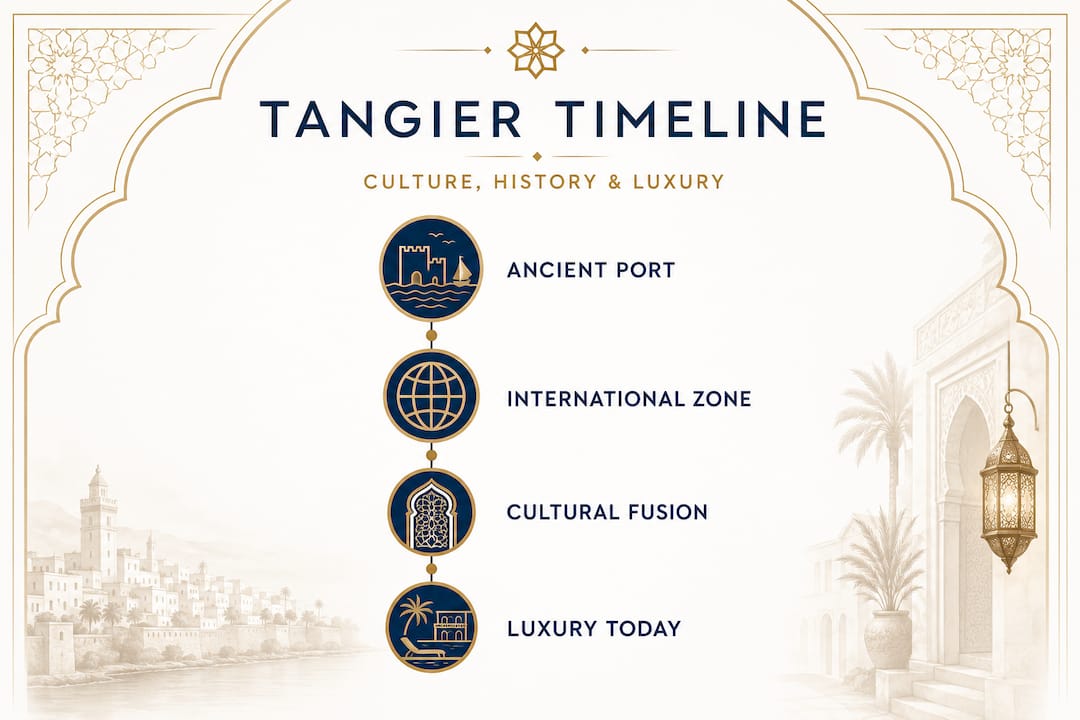
The result was a fusion of European and Moroccan culture unlike anything that developed organically elsewhere. Spanish tapas bars operate today within walking distance of centuries-old riads. Bilingual street signs in Arabic and Spanish appear in the same neighborhoods where calls to prayer echo from minarets. The medina holds mosques, churches, and synagogues within a few hundred meters of each other, a physical record of the tolerance that defined the zone era.
What this history produced for the modern traveler is a city with genuine texture. The European influence is not a tourist overlay. It seeped into the food, the architecture, the social habits, and the way residents move between languages mid-sentence. Tangier is Morocco’s most European city, not because it was colonized by Europeans, but because it was shared with them for decades on terms that both sides negotiated.
Key markers of Tangier’s distinctive cultural identity today include:
- The medina’s religious coexistence: Mosques, the St. Andrew’s Anglican Church (built in 1894), and the historic Synagogue Shaar Raphael all exist within the same walled district.
- Spanish linguistic presence: Many older residents speak Spanish as a first or second language alongside Darija (Moroccan Arabic) and French.
- Architectural eclecticism: Art Deco facades from the 1930s international zone era sit adjacent to traditional Moroccan tile work and carved plaster.
- A literary and artistic legacy: Writers including Paul Bowles, William S. Burroughs, and Henri Matisse all lived or worked in Tangier, drawn by its reputation for creative freedom.
- The Grand Socco: This central plaza connects the medina to the modern ville nouvelle (new city), functioning as a living symbol of the city’s hybrid character.
For travelers already interested in luxury travel in Morocco, Tangier offers something the imperial cities of Fez and Marrakech cannot fully replicate: a cultural identity shaped by openness rather than isolation.
Experiencing Tangier: luxury accommodations and dining
Understanding what makes Tangier distinctive is one thing. Finding the right places to stay and eat is what turns that understanding into a genuinely memorable visit. The city’s luxury hospitality scene reflects its hybrid character, blending Moroccan craftsmanship with European service standards in ways that feel earned rather than contrived.
Where to stay
The standout choice for high-end travelers is the Fairmont Tazi Palace, a restored 1920s palace that offers private gardens, Andalusian-style grounds, and ceilings reaching 12 meters, blending historical opulence with full modern luxury. The property was originally built as a private royal residence, and that sense of inhabiting real history rather than a themed hotel experience is exactly what sets it apart. Book directly with the hotel to access exclusive packages that include private guided medina walks and hammam treatments.
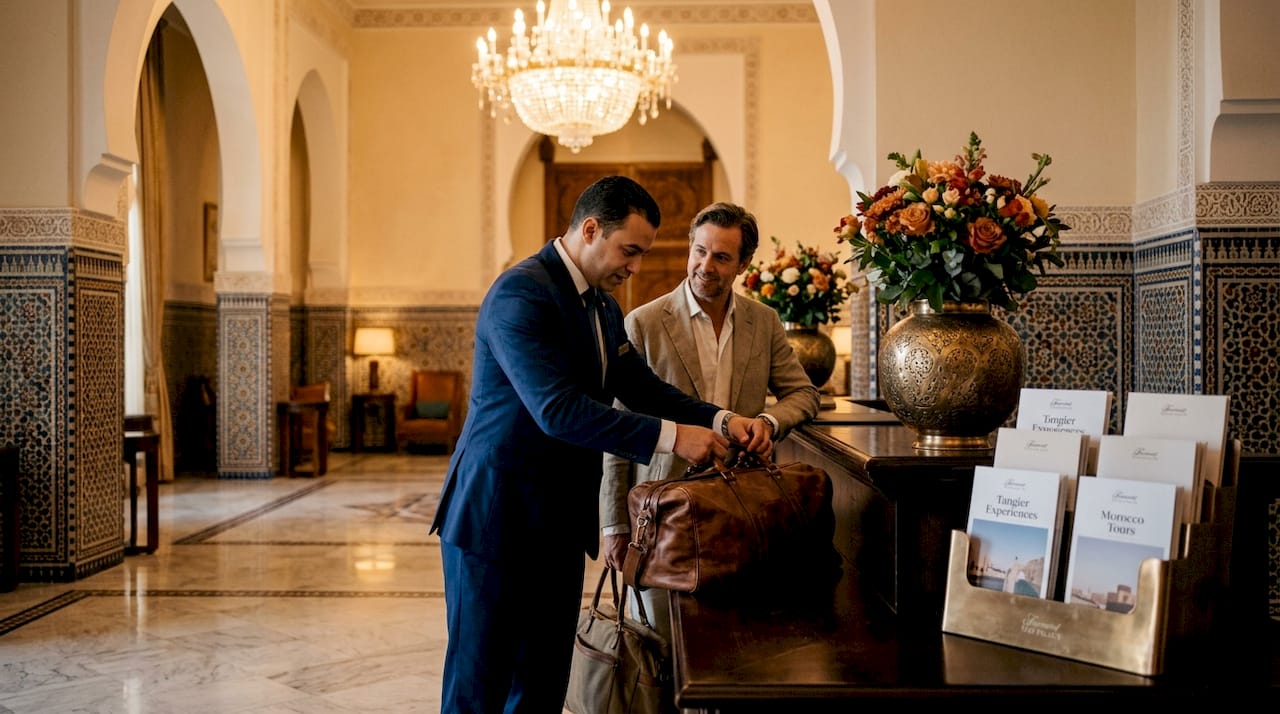
Other strong options for luxury travel accommodations in the city include boutique riads in the Kasbah neighborhood, where private courtyards and rooftop terraces provide seclusion without sacrificing proximity to the main cultural sites.
Where to eat
Dining in Tangier rewards travelers who look beyond the obvious. The city’s best food tells the same story as its architecture: two cultures converging and producing something neither could have created alone.
- El Tangerino on the Corniche is the most consistently recommended Spanish-Moroccan fusion restaurant, offering tapas and fresh seafood at MAD 93 to 230 per person with live music and direct sea views. Request a table upstairs in the non-smoking section for the best views and a quieter experience.
- Dar Nour in the Kasbah serves traditional Moroccan cuisine in a riad setting, with menus that rotate seasonally based on market availability.
- Rooftop dining at boutique hotels across the medina offers some of the most dramatic sunset views in North Africa, with the Strait of Gibraltar visible on clear evenings.
For travelers who want to understand the city through its food, guided street food tours are worth the time. These typically cover six or more stops and include local specialties like caliente (spiced chickpea cakes sold from street carts, priced at approximately MAD 50 for the full tour) as well as freshly fried sardines, Moroccan mint tea service, and tapas-style snacks in the Petit Socco area.
Pro Tip: When booking El Tangerino or similar restaurants for groups, call ahead to reserve the upstairs non-smoking section and request a private dining arrangement. Many Tangier restaurants will accommodate custom menus with advance notice, particularly for groups of four or more.
Private hammam experiences round out the luxury picture. Several traditional hammams in the medina offer private bookings, where an attendant guides you through the full ritual scrub and steam sequence without a shared communal space. This is a genuinely restorative experience and a far cry from the sanitized spa versions found in European hotels.
Navigating Tangier: transport, safety, and expert travel tips
Getting to and around Tangier is easier than most first-time visitors expect, provided you plan ahead and know which options are worth the cost.
Arriving in Tangier
Tangier Ibn Battouta Airport sits 12 kilometers from the city center, with taxi rides taking 20 to 30 minutes and costing approximately £20 (around 250 MAD). Always confirm the fare before getting in. The airport serves direct flights from major European hubs, including Madrid, Paris, and Amsterdam, making Tangier an easy first stop on a broader Morocco itinerary.
Arriving by ferry from Tarifa in southern Spain takes about one hour on the water, plus security and boarding time. The Tangier Med port is the main entry point, and from there it is approximately 40 kilometers into the city center by road. Budget an hour and a half for the full transfer. The high-speed Al Boraq train connects Tangier to Rabat and Casablanca, with services running roughly hourly and reaching Casablanca in under two hours.
Getting around the city
Petit taxis, the small colored cabs operating within city limits, are the most practical option for moving between the medina, the ville nouvelle, and the Kasbah. The key rule: always agree on the fare before you get in or insist the driver uses the meter. Short trips within the city should cost between MAD 15 and MAD 30. Grand taxis, the larger shared vehicles, are better for longer runs to destinations like Cape Spartel.
For Morocco regional tours from Tangier, private transfers arranged through your tour operator eliminate the negotiation entirely and are the most comfortable option for moving between northern Morocco’s key sites.
Safety in Tangier
Tangier is generally safe for alert travelers who stick to well-trafficked areas in the medina and kasbah. The vast majority of visits are entirely trouble-free. That said, there are specific habits worth adopting.
Here are the key safety tips for luxury travelers visiting Tangier:
- Agree on taxi fares explicitly before the ride begins, in writing if possible.
- Decline services from anyone who approaches you unsolicited near major monuments or the port.
- Keep valuables in an inside pocket or secured bag rather than visibly in a backpack.
- Stay in the Kasbah and Grand Socco areas after dark, both of which remain busy and well-lit into the evening.
- Avoid isolated alleyways in the lower medina, particularly after sunset.
- Book any guided tours through your hotel or a licensed operator to ensure legitimate credentials.
- Carry a small amount of local cash (MAD) for taxis, markets, and street food, but avoid pulling out large amounts in public.
Pro Tip: Review luxury travel safety advice before your trip and share your daily itinerary with your hotel concierge. In a city as navigable as Tangier, informed preparation prevents almost every common problem.
Top cultural and historic sites to explore in Tangier
Tangier’s attractions are concentrated enough that a well-organized two-day itinerary covers the essential sites without feeling rushed. The key is visiting early and arriving with a guide who can place each location in historical context. A beautiful building is interesting. The same building with its full story told by someone who grew up nearby is transformative.
The Kasbah Museum
Housed in the former Sultan’s palace, the Kasbah Museum exhibits local history from prehistoric times through the 1800s, with cedar-wood ceilings and an Andalusian courtyard garden that alone justifies the visit. Arrive when doors open to have the rooms largely to yourself. The combination of Roman mosaic floors, Moroccan tilework, and exhibits on the international zone era makes this the single most information-dense site in the city.
The American Legation Museum
This building holds the distinction of being the only historic US national landmark located outside the United States. Morocco was the first country to recognize American independence in 1777, and the legation building in Tangier, donated to the US by the Moroccan sultan, reflects that relationship. The museum houses art, maps, and archival materials documenting both Moroccan-American history and Tangier’s role as a diplomatic hub during the 20th century. Entry is free by donation.
Cape Spartel Lighthouse
Built in 1864 under Sultan Muhammad IV with funding from ten nations, including the United States and multiple European powers, Cape Spartel Lighthouse stands at the point where the Atlantic Ocean meets the Mediterranean Sea. Entry costs approximately 50 MAD and includes access to the surrounding botanical gardens and a small museum. The panoramic views from the lighthouse grounds on a clear day are genuinely spectacular.
Hidden cultural gems worth seeking out
- St. Andrew’s Church: A 19th-century Anglican church where Quranic inscriptions decorate the chancel arch, a visual summary of Tangier’s religious pluralism.
- The Andalusian gardens near the Kasbah: Quiet, beautifully maintained, and almost always less crowded than the main monuments.
- The American Legation library: By appointment only, housing rare documents and letters related to the city’s diplomatic history.
Here is a comparison of the top Tangier city attractions to help you plan your time:
| Site | Entry cost | Best visit time | Highlights |
|---|---|---|---|
| Kasbah Museum | ~20 MAD | 9:00 to 11:00 AM | Cedar ceilings, Andalusian garden, Roman mosaics |
| American Legation Museum | Free (donation) | 10:00 AM to 12:00 PM | Diplomatic history, rare maps, Paul Bowles archive |
| Cape Spartel Lighthouse | ~50 MAD | Early morning | Atlantic/Mediterranean meeting point, botanical gardens |
| St. Andrew’s Church | Free | Anytime | Unique Islamic-Christian architectural fusion |
| Grand Socco | Free | Late afternoon | Historic plaza, market vendors, medina gateway |
Pro Tip: When hiring a local guide, check for the official Moroccan Ministry of Tourism badge, a laminated card they are required to carry. Licensed guides completed formal training programs and are accountable to a regulatory body. This one step filters out the majority of problems visitors encounter at major sites when exploring Tangier’s heritage.
Why Tangier’s layered culture offers unmatched luxury experiences
Here is the view from years of working with discerning travelers in Morocco: most luxury tourism sells the surface. Private villas, high-thread-count linens, champagne on arrival. These things matter, but they are interchangeable. You can get them in Dubai, Paris, or Bali. What you cannot replicate anywhere else is a city that was, for three decades, genuinely stateless. A place where the world’s most interesting people came precisely because the normal rules did not apply.
The fusion atmosphere Tangier built during the International Zone era created something that persists today in a way that no heritage marketing campaign could manufacture. You feel it on a single afternoon walk from the Kasbah through the Grand Socco down into a narrow medina alley where a café is playing flamenco music alongside a vendor selling fresh Moroccan bread. That is not staged for tourists. That is just Tuesday in Tangier.
The conventional wisdom in luxury travel pushes toward destination exclusivity: the harder it is to get to, the more premium it must be. Tangier dismantles that logic. It is 14 kilometers from Europe, accessible by a one-hour ferry, and served by direct flights from every major Western European hub, and yet it remains genuinely undiscovered compared to Marrakech or Fez. Most international luxury travelers have not been here. Most have not even considered it. That gap is the opportunity.
Our perspective, grounded in direct experience: the real luxury in Tangier is informational. A knowledgeable local guide does not just explain what you are seeing. They collapse centuries of layered history into a 90-minute walk that changes how you see the rest of Morocco. The luxury travel insights that matter most here are not about thread count. They are about context. You cannot buy that in a hotel lobby. You access it through the right people, booked in advance, who know where the story lies.
Tangier also challenges the assumption that older and newer Morocco are in conflict. The city holds both simultaneously without apology. A restored 1920s palace serves you dinner on a terrace that overlooks a medina untouched in its basic structure since the 15th century. That coexistence is not tension. It is the whole point of the place, and it is exactly what sophisticated travelers have been looking for without always knowing the name for it.
Plan your bespoke luxury journey in Tangier with Morocco Tours
If this guide has made one thing clear, it is that Tangier rewards travelers who arrive prepared and connected to the right people on the ground. At Morocco Tours, we specialize in exactly that kind of preparation. Our Tangier itineraries are built around private guides with genuine expertise, pre-arranged access to cultural sites, and accommodations selected for both comfort and authenticity. Whether you want to combine Tangier with a Morocco desert tour or explore the north as part of our Morocco highlights tour, every detail is handled. Our team manages private airport transfers, restaurant reservations, hammam bookings, and licensed guide arrangements so that your time in Tangier is spent experiencing it rather than negotiating it. Contact us to start building your itinerary.
Frequently asked questions
What is the best time to visit Tangier for luxury travelers?
Spring and autumn offer the most comfortable temperatures and fewer crowds, making April through June and September through November the ideal windows for a high-end visit.
How safe is Tangier for solo luxury travelers?
Tangier is generally trouble-free for alert travelers who use trusted transport and stay in well-trafficked areas such as the Kasbah and Grand Socco, particularly during daytime and early evening hours.
What unique cultural experiences does Tangier offer luxury visitors?
Luxury visitors can explore the city’s rare Islamic, European, and Jewish architectural heritage, dating to the International Zone era, alongside exclusive museum access and a Spanish-Moroccan dining scene found nowhere else in Morocco.
What luxury accommodation is recommended in Tangier?
Fairmont Tazi Palace is the top recommendation, offering a genuinely historic setting with private gardens, 12-meter ceilings, and Andalusian architecture in a fully modern luxury property.
How can I avoid common scams and hassles in Tangier?
Agree on taxi fares before the ride begins, decline services from unsolicited guides near monuments, keep valuables secure and out of sight, and book all tours through licensed operators or your hotel concierge.