
Morocco Events Planning: Your Expert Guide
- Morocco offers unique event venues like riads, palace estates, and desert camps, each with distinct logistical benefits and challenges.
- Hiring a bilingual local planner significantly reduces costs, improves vendor negotiations, and ensures cultural authenticity.
- Early booking, cultural immersion, and flexible planning are key to creating memorable, stress-free events in Morocco.
Morocco events planning is the specialized practice of designing and executing weddings, corporate retreats, and destination gatherings using local cultural knowledge, vetted vendor networks, and on-the-ground logistics expertise. No other destination in the world combines a riad courtyard, a Sahara desert backdrop, and imperial palace architecture within a single country at this price point. Marrakech alone hosted over 3,000 international weddings in 2025, a 40% increase since 2022. That growth reflects a simple reality: Morocco delivers European-quality experiences at 30–50% lower venue costs. Whether you are planning a destination wedding or a corporate retreat, understanding how event management in Morocco actually works will save you time, money, and serious stress.
What are the best Moroccan venues for events?
Morocco offers four primary venue categories, and each one shapes your event design in a fundamentally different way. Riads, desert camps, palace estates, and luxury villas each carry distinct logistical profiles that affect everything from catering access to guest transportation.
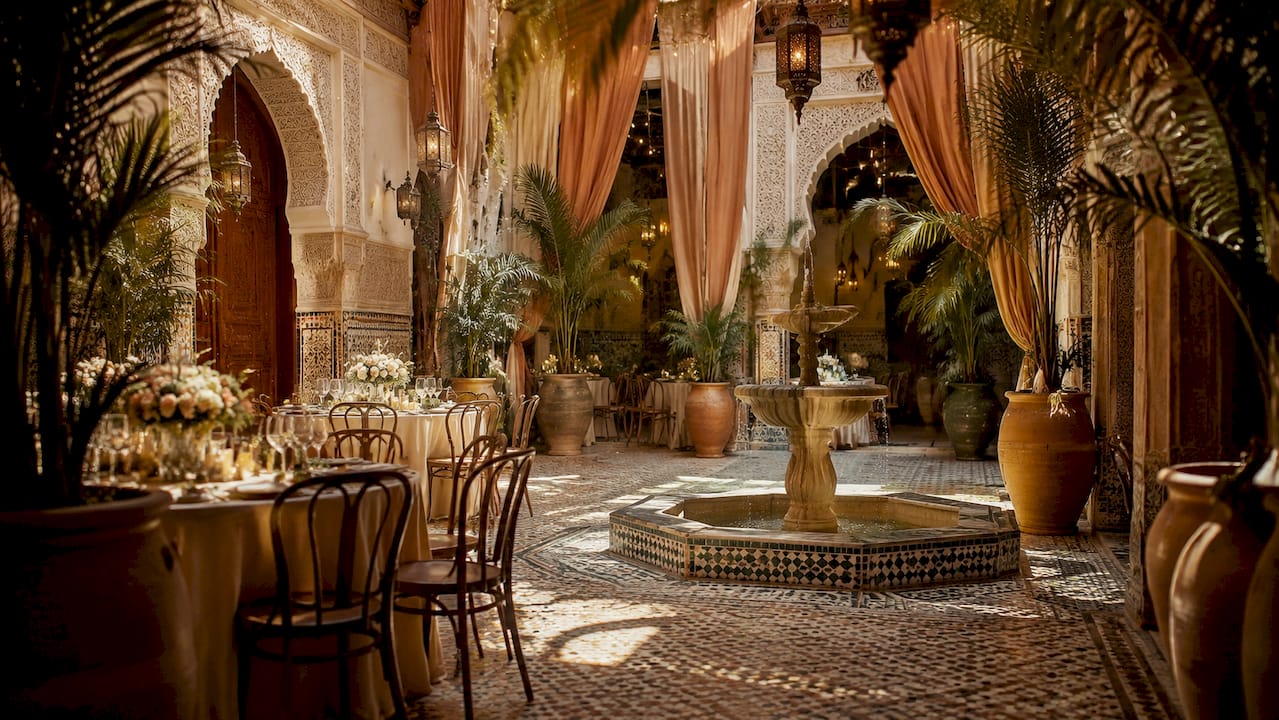
Riads: intimate courtyards with real tradeoffs
A riad is a traditional Moroccan townhouse built around a central courtyard, typically located inside a medina (the historic walled city center). Riads deliver unmatched visual drama: hand-painted tilework, carved plaster walls, and open-sky courtyards that photograph beautifully. The tradeoff is access. Riads in medinas require specialized transport because narrow streets block standard delivery trucks and passenger buses. Vendors must use small vehicles, handcarts, or porters to move equipment and supplies. For events above 80 guests, this creates real bottlenecks that require careful scheduling.
Palace estates and luxury villas
Palace estates outside the medina walls, such as those found in the Palmeraie district north of Marrakech, solve the access problem entirely. These properties offer large parking areas, loading docks, and room for multiple vendor teams to operate simultaneously. Luxury villas in the Atlas Mountain foothills add dramatic scenery and cooler temperatures, which matters significantly for summer events. The tradeoff here is cost: palace estates command premium pricing, particularly during peak season from October through April.
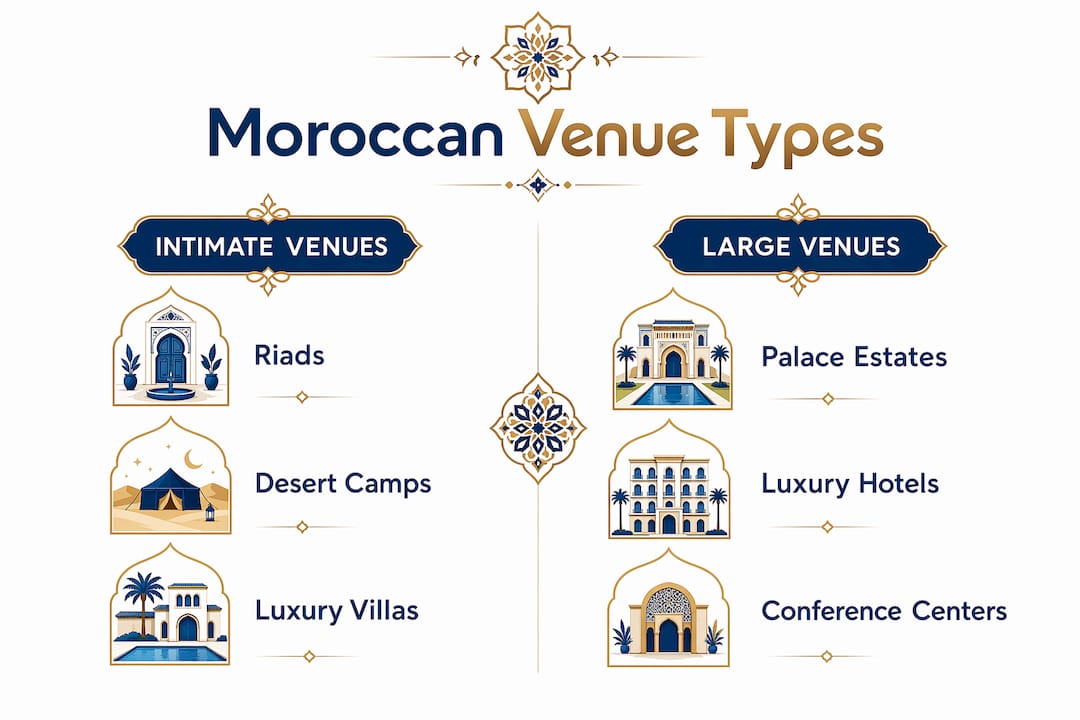
Desert camps in the sahara
Desert camps near Merzouga and the Erg Chebbi dunes represent the most logistically complex venue type in Morocco. Catering equipment, sound systems, generators, and guest accommodations must all travel hours from the nearest city. However, the visual payoff is extraordinary. Moroccotours specializes in luxury desert experiences that combine event logistics with overnight camp stays, making this option more accessible than most planners expect.
Pro Tip: Book a dedicated logistics coordinator for any medina venue. This person handles nothing but vendor access, timing, and street coordination. Without one, your florist and your caterer will arrive at the same narrow alley at the same time.
The key venue considerations to evaluate before signing any contract:
- Guest capacity: Riads typically cap at 60–120 guests; palace estates handle 300 or more
- Vendor access: Confirm loading routes before committing to any medina property
- Accommodation proximity: Desert and mountain venues require on-site lodging or organized transport
- Seasonal temperature: Marrakech averages above 100°F in July and August, making outdoor events impractical without shade structures
- Permit requirements: Some historic properties require municipal permits for amplified music after 11 p.m.
How do local planners handle vendor negotiations in Morocco?
Local event planners in Morocco are not a luxury. They are the single most cost-effective investment in your entire event budget. Underestimating the value of bilingual planners results in higher costs and greater risk. A planner fluent in Arabic, French, and English negotiates contracts in the vendor’s native language, which consistently produces better pricing and clearer terms.
52% of couples planning destination weddings in Morocco hire local planners specifically to manage language barriers, supplier coordination, and permit acquisition. That number reflects a hard lesson many international clients learn after their first attempt to manage Moroccan vendors remotely. Miscommunications over contract terms, delivery windows, and service scope are the most common causes of budget overruns.
What a local planner actually does
The scope of a Moroccan event planner goes well beyond vendor booking. A skilled local planner manages:
- Contract negotiation in Arabic and French, securing terms that foreign clients cannot access independently
- Supplier vetting based on prior working relationships, which reduces technical failures on event day
- Permit acquisition for music, alcohol service, and venue modifications
- Guest logistics including airport transfers, hotel blocks, and medina navigation for international attendees
- Cultural protocol guidance to avoid unintentional offenses during ceremonies or dinners
Experienced Moroccan planners favor suppliers with a history of collaboration because shared working experience reduces communication gaps and technical failures. This is not nepotism. It is risk management. A caterer who has worked three times with a specific sound technician at a specific riad will anticipate timing conflicts that a first-time pairing would not.
Pro Tip: Ask any planner you interview to name three vendors they have worked with more than five times. If they cannot answer immediately, they are not as embedded in the local network as they claim.
Luxury event planning fees in Morocco range from 30,000 to 50,000 MAD, which translates to roughly $3,000–$5,000 USD at current exchange rates. That fee covers coordination, not venue or services. Given that a bilingual planner typically saves 20–30% on vendor contracts alone, the fee pays for itself in most mid-size events.
What does event planning in Morocco actually cost?
Budgeting for events in Morocco requires understanding three cost layers: planner fees, venue pricing, and variable service costs. Each layer behaves differently depending on season, location, and event type.
Seasonal pricing and booking windows
Peak season bookings require 12–18 months of lead time, and cost premiums during October through April reach 20–40% above shoulder season rates. Desert and mountain venues book out 6–10 months in advance even in shoulder season. If you are targeting a spring wedding in Marrakech, the planning clock starts the moment you set a year.
Transparency in event packages is the clearest indicator of a reputable planner. Detailed cost breakdowns that separate fixed fees from variable charges like peak-season surcharges, import fees for specialty items, and service add-ons protect you from invoice surprises at the end of an event.
Budget tier comparison
| Budget Tier | Typical Venue Type | Estimated Total Cost (USD) | Key Considerations |
|---|---|---|---|
| Entry-level | Small riad, 40–60 guests | $15,000–$30,000 | Limited vendor access, minimal décor |
| Mid-range | Luxury villa or boutique palace, 80–150 guests | $35,000–$70,000 | Full planner fee, custom catering |
| Premium | Palace estate or desert camp, 150–300 guests | $75,000–$150,000+ | Multi-day program, imported elements |
| Ultra-luxury | Private palace buyout, 300+ guests | $200,000+ | Full destination management, bespoke design |
Variable costs that most couples and corporate planners underestimate include:
- Import fees on specialty flowers, wines, or branded décor items not available locally
- Generator rental for desert or rural venues without stable power infrastructure
- Translation services for printed programs, signage, and legal documents
- Gratuity customs, which differ from Western norms and should be budgeted separately
Typical Moroccan event packages structure multi-day celebrations with a welcome gathering, a main ceremony day, and a farewell brunch. This three-day format is standard in the destination wedding market and affects both venue rental duration and total accommodation costs. Corporate retreats in Morocco follow a similar multi-day structure, often combining team programming with cultural excursions.
How can you authentically incorporate Moroccan culture into your event?
Cultural integration is the single biggest differentiator between a generic destination event and a genuinely memorable one. Moroccan cultural experiences like Hammam rituals, traditional cuisine, and live music offer immersive guest experiences that no imported décor can replicate. The key is working with vendors who understand both the tradition and the logistics of delivering it for an international audience.
Cultural elements that work best in events
The most successful cultural integrations in Moroccan weddings and corporate retreats share one characteristic: they are participatory, not performative. Guests remember what they did, not what they watched.
- Hammam experiences: A traditional steam bath and scrub session works beautifully as a pre-wedding spa day or a corporate wellness activity. Marrakech has several hammams that offer private group bookings, including the historic Hammam El Bacha.
- Gnawa music: This ancient spiritual music tradition from sub-Saharan Morocco creates a powerful atmosphere for evening receptions. Gnawa musicians perform with guembri (a three-string bass lute) and metal castanets called krakebs. Booking a live Gnawa ensemble for a dinner sets a tone that no DJ playlist can match.
- Moroccan cuisine stations: Rather than a plated dinner, consider a traditional diffa, which is a Moroccan feast format featuring multiple courses of shared dishes, including pastilla (a savory-sweet pastry), tagine, and couscous. This format encourages table conversation and cultural curiosity.
- Henna ceremonies: For weddings, a henna artist applying traditional designs to guests’ hands is one of the most photographed and remembered moments of any Moroccan event.
- Artisan demonstrations: Pottery, weaving, and leather craft demonstrations from local artisans work particularly well for corporate retreats focused on creativity or team building.
Pro Tip: Partner only with cultural vendors who have worked international events before. A Gnawa musician who has never performed for a non-Moroccan audience may not understand pacing, volume levels, or the need for an English-language introduction to the tradition.
Cultural sensitivity matters as much as cultural enthusiasm. Morocco is a Muslim-majority country, and events that include alcohol, mixed-gender activities, or loud music late at night require specific permits and venue types. A local planner navigates these requirements without making them feel like obstacles.
Key takeaways
Successful event management in Morocco requires local expertise, early booking, and cultural integration to deliver experiences that justify the destination.
| Point | Details |
|---|---|
| Hire a bilingual local planner | A planner fluent in Arabic and French saves 20–30% on vendor contracts and reduces logistical risk. |
| Book peak-season venues 12–18 months out | Marrakech and Atlas Mountain venues fill fast; late booking means higher costs and fewer options. |
| Match venue type to guest count | Riads cap around 120 guests; palace estates and desert camps scale to 300 guests or more. |
| Budget for variable costs | Import fees, generator rental, and gratuity to customs add 10–20% beyond the base package price. |
| Make culture participatory | Hammam sessions, Gnawa music, and diffa-style dining create memories that outlast any décor choice. |
What planning events in morocco has taught me
After years of working with international clients on Moroccan weddings and corporate retreats, the pattern I see most often is this: couples and planners who arrive with a fixed vision and a foreign vendor list spend twice as much and enjoy half the result. Morocco rewards flexibility and local trust.
The clients who get the best outcomes are the ones who hire a local planner before they book a venue, not after. That sequence matters more than any other single decision. A good local planner will tell you which riad is overpriced for its access limitations, which desert camp has generator problems, and which palace estate has a noise ordinance that ends your reception at 10 p.m. You cannot find that information on a website.
The other mistake I see regularly is treating cultural elements as decoration. A Gnawa performance booked as background music for cocktail hour is a missed opportunity. The same performance, introduced properly and given 20 minutes of focused attention, becomes the moment guests talk about for years. The difference is not the vendor. It is the intention behind the booking.
Morocco also rewards clients who respect the pace of local business culture. Vendor relationships here are built on personal trust, not just contracts. A planner who has worked with a specific caterer for five years will get a phone call returned at midnight before an event. A foreign client emailing the same caterer for the first time will wait three days. That relationship infrastructure is what you are paying for when you hire local expertise.
For couples considering a Morocco honeymoon combined with their wedding, the country’s geographic range makes it uniquely suited to multi-experience travel. You can marry in a Marrakech palace and spend your honeymoon in the Sahara without ever leaving the country.
— MoroccoTours.co
Plan your Morocco event with expert local support
MoroccoTours.co combines luxury Morocco tour packages with destination event planning services, giving couples and corporate groups a single point of contact for venues, transportation, accommodations, and cultural programming. Every package is built around your specific guest count, budget, and vision. The team handles vendor negotiations in Arabic and French, manages multi-day event logistics, and coordinates travel experiences that extend your event into a full Moroccan journey. Whether you are planning a 50-person wedding in a Marrakech riad or a 200-person corporate retreat in the Atlas Mountains, Moroccotours has the local network and destination management experience to deliver it. Contact the team to start building your custom event plan.
FAQ
How far in advance should I book a Morocco wedding venue?
Peak season venues in Marrakech require 12–18 months of lead time. Desert and mountain venues book out 6–10 months in advance even outside peak season.
Do I need a local planner for a corporate event in Morocco?
A local planner fluent in Arabic and French is the most cost-effective hire for any corporate event in Morocco. Bilingual planners save 20–30% on vendor contracts and handle permits, logistics, and supplier coordination that foreign organizers cannot manage remotely.
What is the best season for outdoor events in Morocco?
October through April is the preferred window for outdoor events in Marrakech and the Sahara. Summer temperatures in Marrakech regularly exceed 100°F, making outdoor ceremonies impractical without significant shade and cooling infrastructure.
Are alcohol and mixed-gender events permitted at Moroccan venues?
Alcohol service and mixed-gender events are permitted at licensed venues, which include most luxury hotels, palace estates, and private villas. A local planner secures the necessary permits and identifies venues where these services are available without restriction.
What cultural elements work best for destination weddings in Morocco?
Hammam rituals, Gnawa music performances, and traditional diffa-style feasts are the most guest-engaging cultural additions to Moroccan destination weddings. Henna ceremonies and artisan demonstrations also rank highly for guest participation and memorability.