
Morocco Horseback Riding Tours: Routes, Tips and Breeds
- Morocco horseback riding tours are multi-day adventures through desert dunes, coasts, and mountains, blending culture and horsemanship.
- Different routes suit various levels, from desert treks demanding stamina to coastal rides ideal for intermediates, with horses being responsive Barb-Arab crosses.
- Success depends on physical preparation, matching skill to route, and engaging fully with Morocco’s rich landscapes and culture.
Morocco horseback riding tours are guided multi-day adventures that move through desert dunes, the Atlantic coastline, and High Atlas mountain trails on resilient Barb and Arab horses. These experiences go well beyond trail rides. They combine cultural immersion, remote wilderness access, and genuine horsemanship into itineraries ranging from a quick four-day coastal break to an eight-day desert expedition. The horses are bred for this terrain, the guides are deeply local, and the landscapes change dramatically from one day to the next. If you are planning Morocco equestrian tours and want to know exactly what to expect, this guide covers every detail.
What are the most popular Morocco horseback riding tours?
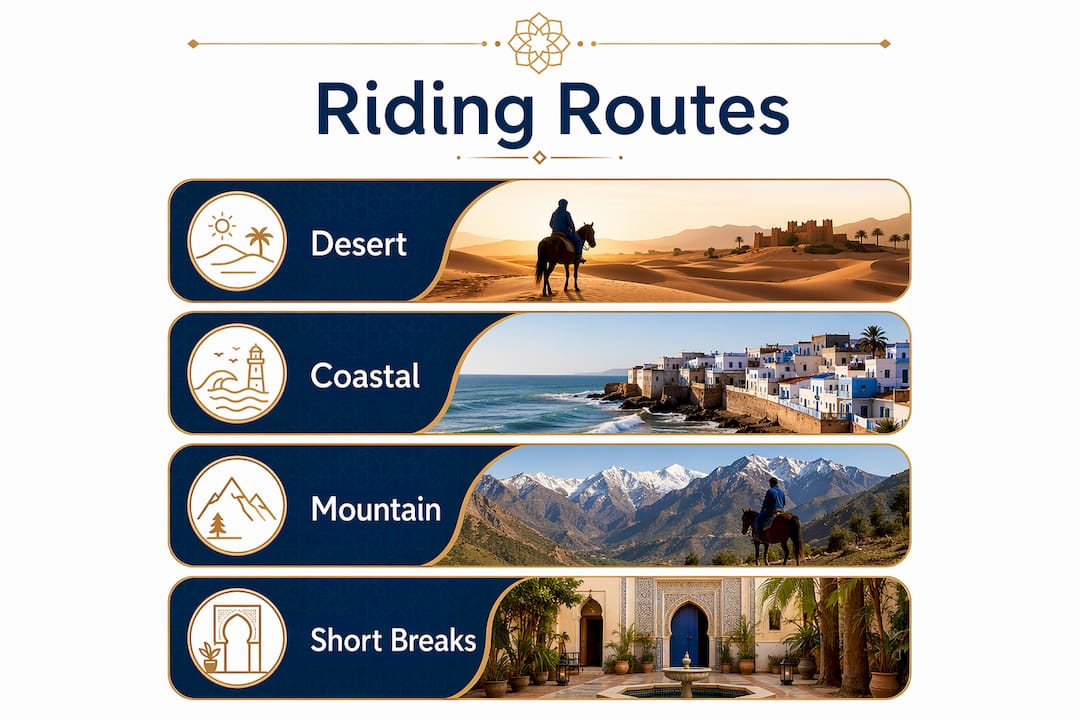
Morocco offers four distinct riding environments, and each produces a completely different experience. Choosing the right route depends on your riding level, preferred terrain, and how many days you can commit.
Desert routes: the signature experience
The Desert Cavalcade Trail is the benchmark for serious riders. Multi-day desert treks run up to eight days and seven nights, covering ergs, rocky plateaus, and oasis valleys near Ouarzazate and Merzouga. The riding pace on desert itineraries breaks down to roughly 60% walk, 25% trot, and 15% canter across long hours in the saddle. That distribution matters. It means desert riding is about stamina and rhythm, not constant speed. Riders who expect non-stop galloping across dunes will be surprised by how meditative and physically demanding the sustained pace actually is.
Most desert itineraries also blend riding days with transfer or rest days. Day seven of the Desert Cavalcade involves morning riding only, which gives riders recovery time before the final push. This structure is deliberate. It protects both horse welfare and rider endurance on longer expeditions.
Coastal and Atlantic rides
Atlantic coast riding tours typically run from May through September, with routes stretching from Agadir toward Essaouira. These rides feature long gallops along surf-washed beaches and trails through argan forests, a combination that is genuinely rare in global equestrian tourism. The terrain is forgiving compared to the desert, making coastal routes well-suited to intermediate riders who want speed and scenery without the physical demands of a full desert trek.
Essaouira itself is a UNESCO World Heritage city with a strong equestrian tradition. Riding into its medina walls on horseback after a coastal gallop is one of those travel moments that photographs cannot fully capture.
High Atlas mountain trails
Mountain rides in the High Atlas offer the most culturally rich experience of any Morocco horseback riding tour. Trails pass through Berber villages, terraced farmland, and cedar forests at elevations that keep temperatures cool even in summer. These routes require sure-footed horses and confident riders, as the paths are narrow and the gradients are steep. The payoff is direct access to communities that most tourists never reach by road.
Short breaks near Marrakech and the Agafay Desert
For travelers with limited time, Agafay Desert short breaks offer three to five hours of daily riding on a rocky desert plateau just 45 minutes from Marrakech. Horseback riding in Marrakech’s surrounding region is the most accessible entry point into Morocco’s equestrian tours, and it works well as a standalone experience or as a warm-up before a longer expedition.
| Route Type | Duration | Rider Level | Best Season |
|---|---|---|---|
| Desert Cavalcade Trail | 8 days / 7 nights | Experienced | October to April |
| Atlantic Coast Ride | 4 to 6 days | Intermediate | May to September |
| High Atlas Mountain Trek | 5 to 7 days | Intermediate to Advanced | April to June, September to November |
| Agafay Desert Short Break | 3 to 4 days | Confident Beginner | Year-round |
| Essaouira Coastal Break | 4 days / 3 nights | Intermediate | May to September |
What rider skills and fitness does a Morocco tour require?
Morocco horseback riding tours are not leisure pony rides. Every reputable operator screens riders before confirming a booking, and the requirements exist to protect both the rider and the horse.
The baseline expectation across most guided horseback trips in Morocco is confidence at walk, trot, and canter on an unfamiliar horse in open terrain. Riders who have only ridden in enclosed arenas may find the open-space experience disorienting at first. Agafay Desert programs specifically require riders who are confident in open spaces and in control at a fast pace, with a weight limit of 89 kg (196 lbs) applied to protect horse welfare.
Fitness matters as much as riding skill. Multi-day itineraries involve three to six hours in the saddle per day, often on terrain that demands active riding rather than passive sitting. Core strength, hip flexibility, and general cardiovascular fitness all reduce soreness and fatigue significantly. Riders who train with some light gym work or yoga in the weeks before departure report a noticeably better experience.
Here is what most operators expect you to bring and what they provide:
- Riding pants or jodhpurs (full-seat or knee-patch): bring your own. Jeans cause friction sores on longer rides.
- Ankle boots or riding boots: bring your own. Trainers are not safe in stirrups.
- Half chaps or gaiters: recommended for desert and mountain terrain. Beginner programs at Ranch De Diabat ask riders to bring pants, boots, and half chaps.
- Helmets: Most operators provide these, but bringing your own guarantees a fit and hygiene.
- Sun protection: desert and coastal rides expose riders to intense UV rays. Long-sleeved technical shirts, sunscreen, and a neck gaiter are non-negotiable.
Pro Tip: Pack a small saddle bag or pommel bag for daily essentials like sunscreen, a water bottle, and a camera. Luggage vehicles follow most multi-day tours, so your main bags travel separately.
Safety screenings by tour operators are designed to protect horse welfare and rider safety equally. If an operator does not ask about your riding experience before confirming your booking, treat that as a warning sign.
How do Morocco’s horse breeds shape the riding experience?
The horses used on Moroccan tours are not generic trail horses. Most are Barb-Arab crosses, standing between 14.0 and 15.2 hands high, with temperaments described as friendly but forward. That distinction is important for riders accustomed to quieter European warmbloods or American quarter horses.
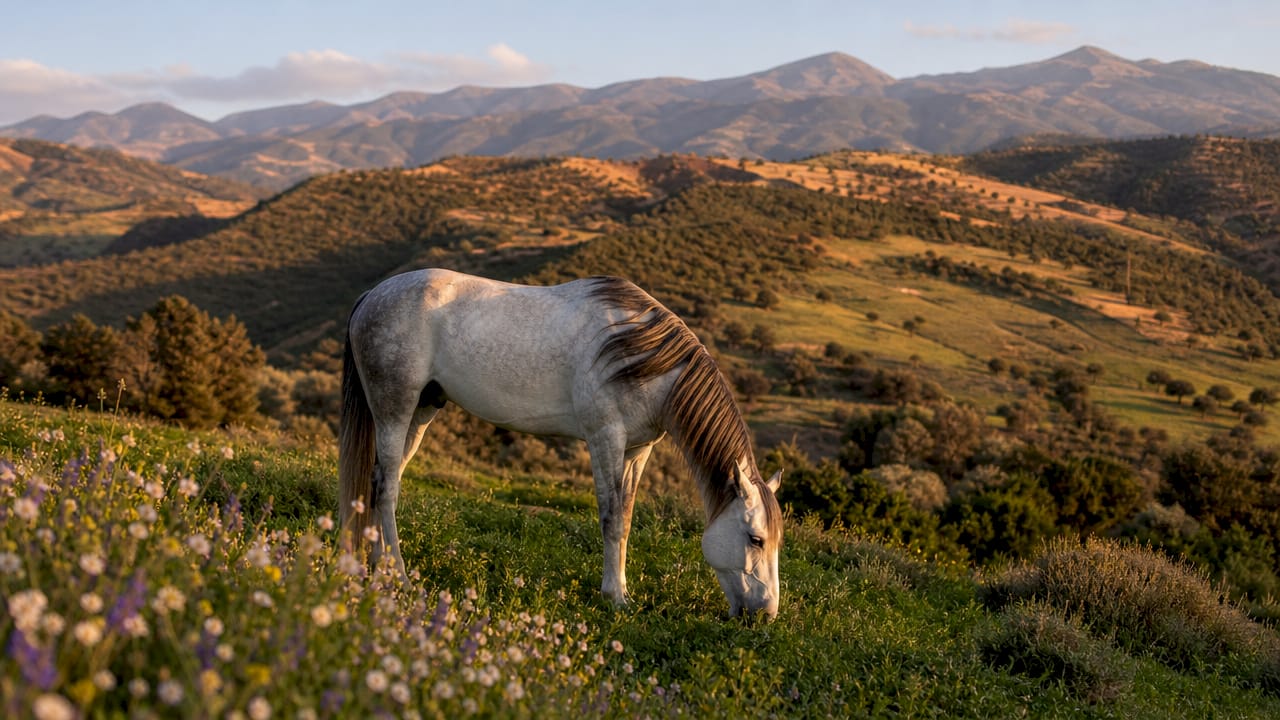
The Barb is one of the oldest horse breeds in the world, originating in North Africa and shaped by centuries of desert survival. The Arab cross adds refinement, speed, and sensitivity. Together, the Barb-Arab produces a horse that is sure-footed on rocky mountain paths, fast enough for coastal gallops, and hardy enough for multi-day desert work without losing condition. These are not horses that need coaxing. They move with purpose and respond to subtle cues.
Most horses used on guided tours are stallions, which reflects a deep cultural tradition in Moroccan horsemanship. Stallions are prized for their spirit and presence, and Moroccan riders have managed them confidently for generations. Riders from Western backgrounds who are accustomed to geldings may notice a more alert, reactive energy. This is not a problem. It is part of what makes the riding feel alive.
The partnership approach on desert itineraries extends to daily horse care. Riders groom and tack their horses each morning, which builds trust and gives you a real sense of the animal’s condition and mood before you ride. This practice is standard on quality tours and produces a noticeably different riding relationship than simply mounting a horse that someone else has prepared.
Key characteristics of Moroccan tour horses:
- Barb-Arab breed: combines endurance with speed and terrain adaptability
- Height range: 14.0 to 15.2 hands, compact and agile
- Temperament: forward and responsive, not sluggish or dull
- Mostly stallions: culturally significant and well-managed by experienced local guides
- Terrain-proven: equally capable on sand, rock, coastal sand, and mountain trails
For a broader look at desert riding experiences that pair equestrian adventures with luxury accommodations, Moroccotours has detailed resources covering the full range of desert itinerary options.
What practical planning do Morocco riding tours require?
Getting the logistics right separates a smooth adventure from a stressful one. Morocco horseback riding tours involve more moving parts than a standard resort vacation, and the details below are worth addressing before you book.
Seasonality by route type is the first planning variable. Desert rides run best from October through April, when daytime temperatures stay manageable. Coastal and Atlantic rides peak from May through September. Mountain routes in the High Atlas are most accessible in April through June and again in September through November. Winter versus summer routes differ in terrain, accommodation style, and riding pace, so matching your travel dates to the right route type is not optional.
Arrival timing directly affects how much riding you get. Arriving before 11:00 AM on the first day of an Agafay Desert tour allows riders to join the afternoon session. Scheduling flights to allow arrival before midday and departure after late afternoon maximizes riding time on both the first and last days of any tour. Most operators include airport transfers from Marrakesh or Ouarzazate, so confirm pickup logistics when you book.
Accommodation varies widely by route and operator. Desert itineraries typically use Berber bivouacs and desert camps, which are atmospheric but basic. Coastal and mountain tours often use riads, lodges, and guesthouses with private rooms. Some operators offer upgraded accommodation tiers for travelers who want more comfort without sacrificing the riding experience. If you are combining a riding holiday with a broader Morocco trip, luxury travel options are available that integrate high-end stays with adventure itineraries.
Pro Tip: Book tours with open-date group departures if you are traveling solo. Operators like Equi Evasion run fixed-date multi-day treks that allow individual riders to join an existing group, which is far more social and cost-effective than a private solo departure.
Here is a practical packing checklist for multi-day horse riding adventures in Morocco:
- Riding pants and boots (non-negotiable)
- Lightweight long-sleeved shirts for sun protection
- Fleece or light jacket for mountain and desert nights
- Personal helmet if you prefer your own fit
- Sunscreen, lip balm, and sunglasses
- Small daypack or pommel bag for trail essentials
- Reusable water bottle (most tours provide refills)
- Camera with a dust-proof case or bag
Family horse riding tours in Morocco are available through several operators, though minimum age requirements vary. Most family-friendly programs set the minimum at eight to ten years old and use quieter horses for younger riders. Confirm age and weight limits with your operator before booking with children.
Key takeaways
Morocco horseback riding tours deliver the most rewarding results when riders match their skill level to the right route, prepare physically, and engage fully with the horses and culture they encounter.
| Point | Details |
|---|---|
| Route diversity is real | Desert, coastal, mountain, and short-break options each suit different rider levels and travel windows. |
| Rider screening protects everyone | Weight limits, skill assessments, and fitness expectations exist to protect horses and riders equally. |
| Barb-Arab horses are forward and responsive | Expect alert, energetic horses that reward confident, subtle riding rather than passive sitting. |
| Seasonal timing is non-negotiable | Desert rides suit October to April; coastal rides peak May to September; mountain routes favor spring and fall. |
| Arrival timing affects riding days | Flying in before midday on day one and departing after late afternoon on the last day maximizes time in the saddle. |
What I have learned from years of Morocco riding itineraries is
After working with riders across dozens of Morocco equestrian tours, the pattern I see most often is this: travelers underestimate the physical demand and overestimate the pace. They expect constant galloping across cinematic dunes. What they actually get is something more demanding and more rewarding. Hours of sustained riding through terrain that changes every day, on horses that are genuinely athletic and responsive, with guides who have ridden these routes their entire lives.
The riders who get the most out of these tours are not always the most technically skilled. They are the ones who show up curious, physically prepared, and willing to participate in horse care rather than treating the horse as a vehicle. Grooming your horse before a desert dawn ride is not a chore. It is the moment the whole experience clicks into place.
I also want to be direct about one thing that most travel content glosses over: these tours are physically hard. Three to six hours in the saddle per day on varied terrain will fatigue muscles you did not know you had. Riders who do not prepare with some core and hip work in the weeks before departure often spend the middle days of a multi-day trek in real discomfort. That is avoidable with a few weeks of targeted preparation.
The cultural dimension is equally underrated. Riding through a Berber village on horseback, stopping for mint tea, and watching your guide interact with locals in Tamazight gives you access to a Morocco that bus tours simply cannot reach. Stay open to those moments. They are the ones you will still be talking about years later.
If you are weighing a Morocco riding holiday against other adventure travel options, I would also recommend looking at Morocco trekking tours as a complement or alternative for days when the terrain is better covered on foot.
— Moroccotours.co
Plan your Morocco riding adventure with Moroccotours
Moroccotours designs luxury and private Morocco tours that include curated horseback riding itineraries across the desert, coast, and High Atlas Mountains. Every package comes with expert local guides, vetted horses, and accommodation options ranging from desert bivouacs to premium riads. Whether you are an experienced rider planning a multi-day desert expedition or a family looking for a guided coastal ride, Moroccotours builds the itinerary around your skill level and travel dates. For fully custom guided tours that incorporate riding with Morocco’s imperial cities and cultural highlights, the team handles every detail from airport transfer to final departure. You can also explore camel and horse tours for a desert experience that combines two iconic Moroccan riding traditions.
FAQ
What experience level do Morocco horseback riding tours require?
Most guided horseback trips in Morocco require riders to be confident at a walk, trot, and canter on an unfamiliar horse in open terrain. Beginner-friendly programs exist, but even these expect riders to have some prior saddle time before arrival.
What is the best time of year for horse riding in Morocco?
Desert routes run best from October through April, coastal Atlantic rides peak from May through September, and High Atlas mountain trails are most accessible in spring and fall. Matching your travel dates to the right route type is critical for comfort and safety.
What horses are used on Morocco equestrian tours?
Most tours use Barb-Arab crossbreeds, standing 14.0 to 15.2 hands high. These horses are known for endurance, sure-footedness across desert and mountain terrain, and a forward, responsive temperament that rewards confident riding.
How long are Morocco horseback riding tours?
Tour lengths range from short three- to four-day breaks near Marrakech and the Agafay Desert to full eight-day desert expeditions. Most multi-day itineraries blend riding days with transfer or rest days to manage rider and horse fatigue.
Do I need to bring my own riding gear to Morocco?
Riders are generally expected to bring their own riding pants, boots, and half chaps. Helmets are provided by most operators, but bringing your own guarantees a fit and hygiene. Confirm gear requirements with your specific operator before departure.