
Casablanca: travel guide for culture & cuisine
TL;DR:
- Casablanca is Morocco’s economic and cultural hub, offering depth through its architecture, digital arts, and community programs.
- Visitors should prioritize pre-booked tours, local cultural encounters, and authentic culinary experiences, including seafood and Friday couscous.
- The city’s beaches are now public and free, and a thoughtfully planned itinerary reveals its momentum as a city actively transforming itself.
Most travelers fly into Casablanca, spend a night, and move on to Marrakech or Fez without a second thought. That’s a significant mistake. The city of Casablanca is Morocco’s economic engine, contributing roughly one-third of the country’s GDP, but reducing it to an industrial hub misses the point entirely. Beneath the modern skyline and busy port lies a city of extraordinary architectural contrasts, a seafood culture that rivals coastal cities anywhere in the Mediterranean, and a growing network of cultural programs that offer luxury travelers something genuinely rare: depth.
Table of Contents
- Casablanca’s unique cultural identity beyond industry
- Iconic sightseeing: the Hassan II Mosque and urban touring
- The gourmet’s guide to Casablanca: seafood, local staples, and dining customs
- Beach experiences and sustainability in Casablanca’s urban seafront
- Planning your structured luxury itinerary in Casablanca
- Rethinking Casablanca: beyond landmarks to a living cultural experience
- Experience Casablanca with tailored luxury tours and expert guides
- Frequently asked questions
Key Takeaways
| Point | Details |
|---|---|
| Casablanca’s cultural depth | The city blends industrial modernity with rich cultural and digital learning initiatives for unique travel experiences. |
| Hassan II Mosque’s importance | This iconic oceanfront mosque is Casablanca’s centerpiece, accessible to non-Muslims via guided tours. |
| Signature cuisine | Local seafood and Friday couscous define Casablanca gastronomy, ideal for dining explorations. |
| Beach accessibility | Recent policies have made beaches fully free and public, changing luxury beach experiences in Casablanca. |
| Efficient itinerary planning | Structured touring loops and pre-booked experiences maximize comfort and cultural immersion for travelers. |
Casablanca’s unique cultural identity beyond industry
The most common misconception about the city of Casablanca is that it lacks soul. In reality, it has been quietly building one of Africa’s most forward-thinking urban identities. Casablanca is part of UNESCO’s Global Network of Learning Cities, and that designation shapes far more than education policy. It reflects a city philosophy.
Casablanca integrates lifelong learning into its Communal Action Plan, weaving vocational pathways, digital inclusion, and cultural participation directly into how neighborhoods function. This is aligned with Morocco’s Vision 2030 national strategy, and the effects are visible on the ground. Neighborhoods that once had little cultural infrastructure now host digital hubs, creative workshops, and public health programs that residents and, increasingly, informed visitors can access.
For luxury travelers, this is a real opportunity. A curated private visit to one of Casablanca’s neighborhood learning centers or digital cultural hubs offers something no restaurant or rooftop bar can match: genuine local exchange. You are not watching the city perform for tourists. You are inside its actual present.
What makes Casablanca’s cultural identity distinctive for discerning visitors:
- Art Deco and Moorish architecture layered through the Ville Nouvelle, a neighborhood built under French protectorate rule that blends Islamic geometric detail with European modernist form
- Emerging digital arts districts around the city center, where local designers, filmmakers, and tech entrepreneurs are building a creative economy
- Circular economy and green innovation programs, including a significant waste-to-energy infrastructure project that places Casablanca ahead of most African cities on sustainability
- Neighborhood cultural associations that run programs in music, crafts, and civic literacy, accessible through private arrangements
Pro Tip: Ask your guide to contact a local association (jam’iya) in the Ain Chock or Sidi Moumen districts before your trip. A private afternoon with community organizers gives you a story no other traveler in your circle will have. MoroccoTours.co’s luxury tours in Morocco regularly incorporate these kinds of exclusive cultural encounters into their itineraries.
Iconic sightseeing: the Hassan II Mosque and urban touring
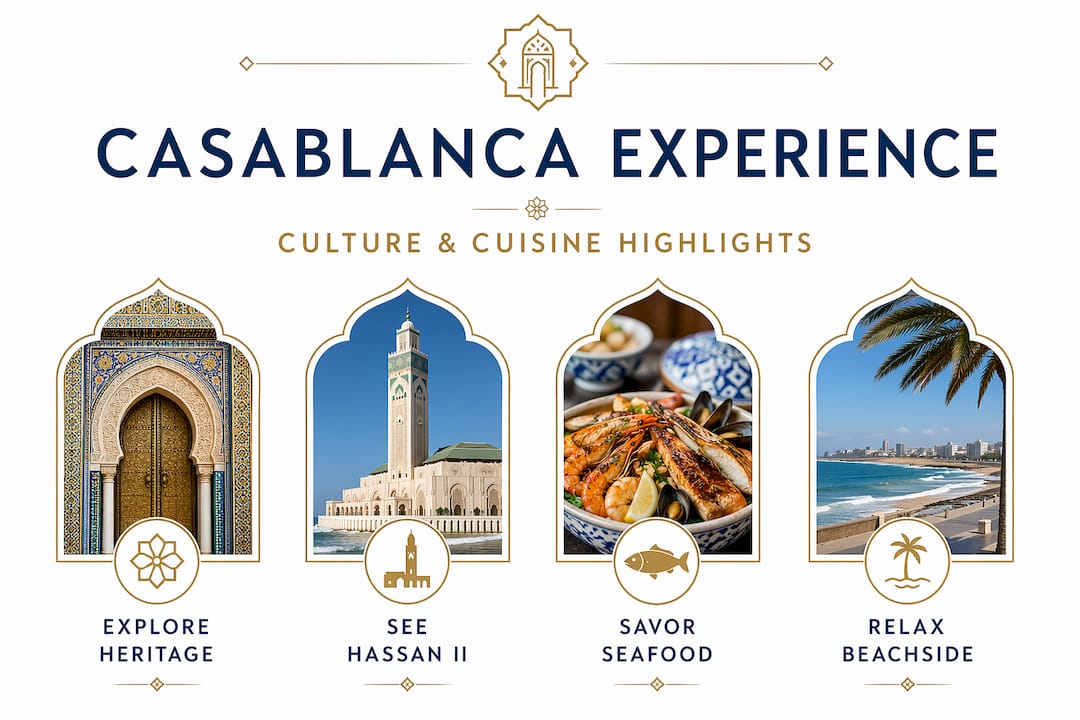
You cannot visit the city of Casablanca and skip the Hassan II Mosque. It would be like going to Paris and skipping the Eiffel Tower, except that the mosque is architecturally more interesting and far less crowded. The Hassan II Mosque stands as one of the world’s largest, with a 689-foot minaret visible from kilometers away, built directly over the Atlantic Ocean. The sight of waves crashing below the prayer hall floor, which is partly made of glass, is one of those genuinely unrepeatable travel experiences.
Non-Muslim visitors are welcome inside, but only through organized guided tours. That detail matters more than it sounds. You cannot simply arrive and walk in. Tours run at set times in multiple languages, including French, English, and Spanish, and they fill up. For a luxury itinerary where time is your most limited resource, pre-booking is not optional.
Beyond the mosque, the Casablanca attractions most worth your time in the immediate urban center include:
- Place Mohammed V: The civic and administrative heart of the city, surrounded by French protectorate-era buildings in the Moorish style. It is less photographed than it deserves to be and genuinely beautiful in the late afternoon light.
- The Corniche (Boulevard de la Corniche): Casablanca’s coastal boulevard running west from the city center toward the Ain Diab neighborhood. It is lined with upscale restaurants, beach clubs, and cafés and offers the most pleasant walking in the city.
- The Ancienne Médina (Old Medina): Casablanca’s medina is small compared to Fez or Marrakech. It is not a shopping destination so much as a living neighborhood worth an hour of wandering for atmosphere and photography.
- Art Deco touring on foot: The streets around Rue du Prince Moulay Abdallah hold some of Africa’s best-preserved Art Deco facades. A focused architectural walk here rewards anyone interested in Casablanca architecture and the city’s colonial history.
One practical warning: the Ville Nouvelle experiences serious traffic congestion during morning and evening rush hours. Luxury touring in Casablanca means planning your urban loops around traffic, not landmarks. Schedule the mosque visit for a mid-morning departure, move to Place Mohammed V by early afternoon, and finish with the Corniche at sunset. That sequence avoids gridlock and gives you the best light at each stop.
Booking Morocco guided tours with a private driver familiar with city traffic patterns makes an enormous practical difference here, and looking into exclusive luxury tours that cover multiple Casablanca highlights in a single efficient day is well worth considering.
The gourmet’s guide to Casablanca: seafood, local staples, and dining customs
Casablanca’s food culture is one of the most underrated on the African continent. The city sits on the Atlantic, and its restaurants take serious advantage of that geography. The old port area is where you want to start. Fresh fish pulled from the harbor that morning, grilled over charcoal, dressed simply with chermoula (a marinade of herbs, lemon, and spices), and served alongside rough bread. It is not fancy. It is extraordinary.
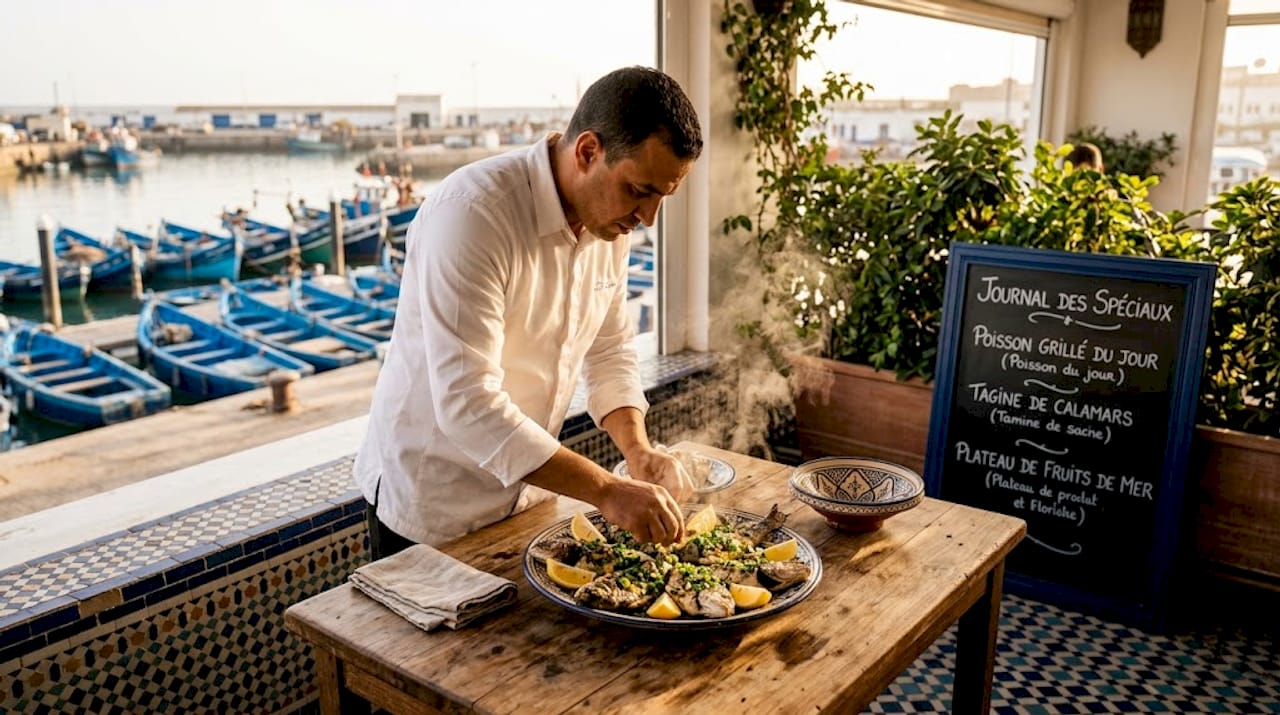
Beyond grilled fish, Casablanca’s signature dishes include maakouda (crispy fried potato fritters, often sold streetside), bissara (a thick, comforting fava bean soup finished with olive oil and cumin), and seafood pastilla, which takes the traditional sweet and savory pastry and fills it with shrimp, squid, and fish in a format that surprises even experienced Morocco travelers.
Friday changes everything. Friday couscous is Morocco’s most culturally important weekly meal, eaten communally at midday after prayers. In Casablanca, families gather around enormous shared dishes piled with vegetables, tender lamb or chicken, and the lightest couscous grain you will find outside a Moroccan home kitchen. For a luxury traveler, timing your Casablanca visit to include a Friday means access to this experience in a way that no other day of the week replicates.
What to eat and how to eat it:
- Fresh grilled seafood at the old port: Order the daily catch, not a menu item. Ask what came in that morning.
- Maakouda: Best eaten from a street vendor in paper, still hot. Pair with harissa.
- Seafood pastilla: A luxury dish that shows up at upscale restaurants in refined form. Both versions are worth trying.
- Bissara: Typically a breakfast or lunch dish. Order it at a traditional café, not a tourist restaurant.
- Friday couscous: Arrange in advance through your guide for a private family-hosted lunch. This is the single most culturally memorable meal Casablanca offers.
Two customs worth knowing. First, using your right hand to eat is standard practice, especially with communal bread used to scoop from shared dishes. Second, French colonial influence is visible in Casablanca’s café culture. The city has genuine patisseries producing croissants and pastries that hold their own against anything in Paris. Budget time for an unhurried mid-morning café stop.
Pro Tip: For a refined port-to-table experience, look for restaurants in the Port de Pêche area that let you choose your fish from the display and have it cooked to order. Several upscale establishments near the Corniche now offer this format with wine service and full table settings. A Morocco food tour organized through a local specialist can combine both the street-level and high-end expressions of the same ingredient on the same afternoon.
Beach experiences and sustainability in Casablanca’s urban seafront
Casablanca’s relationship with its beaches has changed significantly in 2026. Historically, the city’s urban beaches were dominated by private rental operators charging for chairs and umbrellas, effectively creating a pay-to-sit dynamic that squeezed out casual visitors and created cluttered, commercialized shorelines. That system has now ended.
Casablanca’s beaches are now fully free and publicly accessible, with commercial rentals eliminated and free parking introduced near the waterfront. This is a policy shift that aligns directly with the city’s broader sustainability agenda, and for luxury travelers, it changes the beach experience in ways that are mostly positive.
Here is how to approach Casablanca’s beach options as a discerning visitor:
- Arrive early on weekdays. Without commercial operators managing chairs and shade, the best spots are first-come. Weekday mornings before 10 a.m. offer genuinely quiet stretches of Atlantic shoreline within a major city.
- Bring your own setup. High-quality portable beach furniture is worth the minor effort. The lack of rentals means you define your own comfort level.
- Focus on Ain Diab. The Ain Diab stretch along the Corniche remains the most pleasant urban beach area, with several beach clubs that now operate under the new open-access rules.
- Pair beach time with a Corniche lunch. The Boulevard de la Corniche has enough excellent restaurants that a beach morning can flow naturally into a seafood lunch without needing to move far.
- Respect the environmental direction. Casablanca is actively investing in pollution reduction and coastal cleanup programs. The beach environment is better than it was five years ago, and your behavior as a visitor contributes to or detracts from that progress.
| Beach area | Best for | Timing |
|---|---|---|
| Ain Diab (Corniche) | Urban beach, walkable to restaurants | Morning on weekdays |
| Sidi Abderrahman | Atmospheric rocky outcrop, small shrine | Late afternoon light |
| Lalla Meryem Beach | Calmer water, family atmosphere | Midday |
| Tamaris | Quieter, slightly outside city center | Full day trip |
Planning your structured luxury itinerary in Casablanca
Most travelers treat Casablanca as a transit point and regret it later. A well-planned Casablanca visit built around efficient touring loops and cultural timing turns a what most people experience as a functional overnight into one of the most interesting urban days of a Morocco trip.
Here is a practical framework for a one-day luxury Casablanca itinerary:
- 7:30 a.m. Breakfast at a French-style café in the Ville Nouvelle. This sets the tone and gives you a genuine feel for the city’s dual cultural identity before the crowds arrive.
- 9:00 a.m. Hassan II Mosque guided tour (pre-booked). Interior tours typically last 45 to 60 minutes. Pre-booking is essential because scheduling and language options are fixed in advance. Book at least a week ahead for weekend visits.
- 11:00 a.m. Art Deco walking tour in the Ville Nouvelle. Keep it focused: Rue du Prince Moulay Abdallah, Place Mohammed V, and the surrounding civic quarter. Two hours is enough to see the best of it.
- 1:00 p.m.: Lunch. On Fridays, this means communal couscous. On other days, the old port is for seafood.
- 3:00 p.m. Private visit to a cultural or digital learning hub. This is the element most itineraries skip entirely and the one that generates the most conversation afterward.
- 6:00 p.m. Corniche walk and sunset drinks. End at a terrace overlooking the Atlantic. Casablanca in the evening light, with the Hassan II Mosque visible to the east and the ocean to the west, is one of Morocco’s great views.
| Common itinerary mistake | Recommended luxury approach |
|---|---|
| Arriving and departing the same day | Allocating at least one full day minimum |
| Visiting the mosque without pre-booking | Booking the guided tour at least one week ahead |
| Skipping the Art Deco district | Including a 90-minute architectural walking tour |
| Eating only at hotel restaurants | Combining pork seafood with a Friday couscous lunch |
| Ignoring neighborhood cultural programs | Arranging a private learning-city visit through your guide |
| Driving everywhere in peak traffic | Planning a walking-based loop from 9 a.m. to 2 p.m. |
Pro Tip: If you are including Casablanca as part of a broader Morocco circuit, place it at the start of your trip rather than the end. Arriving fresh, with full energy, lets you actually absorb what the city offers. Adding it as a tired final stop before a flight wastes it. Pairing Casablanca with a Morocco guided tour that continues to Fez, Meknes, or Marrakech via the Morocco imperial cities route creates a natural and satisfying narrative arc for the whole trip.
Rethinking Casablanca: beyond landmarks to a living cultural experience
Most travel guides to Casablanca give you the Hassan II Mosque, a paragraph on the Corniche, and a mention of Art Deco and call it done. That coverage is not wrong. It is just incomplete in a way that short-changes the city and short-changes you.
Here is the perspective that a decade of planning high-end Morocco itineraries has confirmed: the travelers who return most satisfied from Casablanca are not the ones who ticked off the landmarks fastest. They are the ones who spent time in the city’s actual present, not just its architectural past.
Casablanca’s learning-city cultural programs and digital hubs offer travelers something that cannot be replicated anywhere else in Morocco. A private afternoon with a design collective in a repurposed industrial space in the Derb Sultan neighborhood, or a conversation with the organizers of a community literacy program in Sidi Bernoussi, gives you access to a version of Morocco that most international visitors never encounter. These are not sanitized cultural performances. They are real people doing real work, and the access is available if you ask for it through the right channels.
Casablanca is also doing something in sustainability that deserves more attention than it gets. The city’s waste-to-energy project, its coastal cleanup programs, and its public space reclamation (the beach policy change being the most recent visible example) reflect a city genuinely working through what modern urban development looks like in an African context. For a luxury traveler with any interest in how cities are evolving, that is as interesting as any monument.
The honest reframe is this: Casablanca is not a city you visit for nostalgia. It does not have the medina depth of Fez or the sensory drama of Marrakech. What it has is momentum. It is a city actively becoming something. And being present for that, with the right access and the right guide, is one of the most interesting things you can do in Morocco right now. Your Morocco luxury travel guide experience is fundamentally different when Casablanca is treated as a destination rather than a departure point.
Experience Casablanca with tailored tours and expert guides
After exploring what the city of Casablanca genuinely offers, the next step is making sure your itinerary actually delivers it. At MoroccoTours.co, our luxury travel packages are built to go further than the standard tourist circuit. We handle pre-booked Hassan II Mosque tours in your preferred language, arrange private visits to neighborhood cultural and learning-city programs, coordinate port-to-table seafood dining, and plan your city touring loops to work with traffic patterns, not against them. Whether you are folding Casablanca into a longer journey via our 10-day Morocco Signature Tour or using our Morocco Highlights Tour to cover the imperial cities and coast, our expert local guides ensure your time in Casablanca is fully used. Contact us to build the itinerary that matches what you actually want.
Frequently asked questions
What is the best way to visit the Hassan II Mosque as a non-Muslim traveler?
Non-Muslims can visit the Hassan II Mosque only via organized guided tours, which must be pre-booked in advance due to limited daily schedule slots and fixed language options. Booking at least a week ahead is strongly recommended, especially for weekend visits.
Are Casablanca’s beaches privately controlled or public?
Since 2026, Casablanca’s beaches have been fully free and publicly accessible, with commercial chair and umbrella rentals eliminated and free parking introduced near the shoreline. The shift restores the beaches as open public spaces for all visitors.
When is the best day to experience traditional couscous in Casablanca?
Friday is the traditional day for couscous in Morocco, eaten as a communal midday meal after prayers. Visiting on a Friday and arranging a family-hosted or restaurant couscous lunch gives you access to Casablanca’s most culturally significant weekly food tradition.
How can travelers experience the cultural and digital initiatives in Casablanca?
Travelers can arrange private visits to learning city programs and neighborhood digital hubs through a local guide with community connections. These visits require advance coordination but offer cultural access that no standard tourism route provides.
What meals or dishes should I not miss during a visit to Casablanca?
Don’t miss fresh grilled seafood at port restaurants, maakouda fritters, bissara soup, seafood pastilla, and the Friday couscous tradition. Together, these cover the full range of Casablanca’s culinary identity, from street-level classics to refined Atlantic coastal cuisine.