
Visit Morocco: Your Immersive Travel Guide
- Morocco offers a diverse, layered landscape that surprises visitors from the moment they arrive.
- Traveling during shoulder seasons and planning ahead enhances the experience while exploring cities like Marrakech, Fez, and Rabat reveals contrasting cultural atmospheres.
- Using private drivers, guided tours, and respecting local customs ensures safe, authentic immersion into Morocco’s rich heritage.
Morocco has a way of unsettling your assumptions from the moment you land. You come expecting one thing and get five others, all of them better. When you visit Morocco, you find a country that layers Roman ruins, Saharan dunes, Atlantic coastlines, and medieval medinas into a geography smaller than Texas. This guide cuts past the surface-level advice to give you what actually matters: when to go, where to go, how to move around, and how to experience the country as more than a backdrop for Instagram photos. Whether this is your first time or your third, there is more here than most travelers find on their own.
Table of Contents
- Key Takeaways
- Why you should visit Morocco now
- Planning your trip: timing, insurance, and logistics
- Exploring Morocco’s key destinations
- Cultural experiences worth building your trip around
- Getting around Morocco safely and confidently
- My honest take on traveling Morocco well
- Plan your Morocco trip with Moroccotours
- FAQ
Key Takeaways
| Point | Details |
|---|---|
| Time your visit strategically | Shoulder seasons (spring and fall) offer the best weather and fewer crowds across most destinations. |
| Match destinations to your pace | Marrakech delivers intensity; Rabat offers calm. Mixing both gives a richer picture of modern Morocco. |
| Get activity-specific travel insurance | Standard coverage often excludes adventure activities like trekking. Customize your policy before you fly. |
| Book Marrakech accommodation early | Overnight stays in Marrakech rose 40% year over year, making early reservations a practical necessity. |
| Hire a private driver or guide | Private transport makes Morocco’s varied terrain and complex medinas far easier and more rewarding to explore. |
Why you should visit Morocco now
Morocco is one of the few countries that genuinely delivers on the promise of contrast. Within a single week, you can walk through a 9th-century medina, sleep under stars in the Sahara, surf Atlantic breaks near Taghazout, and eat some of the most complex, layered food on the planet. That range is rare. Most destinations offer one or two headline experiences. Morocco offers a full itinerary just by existing.
The country has also become significantly easier to access. Chinese tourist arrivals climbed from 10,000 in 2015 to 150,000 in 2025 following a visa exemption, reflecting how Morocco has opened its doors to a growing list of nationalities. Infrastructure has improved alongside that growth: better airport connections, more accommodation options across all price points, and a tourism industry with genuine experience serving international visitors.
The timing is right. Growth is still concentrated enough that the country has not been overrun but mature enough that the logistics are manageable on your own or with a well-organized tour operator.
Planning your trip: timing, insurance, and logistics
Getting the basics right before you board the plane saves you significant headaches on the ground. This is not the country to wing entirely. A bit of advance work pays off disproportionately.
Choosing the best time to visit Morocco
The best time to visit Morocco is widely considered to be spring (March to May) and fall (September to November). Temperatures are comfortable across most regions, the desert is not brutally hot, and the mountain passes in the Atlas are accessible. Summer in the interior cities like Fez and Marrakech regularly hits 100°F and above. If you go in July or August, the coast becomes your friend. Essaouira and Agadir attract summer visitors for exactly that reason.
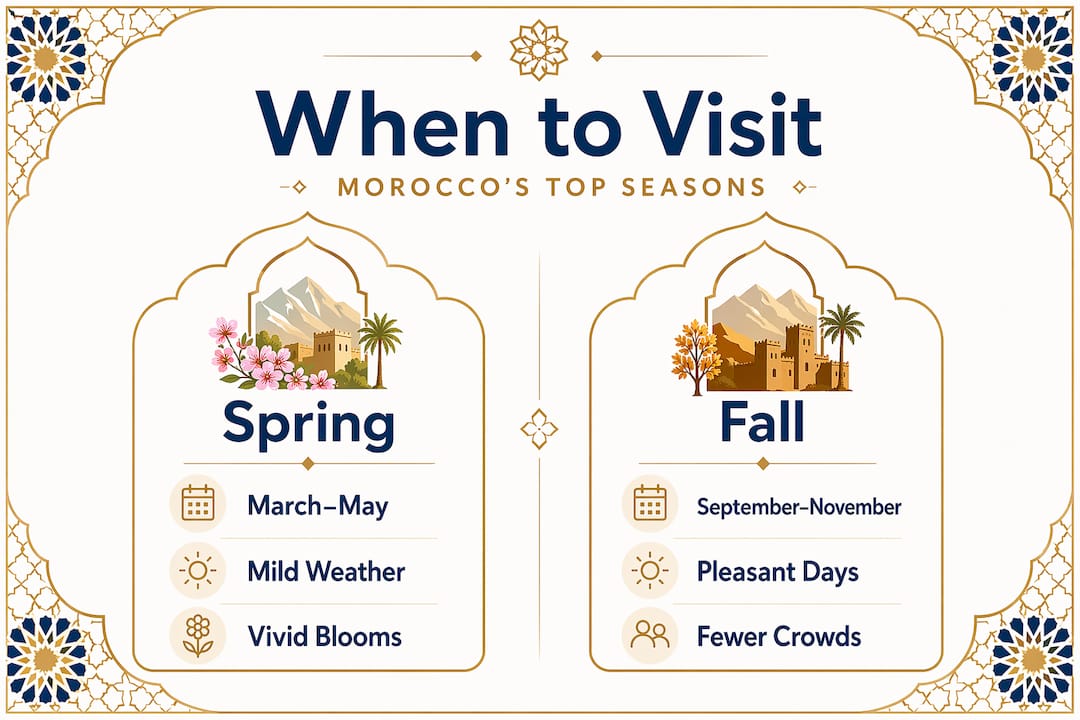
Winter is underrated. The Sahara actually gets cold at night in December and January, which surprises most visitors, but daytime conditions in the south are beautiful. The shoulder seasons consistently reward travelers who plan around them with fewer crowds and reasonable prices on accommodation.
Pro Tip: Book accommodations in Marrakech at least two to three months out if you’re traveling in spring or fall. With overnight stays rising at 40% year over year, the best riads fill up fast.
Insurance, visas, and health preparation
The UK Foreign, Commonwealth and Development Office strongly recommends getting travel insurance that covers your full itinerary, planned activities, and emergency scenarios before you travel. That advice applies to every nationality. Standard travel policies often exclude adventure activities like camel trekking, desert 4×4 tours, or hiking in the Atlas Mountains. If your itinerary includes any of these, read your policy carefully and upgrade if necessary.
Most Western passport holders enter Morocco visa-free for stays up to 90 days, but confirm current requirements for your specific nationality before traveling. Health-wise, no vaccinations are mandatory, but hepatitis A, typhoid, and a rabies precaution are sensible depending on your activities and duration of stay.
Key logistics to address before departure:
- Accommodation: Book riads in Fez and Marrakech well in advance during peak months
- SIM card: Local Moroccan SIM cards (Maroc Telecom, Orange Morocco) are inexpensive and widely available at airports
- Currency: The Moroccan dirham is not freely convertible outside Morocco; bring euros or dollars and exchange on arrival
- Packing: Pack layers for temperature swings between cities and the desert; modest clothing is appropriate for medinas and religious sites
Exploring Morocco’s key destinations
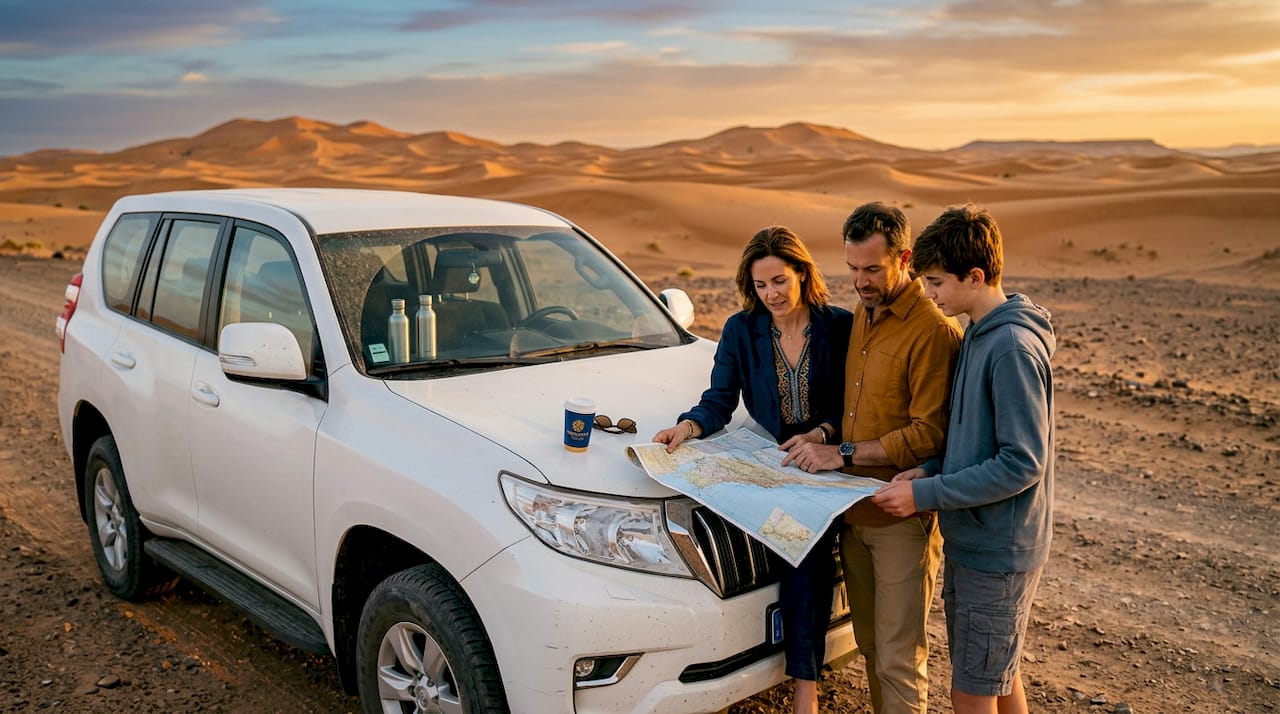
The country rewards those who move beyond Marrakech. Not because Marrakech is not worth your time (it absolutely is), but because the full picture of Morocco only comes through when you add at least one or two other cities or regions to your itinerary.
A city-by-city breakdown
Marrakech’s tourism surge is real and visible. The Djemaa el-Fna square is as chaotic and alive as its reputation suggests. The souks behind it require patience and a willingness to get genuinely lost. The Majorelle Garden, the Bahia Palace, and the medina’s historic mosques form a cultural circuit that takes two full days to do properly. Despite the crowds, Marrakech delivers.
Fez is older, denser, and harder to navigate, which is exactly what makes it worth the effort. The Fes el-Bali medina is the largest car-free urban area in the world. Hiring a local guide here is not optional. It is the difference between wandering confused for hours and actually understanding the logic of a city that has functioned continuously since the 9th century. The leather tanneries viewed from rooftop terraces above the souk are one of those genuinely unforgettable travel moments.
| Destination | Character | Best for | Crowd level |
|---|---|---|---|
| Marrakech | Energetic, sensory-rich | Souks, palaces, nightlife | High |
| Fez | Historic, labyrinthine | Medina, tanneries, craft workshops | Moderate |
| Rabat | Calm, walkable, modern | UNESCO sites, seafood, museums | Low |
| Casablanca | Urban, commercial | Architecture, Hassan II Mosque | Moderate |
| Chefchaouen | Scenic, photogenic | Mountain hiking, photography | Seasonal |
Rabat stands apart from the crowd, almost literally. While Marrakech’s visitor numbers have surged, Rabat remains calm and unhurried. As Morocco’s capital and a UNESCO World Book Capital, it has a sophisticated cultural infrastructure: well-maintained boulevards, excellent seafood restaurants along the Bouregreg River, a UNESCO-listed medina, and the Kasbah des Oudaias with its extraordinary Atlantic views. If you have been to Marrakech before and want to see a different side of Moroccan urban life, Rabat is the answer.
Casablanca is often dismissed by travelers as purely a transit city, which is a mistake. The Hassan II Mosque, completed in 1993, is one of the largest mosques in the world and sits directly on the Atlantic. It accepts non-Muslim visitors at scheduled times and is genuinely breathtaking in scale and detail.
Pro Tip: Structuring your Morocco itinerary from high-energy cities to calmer destinations (such as Marrakech → Fez → Rabat → Essaouira) helps you decompress gradually and avoid cultural and sensory fatigue by the end of the trip.
Cultural experiences worth building your trip around
The most memorable things to do in Morocco are rarely the ones you can check off a list in an afternoon. They require slowing down and letting the experience develop.
Here are the experiences that consistently stand out for travelers seeking genuine cultural immersion:
- Sahara Desert overnight stay. A luxury desert camp stay with camel trekking at sunset near Merzouga or Zagora is not just a travel activity. It shifts your sense of scale and silence in a way that stays with you long after you’re home. The Erg Chebbi dunes in Merzouga rise to 150 meters. The light at golden hour is extraordinary.
- Cooking class in a traditional riad. Moroccan cuisine is complex in ways that are hard to appreciate until you’ve been in the kitchen. Tagines, couscous, and pastilla each require technique refined over generations. A three-hour morning class followed by lunch in the riad gives you context that restaurant meals alone never provide.
- Medina walking tour with a licensed guide. This applies especially in Fez and Marrakech. A good guide does not just show you landmarks. They explain how a neighborhood functions: which craft is made where, how trade routes shaped the city layout, and what a fondouk was historically used for. The physical architecture suddenly makes sense.
- Attending a weekly souk. Village markets outside the main cities run on specific weekdays. The Tuesday market in Rissani near Merzouga or the Thursday market in Khamlia gives you a view of commercial and social life entirely separate from the tourist economy. Arrive early. The action peaks in the morning.
- Argan oil cooperative visit. The Souss Valley between Agadir and Taroudant has women’s cooperatives that produce genuine argan oil using traditional methods. Visiting one of these puts money directly into the local community and gives you context that makes the ubiquitous argan products sold in souks mean something different.
Respecting local customs throughout all of these experiences matters practically, not just symbolically. Covering shoulders and knees in medinas and religious sites is basic courtesy. Respecting dress codes and customs consistently improves how locals engage with you. This is not about being a perfect tourist. It is about creating the conditions for genuine exchange.
Getting around Morocco safely and confidently
Morocco has a better transport infrastructure than most first-time visitors expect. Knowing your options and choosing the right one for each leg of your trip makes a real difference.
Transportation options that actually work
- Private drivers and guides: Private transport is the most flexible and comfortable way to cover ground between cities or navigate rural areas. Moroccotours and similar operators can arrange this across your whole itinerary
- ONCF trains: Morocco’s national rail network connects Casablanca, Rabat, Fez, Marrakech, and Tangier with reliable, air-conditioned service. First-class tickets are affordable and worth the price difference
- CTM buses: For destinations not on the rail network, the CTM intercity bus service is comfortable and punctual
- Car rental: Practical if you’re confident driving and want flexibility in the Atlas Mountains or southern regions, but be aware that city driving in Fez and Marrakech medinas is not possible by car anyway
- Petit taxis: Available within cities, affordable, and metered (insist on the meter in tourist areas)
Staying safe and culturally aware
Morocco is a safe destination for international travelers. Petty theft exists in crowded tourist areas, as it does in any major travel destination globally. Keep your phone in a front pocket in the souks, use a money belt for your passport, and be aware of overly persistent shop owners who may not take the first “no thank you” as final.
For women traveling alone, Morocco requires a bit more situational awareness than some destinations, but solo female travelers do it successfully every day. Dressing modestly reduces unwanted attention considerably. Traveling with a licensed guide or booking a private Morocco tour removes most of the friction entirely.
Advance reservations during peak periods also help manage the stress of arrival. Knowing your driver is waiting and your riad has your room ready lets you absorb the initial sensory intensity of arrival without logistical anxiety layered on top.
My honest take on traveling Morocco well
I’ve spent a lot of time thinking about what makes the difference between people who come back from Morocco transformed and people who come back just tired. The gap almost always comes down to pace.
Morocco asks something of you that most Western travel doesn’t. It asks you to operate on its timeline, not yours. The tea takes as long as it takes. The negotiation in the souk is a conversation, not a transaction. The muezzin calls prayer regardless of your schedule. When travelers fight this rhythm, they get frustrated. When they accept it, the country opens up in ways that feel almost personal.
In my experience, the travelers who get the most out of Morocco are the ones who leave deliberate white space in their itinerary. One afternoon with no plan. One morning wandering without a destination. That unstructured time is where the unexpected encounters happen, and those are the stories people actually tell when they get home.
The contrast between cities matters more than most travel guides acknowledge. Fez and Marrakech are both “medina cities,” but they feel nothing alike. Marrakech has been shaped by its tourism economy in ways that are visible everywhere. Fez has too, but less completely. Rabat barely at all. Moving across that spectrum within a single trip gives you a far more honest picture of Morocco than staying in one place ever could.
One practical lesson: do not overschedule the Sahara. Travelers often treat the desert as a night’s stop between cities. Give it two nights if you can. The second morning, when the other groups have left and you have the dunes mostly to yourself, is when it actually delivers.
— Moroccotours.co
Plan your Morocco trip with Moroccotours
At Moroccotours.co, every itinerary is built around what you actually want from Morocco, not a generic checklist of must-sees. The team arranges private guides, luxury riad stays, Sahara camp experiences, and transport across the entire country so the logistics never compete with the experience. Whether you’re drawn to the imperial cities, the Atlas Mountains, the Atlantic coast, or all of the above, MoroccoTours designs a trip that moves at your pace. The 14-day Morocco highlights tour covers the country’s major cultural and natural landmarks in a well-sequenced itinerary, while the 8-day desert tour focuses on the Sahara and imperial cities for travelers with less time. If you want something built entirely around your preferences, the team handles the custom planning from the first inquiry.
FAQ
When is the best time to visit Morocco?
Spring (March to May) and fall (September to November) offer the most comfortable temperatures and manageable crowds across most regions. Summer works well for coastal destinations, while winter suits the desert south.
Is Morocco safe for international travelers?
Morocco is generally safe for tourists. Petty theft occurs in crowded areas, but violent crime targeting travelers is rare. Respecting local customs and booking through reputable operators reduces most risks further.
How many days do you need to visit Morocco properly?
Ten to fourteen days allows you to cover two or three major cities plus a desert or coastal experience. Fewer than seven days forces trade-offs that most travelers later regret.
Do you need a visa to travel to Morocco?
Citizens of most Western countries, including the US, UK, Canada, and EU nations, can enter Morocco visa-free for up to 90 days. Always verify current requirements for your specific passport before traveling.
What is the best way to get around Morocco?
The ONCF train network is excellent for city-to-city travel between the main urban centers. Private drivers are the best option for flexibility in rural areas, desert routes, and areas not served by rail.