
What to Know Before Visiting Morocco
Highlights
- Travelers should plan for spring and autumn visits in Morocco, when temperatures are comfortable and crowds are smaller.
- A trip of seven to ten days covers key regions like Marrakech, the Sahara, and Fes without feeling rushed, while respecting local customs and safety tips enhances the experience.
- Focusing on a few destinations deeply offers the most memorable and meaningful first-time exploration.
Morocco is a North African country where ancient medinas, Saharan dunes, and Atlantic coastlines exist within a single border, making it one of the most layered travel destinations on earth. Knowing what to expect before you arrive separates a frustrating trip from a genuinely memorable one. The essentials cover timing, trip length, cultural respect, safety logistics, and the experiences that define Morocco at its best. This guide gives you all of it, drawn from current travel practice and the realities on the ground, so you can plan with confidence.
What to know before visiting Morocco: the core facts
Morocco rewards preparation. The country spans four major geographic zones: the imperial cities of Marrakech, Fes, Meknes, and Rabat; the High Atlas Mountains; the Sahara Desert in the southeast; and a long Atlantic and Mediterranean coastline. Each zone has its own climate, pace, and culture. A traveler who understands this geography plans a better route and sets realistic expectations for each leg of the trip.
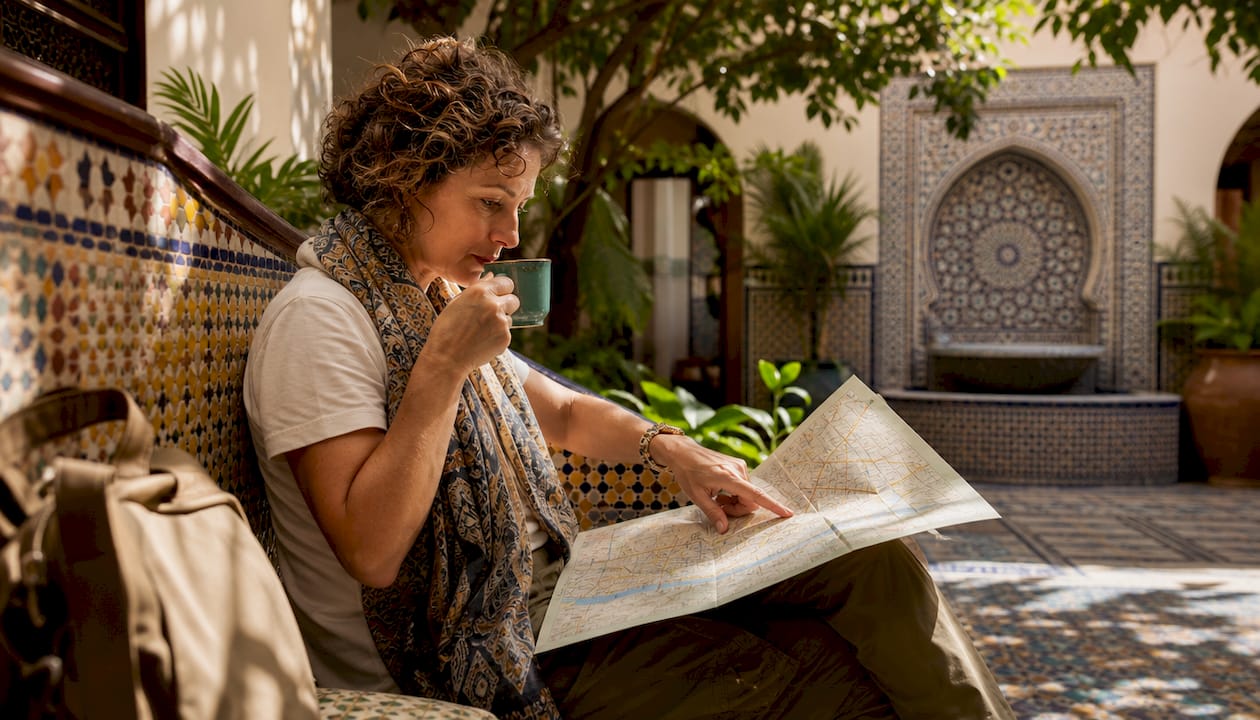
The Moroccan Dirham (MAD) is the local currency, and MAD cannot be purchased outside Morocco. That fact catches many first-time visitors off guard. Exchange currency or withdraw from ATMs at the airport or in city centers upon arrival, and carry enough cash for daily transactions throughout your stay.
Moroccotours recommends treating Morocco as a destination that blends cultural immersion with natural adventure. The country’s diversity means a single trip can include a night in a Fes riad, a camel ride in Merzouga, and a seafood lunch in Essaouira all within ten days.
What is the best time to visit Morocco?
Spring and autumn are the best times to visit Morocco, with daytime temperatures around 25–28°C and manageable crowds. Those two windows, March through May and September through November, give you comfortable conditions for city sightseeing, mountain hikes, and desert excursions without the punishing heat of summer.
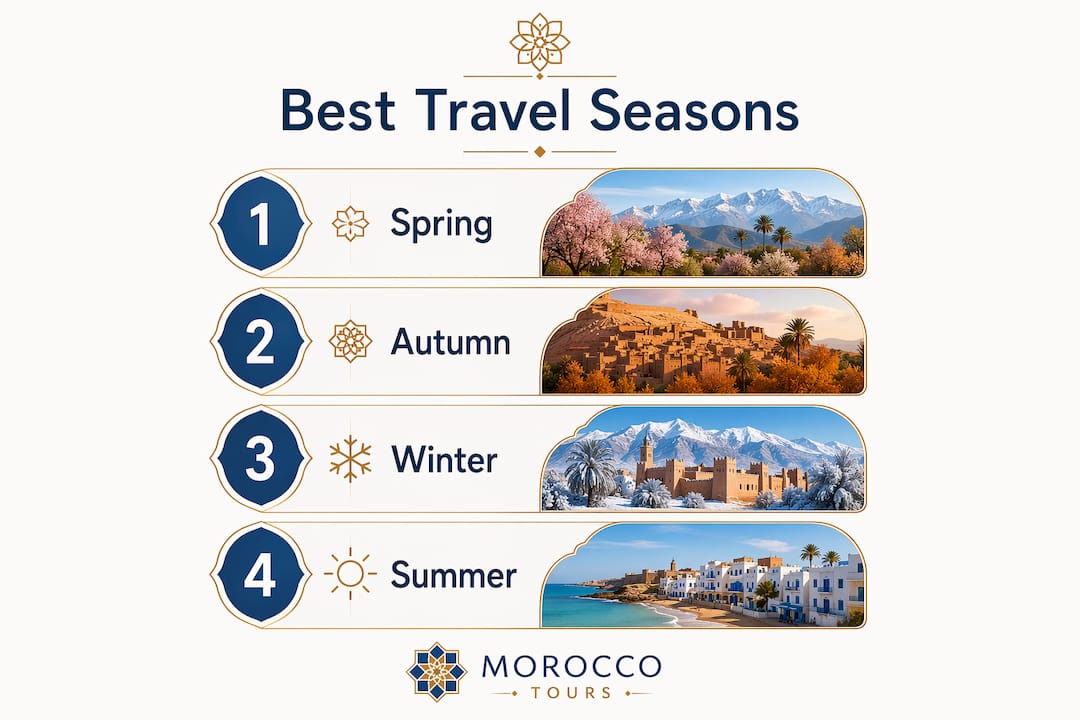
Summer in inland cities like Marrakech and Fes regularly pushes past 40°C. That heat makes midday sightseeing genuinely difficult. The Atlantic coast, including Essaouira and Agadir, stays cooler in summer thanks to ocean breezes, making those cities the smart summer choice for beach-focused travelers.
Winter brings cold nights in the mountains and the desert, but it is the ideal season for Sahara trips. The desert sees summer days exceeding 45°C and winter nights that drop below freezing, so the sweet spot for desert travel runs from late September through April. Pack layers for that range.
| Season | Best for | Temperatures |
|---|---|---|
| Spring (march–may) | Cities, mountains, desert | 20–28°C daytime |
| Summer (june–august) | Atlantic coast, beaches | 35–40°C+ inland |
| Autumn (sept–nov) | All regions, festivals | 20–27°C daytime |
| Winter (dec–feb) | Sahara Desert, quieter cities | 15–20°C days, cold nights |
Pro Tip: Book your Sahara Desert camp for October or April. Those months give you warm days, cool nights, and far fewer tour groups than the peak December holiday rush.
Check the full season-by-season breakdown on Moroccotours for regional climate details that go beyond general advice.
How many days should you plan for your first Morocco trip?
Seven to ten days is the recommended duration for a first-time visit that covers multiple regions without feeling rushed. That window allows a classic loop: Marrakech, the High Atlas, the Sahara Desert near Merzouga, and Fes, with optional stops at Aït Benhaddou or the Todra Gorge along the way. Fewer than five days works only if you base yourself in one city and take day trips.
The most popular first-timer routes follow a clear logic:
- Marrakech to Fes via the desert (7–10 days): Start in Marrakech, drive south through the Atlas Mountains, spend a night in the Sahara, then head north through Midelt and Ifrane to Fes. This route covers the country’s geographic and cultural range.
- Marrakech only (3–5 days): Focus on the medina, Jemaa el-Fnaa square, the Majorelle Garden, and day trips to the Atlas or Essaouira. Efficient and satisfying for short trips.
- Imperial cities circuit (7–10 days): Casablanca, Rabat, Meknes, Fes, and Marrakech by train and bus. Best for travelers who prioritize history and architecture over desert landscapes.
- Coastal and cultural mix (10–14 days): Add Essaouira, Agadir, or Chefchaouen to any of the above routes for a fuller picture of Morocco’s variety.
For transportation, trains connect Casablanca, Rabat, Meknes, Fes, and Marrakech reliably and affordably. Buses cover most other cities. Private transfers work best for the desert route, where roads are long and remote. Rental cars give you freedom in the south but require confidence on mountain roads and in medina traffic.
Pro Tip: Hire a private driver for the Marrakech-to-Fes desert route. The roads between Ouarzazate and Merzouga are stunning but long. A local driver doubles as a guide and handles logistics you would spend hours figuring out alone.
Moroccotours offers a detailed Morocco itinerary guide covering 7, 10, and 14-day options with day-by-day breakdowns for each route.
What cultural customs should you respect in Morocco?
Modest dress is the single most practical cultural adjustment you will make in Morocco. Cover your shoulders and knees in loose, breathable fabrics. This applies to both men and women, though women traveling alone or in conservative areas will feel more comfortable with a light scarf available. Loose linen or cotton works well in summer heat and reads as respectful in any context.
Learning a few phrases in Arabic or French goes a long way. Morocco’s official languages are Arabic and Amazigh (Berber), with French widely spoken in cities and tourist areas. Common phrases worth knowing:
- “As-salamu alaykum” (Peace be upon you): The standard greeting. Use it when entering a shop or meeting someone new. The response is “Wa alaykum as-salam.”
- “Shukran” (Thank you): Universally understood and appreciated.
- “La, shukran” (No, thank you): Useful for politely declining persistent vendors.
- “Bshal hada?” (How much is this?): Opens bargaining conversations in the souks.
- “Merci” and “S’il vous plaît”: French equivalents that work in most cities and restaurants.
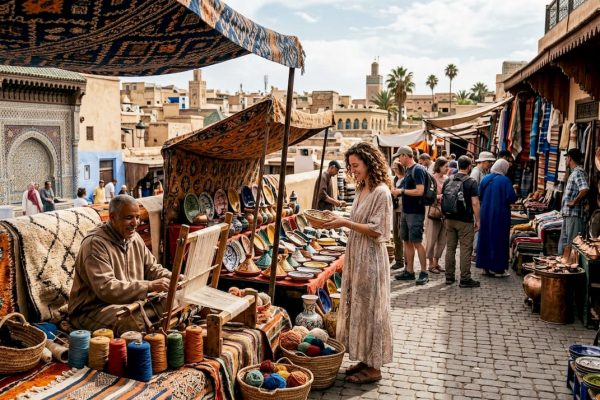
Bargaining is expected in souks and open markets but not in shops with posted prices. Start at roughly half the asking price and settle somewhere in the middle. The process is social, not confrontational. Keep it friendly and be willing to walk away.
Alcohol is available in licensed hotels, bars, and select restaurants in tourist areas. Public drinking is socially unacceptable and should be avoided entirely. During Ramadan, eating, drinking, or smoking in public during daylight hours is deeply disrespectful. Check the Ramadan calendar before you travel and adjust your behavior accordingly.
What are the most important safety tips for Morocco?
Morocco is a safe destination for most travelers, but petty theft and tourist scams require awareness. The following practices cover the situations that catch first-timers most often.
- Carry cash in MAD. Police checkpoints on highways require fines to be paid immediately in cash. Carrying at least 1,000 MAD avoids bureaucratic delays and keeps road trips moving.
- Watch your belongings in medinas. Crowded souks in Marrakech and Fes are the most common settings for pickpocketing. Use a front-facing bag or a money belt for passports and cards.
- Decline unsolicited guides. Getting lost in a medina is normal and part of the experience. Accepting help from strangers who approach you often leads to an expectation of payment. Use Google Maps offline or hire an official guide through your accommodation.
- Drink bottled or filtered water. Tap water in Morocco is technically treated but can cause stomach issues for travelers not accustomed to it. Bottled water is cheap and widely available.
- Verify taxi fares before you get in. Petit taxis in cities use meters, but some drivers skip them for tourists. Agree on a price before the ride or insist on the meter.
- Check vaccination requirements. No vaccinations are legally required for entry from the United States, but hepatitis A, typhoid, and a tetanus booster are commonly recommended by travel health clinics.
- Respect photography norms. Always ask before photographing people, especially in rural areas and markets. Many locals decline, and photographing without permission creates conflict.
The overall risk level in Morocco is low for standard tourist activities. Staying alert in crowded spaces and using common sense covers the vast majority of situations.
What unique experiences define a first trip to Morocco?
Morocco’s most memorable moments happen in places that feel unlike anywhere else. These are the experiences that first-time travelers consistently describe as the highlights of their trip.
- Jemaa el-Fnaa in Marrakech: This UNESCO-recognized square transforms from a daytime market into a full sensory event at night, with food stalls, musicians, storytellers, and acrobats. Arrive at dusk for the full effect.
- The Fes el-Bali medina: The oldest continuously inhabited medieval city in the world. The tanneries at Chouara, viewed from leather shop balconies, are one of Morocco’s most photographed sights.
- A Sahara Desert overnight: Multi-day desert tours combining camel rides, 4×4 excursions, and authentic desert camps deliver the best Sahara experience while keeping logistics manageable. Sleeping under a sky with no light pollution is genuinely transformative.
- Chefchaouen: The blue-painted mountain town in the Rif Mountains draws photographers and hikers. It is quieter than Marrakech and offers a completely different pace.
- Essaouira: A windswept Atlantic port city with a relaxed medina, excellent seafood, and a strong music culture rooted in Gnawa tradition. A perfect counterpoint to the intensity of Marrakech.
| Experience | Location | Best season |
|---|---|---|
| Sahara camel ride and camp | Merzouga, Erg Chebbi | October–April |
| Jemaa el-Fnaa night market | Marrakech | Year-round |
| Fes medina and tanneries | Fes el-Bali | Spring, autumn |
| Blue city photography | Chefchaouen | Spring, autumn |
| Coastal seafood and beaches | Essaouira, Agadir | Summer, spring |
Pro Tip: Book your desert camp at least two weeks in advance for October and November. The best camps fill up fast during peak autumn season, and the difference between a basic tent and a proper luxury camp is significant.
Key Takeaways
Morocco rewards travelers who arrive informed: the right season, a realistic trip length, cultural awareness, and basic safety habits make the difference between a good trip and a great one.
| Point | Details |
|---|---|
| Best travel seasons | Spring and autumn offer 25–28°C temperatures ideal for all regions. |
| Recommended trip length | Plan 7–10 days for a balanced first visit covering cities, desert, and coast. |
| Cultural respect | Cover shoulders and knees, learn basic Arabic greetings, and bargain only in souks. |
| Cash is critical | MAD cannot be bought outside Morocco; carry at least 1,000 MAD for road trips. |
| Desert timing | Visit the Sahara between late September and April for manageable temperatures. |
What I’ve learned from watching travelers get Morocco right and wrong
The travelers who struggle in Morocco almost always share one trait: they underestimate how much the country asks of you culturally. They dress for a beach vacation in a conservative medina, they accept help from strangers without thinking, and they try to rush through Fes in four hours. Morocco does not reward that approach.
The travelers who leave genuinely moved do something different. They slow down. They sit in a café in the Fes medina for an hour with no agenda. They let a wrong turn lead them somewhere unexpected. They greet shopkeepers in Arabic even if the pronunciation is imperfect. That small effort shifts the entire dynamic of an interaction.
I have seen this pattern play out consistently. The cultural respect piece is not just etiquette advice. It is the mechanism that opens Morocco up. Locals respond to genuine curiosity and basic courtesy with warmth that is hard to find in more heavily touristed destinations.
The other thing I would tell any first-timer: do not try to see everything. Morocco is large and varied enough that a 10-day trip still leaves entire regions untouched. Pick a route that matches your energy level and interests, commit to it, and resist the urge to add one more city. The depth of experience in two or three places beats a surface-level sprint through six.
Planning a longer trip? The 14-day Morocco highlights tour from Moroccotours covers imperial cities and the Sahara with enough breathing room to actually absorb each place.
— MoroccoTours.co
Moroccotours: private and luxury Morocco tours built around your trip
MoroccoTours.co designs private, customizable tours that match the trip lengths and routes described in this guide. Whether you want a focused 10-day signature tour covering Marrakech, the Sahara, and Fes, or a longer cultural circuit through all four imperial cities, every itinerary comes with expert local guides, private transportation, and hand-picked accommodations. The team handles logistics so you focus on the experience. Browse the full range of luxury Morocco tours to find the package that fits your travel style and timeline.
FAQ
What is the best time to visit Morocco for first-timers?
Spring and autumn are the best seasons for first-time visitors, with mild temperatures and balanced conditions across all regions. March through may and september through november avoid both summer heat spikes and winter cold.
How many days do I need for a Morocco trip?
Seven to ten days covers the classic Marrakech-to-Fes desert loop comfortably. Fewer than five days works only for a single-city stay with day trips.
Is Morocco safe for solo travelers?
Morocco is generally safe for solo travelers who stay alert in crowded areas and decline unsolicited guide offers. Petty theft in medinas is the most common risk, and basic precautions like a front-facing bag and offline maps address it effectively.
Can I use a credit card in Morocco?
Credit cards work in hotels, larger restaurants, and some shops, but cash is required for markets, small vendors, and road-trip logistics. The Moroccan Dirham cannot be purchased outside Morocco, so exchange money or use an ATM upon arrival.
What should I pack for Morocco?
Pack loose, breathable clothing that covers shoulders and knees, a light scarf for conservative areas, comfortable walking shoes for medina cobblestones, and layers for desert nights. Sunscreen and a reusable water bottle round out the practical essentials.
Itinerary Expand all Collapse all
Included
Price
Related Tours
Morocco Desert Tour
Northern Morocco Tour
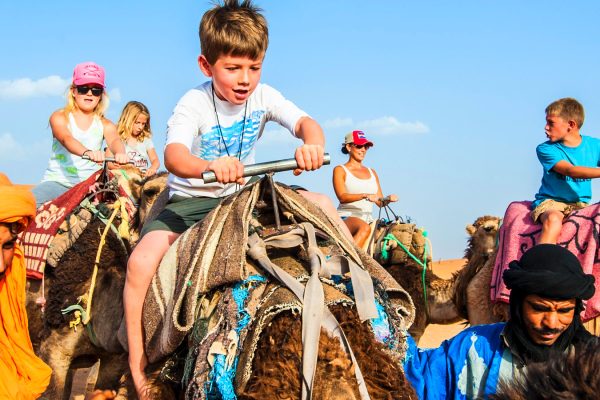
Morocco Family Tour
Morocco Spain Tour
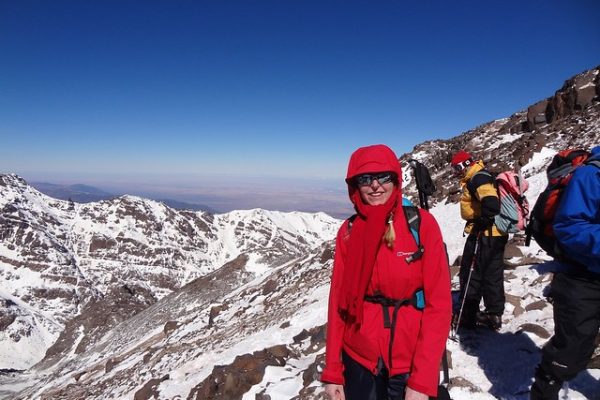
Morocco Trekking Tour
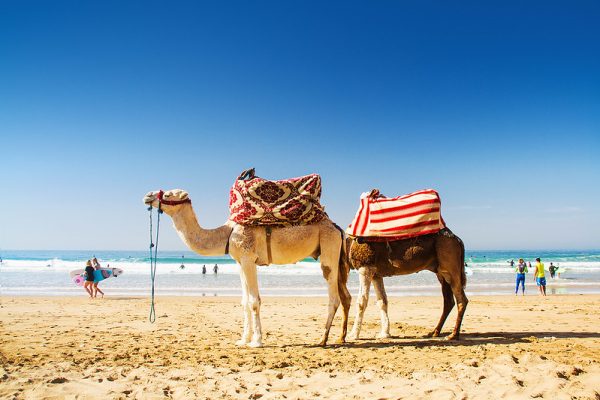
Morocco Highlights Tour
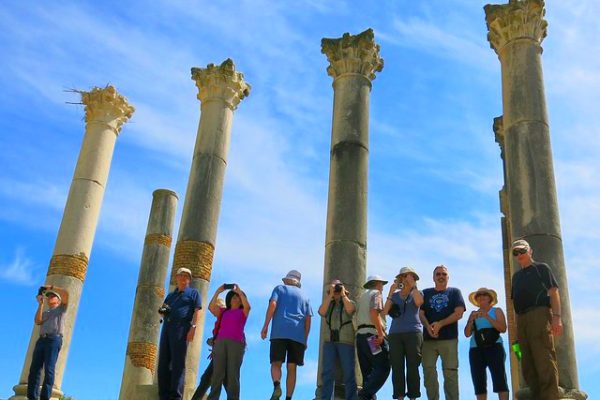
Morocco Group Tour
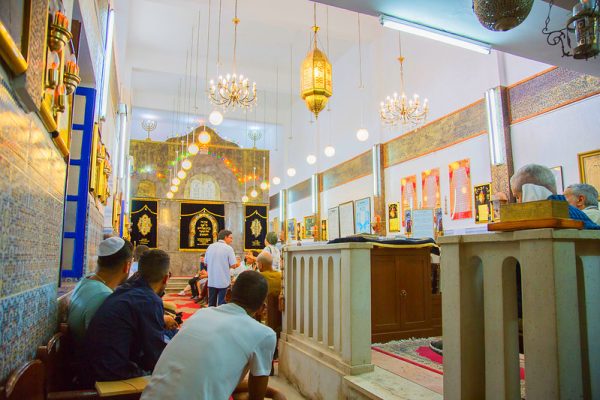
Morocco Jewish Tour
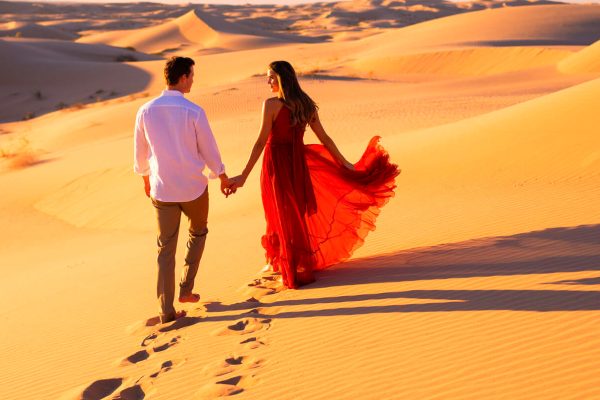
Morocco Honeymoon Tour
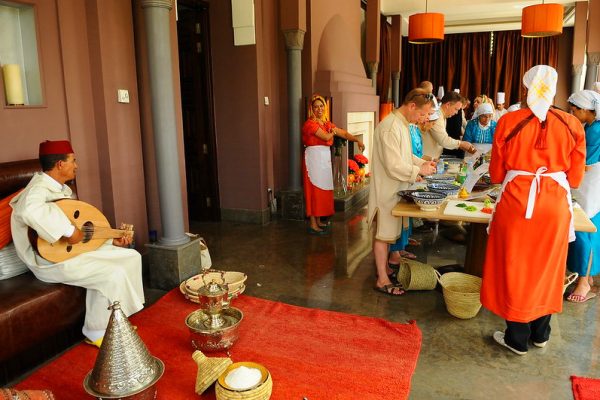
Morocco Food Tour
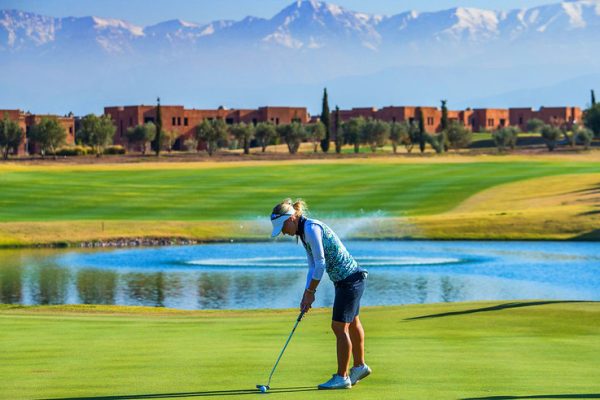
Morocco Golf Tour
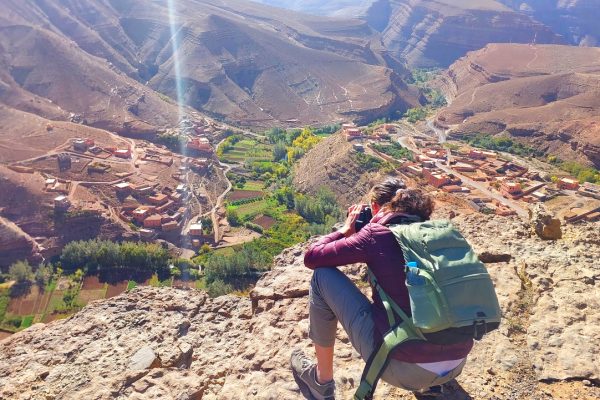
Morocco Photography Tour
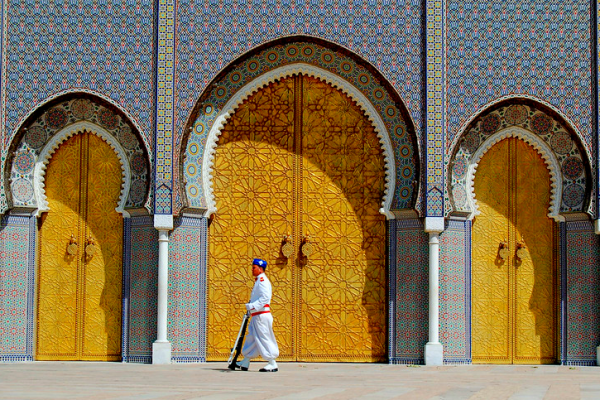
Morocco Signature Tour
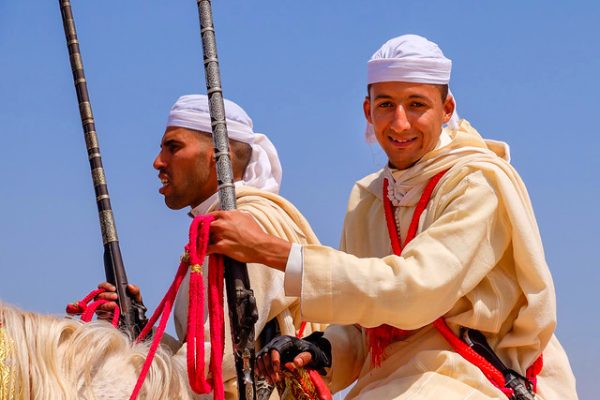
Morocco Imperial Cities Tour
Morocco Grand Tour

Is Morocco Safe for Solo Women? Your Guide

Morocco Itinerary Guide: 7, 10, and 14 Days
Is Morocco Safe for Tourists? Your Guide
Morocco Travel Tips for First Time Visitors

How Many Days Do You Need in Morocco

What to Know Before Visiting Morocco

10 Mistakes Travelers Make in Morocco

Morocco Travel Agency: Plan Your Luxury Tour

Morocco Visa Guide: Requirements and How to Apply
